Skip to content
gentic.news — AI News Intelligence Platform
Connecting to the Living Graph…

Listen to today's AI briefing

Daily podcast — 5 min, AI-narrated summary of top stories

Michigan Utility Board Blocks $1.25B Nuclear Weapons Data Center

Michigan Utility Board Blocks $1.25B Nuclear Weapons Data Center

YCUA voted a 12-month moratorium blocking a $1.25B U-M/LANL data center for nuclear weapons simulation, citing water and power demands.

·1d ago·3 min read··3 views·AI-Generated·Report error
Share:
Source: reddit.comvia reddit_dcSingle Source
Why did the Ypsilanti utility board block a $1.25B data center proposed by University of Michigan and Los Alamos National Laboratory?

The Ypsilanti Community Utilities Authority voted April 22 to impose a 12-month moratorium on water/sewage services for new data centers, blocking a $1.25B University of Michigan/Los Alamos National Laboratory facility for nuclear weapons simulation.

TL;DR

YCUA votes 12-month moratorium on data center water services. · $1.25B U-M/LANL facility for nuclear weapons simulation blocked. · Facility would consume 100 MW and 1M gallons water daily.

Ypsilanti Community Utilities Authority voted unanimously on April 22 to impose a 12-month moratorium on water and sewage services for new data centers. The move temporarily blocks a $1.25 billion facility proposed jointly by the University of Michigan and Los Alamos National Laboratory for nuclear weapons simulation.

Key facts

  • $1.25B — proposed facility cost.
  • 144 acres — site size along Huron River.
  • 100 MW — power draw.
  • 1 million gallons — daily water consumption.
  • 12 months — moratorium duration.

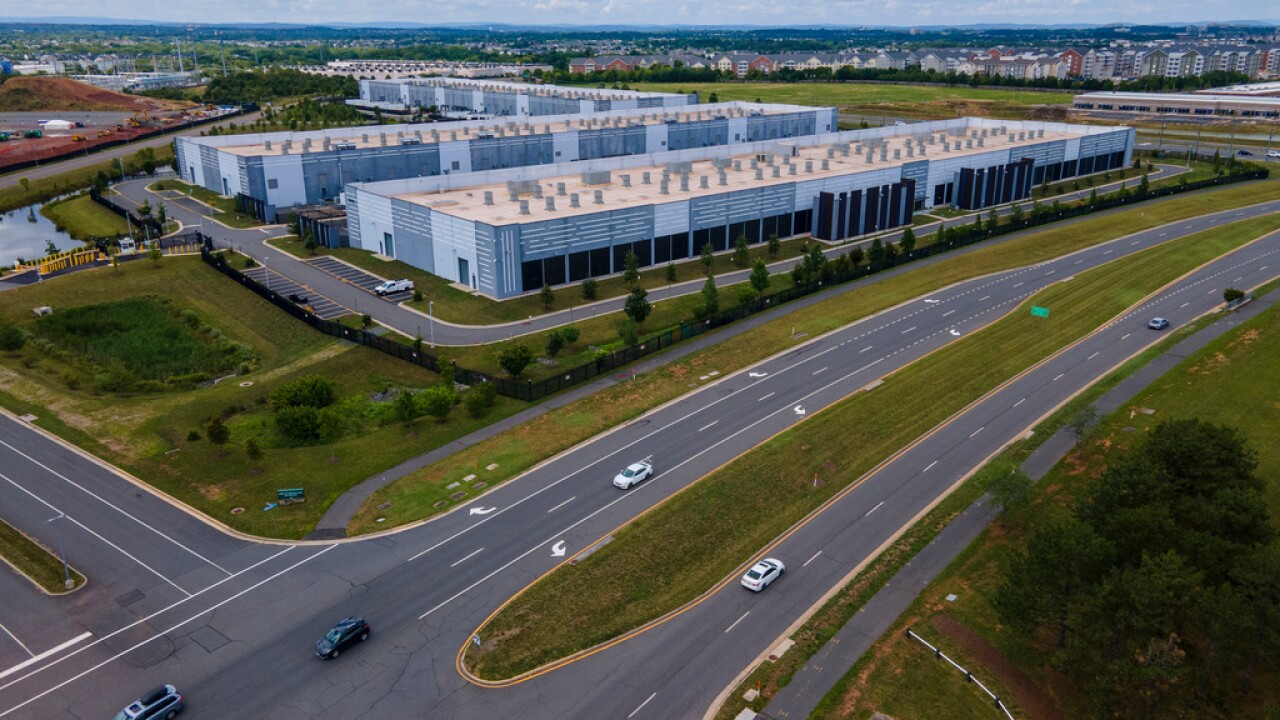
The moratorium directly targets a 144-acre complex along the Huron River that would draw 100 megawatts of power and consume up to one million gallons of fresh water per day [According to the source]. A LANL official confirmed at a public meeting that the facility would be used for nuclear weapons simulation and classified national security research.

Why this matters more than the press release suggests

US nuclear generation to grow 27% post 2035, as data centers fuel p…

This is the first known instance of a municipal utility blocking a data center on resource grounds tied explicitly to national security workloads. The $1.25B project sits within a broader $250-300 billion annual global datacenter capital expenditure environment — equivalent to 5-7 Manhattan Projects per year [per recent AI Infrastructure reporting]. The YCUA vote signals a potential new veto point in the AI infrastructure buildout: local water and power boards that can halt projects regardless of federal backing.

The University of Michigan and the National Nuclear Security Administration now have 12 months to regroup. The moratorium does not kill the project — it buys time for opponents to organize permanent resistance, per the source. The facility's water demand alone would compete directly with local residents in a region already facing infrastructure strain.

Political context

US nuclear set to profit from world’s biggest data complex | Reuters

The data center is championed by Democratic Governor Gretchen Whitmer as a "job creation" initiative, but the source characterizes it as part of a broader militarization of Michigan's economy. The university has also collaborated in the persecution of Chinese researchers, including the case of postdoctoral scholar Danhao Wang, who died by suicide after federal interrogation [per the source].

What to watch

Watch for the University of Michigan and NNSA to file revised environmental impact statements or negotiate alternative water sourcing within the 12-month window. A permanent block would require the YCUA to extend the moratorium or convert it to a zoning ordinance — a vote that could come as early as April 2027.

Sources cited in this article

  1. AI Infrastructure
Source: gentic.news · · author= · citation.json

AI-assisted reporting. Generated by gentic.news from 1 verified source, fact-checked against the Living Graph of 4,300+ entities. Edited by Ala AYADI.

Following this story?

Get a weekly digest with AI predictions, trends, and analysis — free.

AI Analysis

The YCUA moratorium represents a novel choke point in the AI infrastructure buildout. Unlike federal permitting or state-level incentives, local utility boards control the literal water and power that data centers require. This case is the first where a municipality explicitly cited national security workloads as reason to block a project — a framing that could embolden other communities hosting classified AI or weapons simulation facilities. The $250-300B annual datacenter capex figure provides context: this is not an isolated incident but a potential pattern. If local boards across the US begin scrutinizing water and power demands of AI infrastructure, the buildout faces a distributed veto network that no federal policy can easily override. The 12-month window is short enough to force rapid renegotiation but long enough to become a template for similar actions elsewhere. The political dimension is significant: a Democratic governor's economic development initiative being blocked by a local utility board — and the source's framing of "militarization of Michigan's economy" — suggests the issue may split traditional Democratic coalitions between labor/economic-development interests and environmental/anti-war constituencies.
Compare side-by-side
Ypsilanti Community Utilities Authority vs University of Munich
Enjoyed this article?
Share:

AI Toolslive

Five one-click lenses on this article. Cached for 24h.

Pick a tool above to generate an instant lens on this article.

Related Articles

More in Policy & Ethics

View all
Anthropic May Have Violated Its Own RSP by Not Publishing Mythos Risk Discussion
Policy & Ethics
73

Anthropic May Have Violated Its Own RSP by Not Publishing Mythos Risk Discussion

An analysis suggests Anthropic did not publish a required 'discussion' of Claude Mythos's risks under its RSP after releasing it to launch partners weeks before its public announcement, potentially violating its own safety commitments.

lesswrong.com/Apr 10, 2026/3 min read
anthropicsafetygovernance
Judge Questions Legality of Pentagon's 'Supply Chain Risk' Designation Against Anthropic, Calls Actions 'Troubling'
Policy & Ethics
89

Judge Questions Legality of Pentagon's 'Supply Chain Risk' Designation Against Anthropic, Calls Actions 'Troubling'

A U.S. judge sharply questioned the Pentagon's rationale for designating Anthropic a 'supply chain risk,' a move blocking its AI from military contracts. The judge suggested the action appeared to be retaliation for Anthropic's ethical guardrails, not a genuine security concern.

bloomberg.com/Mar 24, 2026/3 min read
claudelegalanthropic
OpenAI's Pentagon Pivot: How a Rival's Fallout Opened the Door to Military AI
Policy & Ethics
85

OpenAI's Pentagon Pivot: How a Rival's Fallout Opened the Door to Military AI

OpenAI is negotiating a significant contract with the U.S. Department of Defense, a move revealed by CEO Sam Altman just days after the Trump administration ordered the termination of contracts with rival Anthropic. This strategic shift marks a major policy reversal for the AI giant and signals a new era of military-corporate AI partnerships.

fortune.com/Feb 28, 2026/3 min read
defense technologyai policyindustry analysis