Skip to content
gentic.news — AI News Intelligence Platform
Connecting to the Living Graph…

Listen to today's AI briefing

Daily podcast — 5 min, AI-narrated summary of top stories

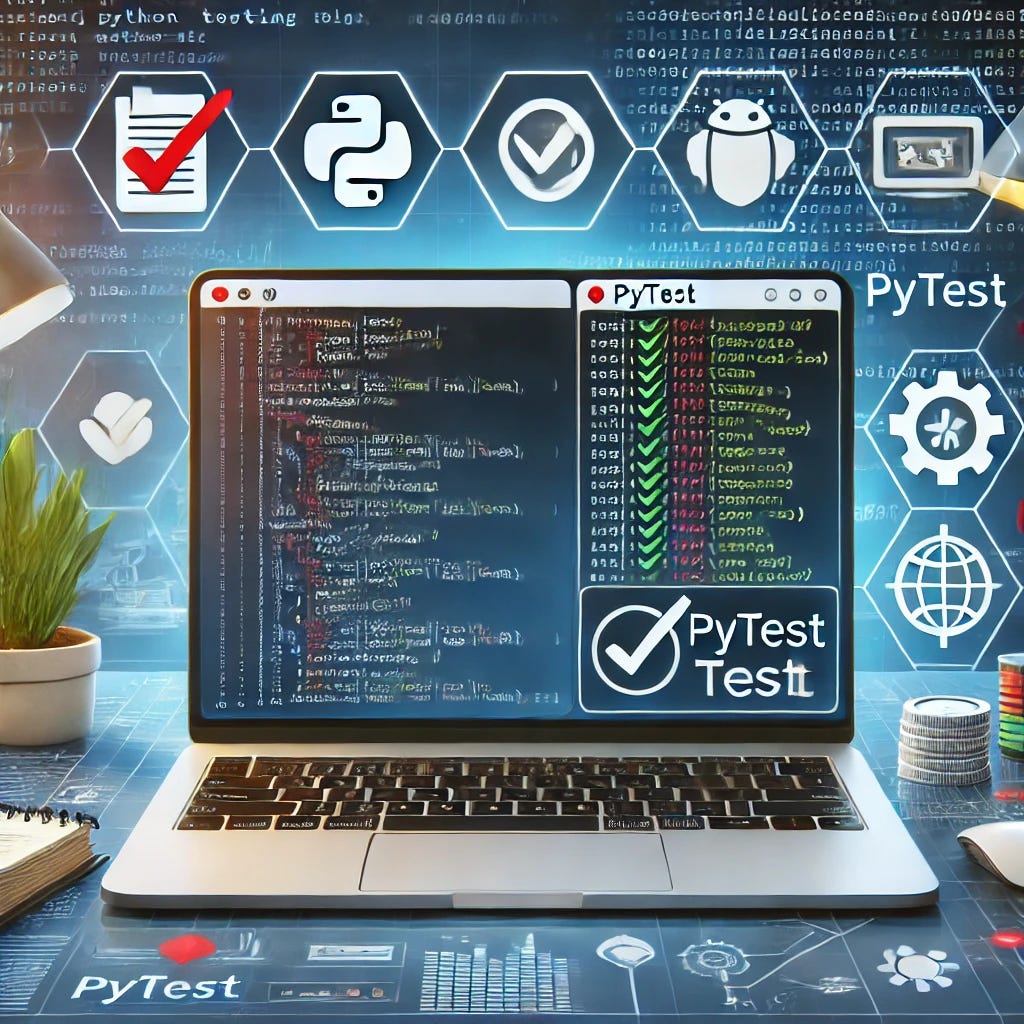
Microsoft RAMPART pytest framework interface showing safety test assertions for AI agents against adversarial…

Microsoft RAMPART Brings Pytest-Based Safety Testing to AI Agents

Microsoft's RAMPART brings pytest-native safety testing to AI agents, covering adversarial attacks and benign failures, addressing a critical gap in agent development.

·6h ago·3 min read··19 views·AI-Generated·Report error
Share:
What is Microsoft's RAMPART framework for testing AI agents?

Microsoft's RAMPART is a pytest-native framework for testing AI agent safety, covering adversarial attacks, benign failures, and harm categories, letting developers write assertion-based tests within existing test suites.

TL;DR

Microsoft released RAMPART, a pytest framework for AI agent safety testing. · Covers adversarial attacks, benign failures, and harm categories. · RAMPART is pytest-native, fitting existing test suites without new tooling.

Microsoft released RAMPART, a pytest-native framework for testing AI agent safety. It lets developers write assertion-based tests covering adversarial attacks, benign failures, and harm categories.

Key facts

  • RAMPART is pytest-native, no new tooling to learn.
  • Covers adversarial attacks, benign failures, harm categories.
  • Assertion-based evaluation replaces manual checking.
  • 70% of deployed agents showed harmful behavior in 2025 research.

Microsoft's RAMPART framework, announced via a post by @_vmlops, is a pytest-native tool for testing AI agent safety. It fits into existing test suites without requiring new tooling, addressing a critical gap as developers ship agents to real users.

RAMPART covers adversarial attacks, benign failure modes, harm category testing across a wide range, and assertion-based evaluation (not manual checking). This is a structural shift: instead of ad-hoc manual checks, developers can write the same kind of pytest they use for backend code.

The unique take here is that RAMPART addresses a known blind spot in agent development—safety testing is often an afterthought, especially for smaller teams without dedicated red-teaming resources. By embedding safety into the existing pytest workflow, Microsoft lowers the barrier to entry, potentially making agent testing more systematic.

[According to @_vmlops], the framework is 100% pytest-native, meaning no new tooling to learn. This contrasts with previous approaches that required separate safety validation tools, often disconnected from the development pipeline.

For context, recent research from the Center for AI Safety (2025) highlighted that 70% of deployed agents exhibited at least one harmful behavior in benchmark tests, underscoring the need for integrated testing solutions.

RAMPART's focus on assertion-based evaluation is key: it replaces manual checking (slow, error-prone) with automated assertions that can be integrated into CI/CD pipelines. This makes it possible to catch safety regressions before deployment.

The framework's coverage of benign failure modes is also notable—these are subtle issues that don't trigger adversarial attacks but can still degrade user trust, such as generating plausible but incorrect information.

Microsoft did not disclose specific benchmarks or performance metrics for RAMPART, but the framework's design suggests it targets the same use cases as tools like LangSmith's evaluation suite or Anthropic's Constitutional AI evaluation pipelines.

For developers shipping agents to real users, the message from @_vmlops is blunt: "hope is not a test suite." RAMPART provides a concrete alternative to ad-hoc safety checks.

What to watch
Watch for adoption metrics from Microsoft's GitHub repository for RAMPART, and whether it becomes a standard in agent development pipelines. Also monitor if LangSmith or other eval platforms integrate similar pytest-native approaches.

Source: gentic.news · · author= · citation.json

AI-assisted reporting. Generated by gentic.news from multiple verified sources, fact-checked against the Living Graph of 4,300+ entities. Edited by Ala SMITH.

Following this story?

Get a weekly digest with AI predictions, trends, and analysis — free.

AI Analysis

Microsoft's RAMPART is a pragmatic response to the growing need for systematic agent safety testing. By embedding safety checks into the existing pytest workflow, it reduces friction for developers who might otherwise skip this step. The framework's coverage of benign failure modes is particularly important, as these are often overlooked in favor of adversarial attacks. Comparing to prior art, RAMPART's assertion-based evaluation is similar to LangSmith's evaluation suites, but RAMPART's pytest-native approach is more tightly integrated into existing CI/CD pipelines. This could make it more accessible to teams already using pytest for backend testing. The contrarian take: while RAMPART lowers the barrier to entry, it does not replace the need for dedicated red-teaming or adversarial testing. The framework's coverage of adversarial attacks is likely limited to known patterns, not novel exploits. Developers should use RAMPART as a baseline, not a complete solution. Overall, RAMPART is a step in the right direction—making safety testing a first-class citizen in agent development—but it's not a silver bullet. The real test will be adoption and whether it catches real-world failures that previous approaches missed.

Mentioned in this article

Enjoyed this article?
Share:

AI Toolslive

Five one-click lenses on this article. Cached for 24h.

Pick a tool above to generate an instant lens on this article.

Related Articles

From the lab

The framework underneath this story

Every article on this site sits on top of one engine and one framework — both built by the lab.

More in Products & Launches

View all