Researchers at MIT have developed a new type of artificial muscle fiber that contracts silently when voltage is applied, capable of lifting significant weight through an innovative electrohydraulic mechanism. The system uses bundled fibers that pump charged fluid inside sealed tubes to generate force, with one fiber contracting while its paired fiber relaxes—mimicking the antagonistic action of biological muscles like biceps and triceps.
Key Takeaways
- MIT engineers created artificial muscle fibers that contract silently when voltage is applied.
- Bundled fibers can lift over 1 kilogram by pumping charged fluid inside sealed tubes, mimicking antagonistic muscle pairs.
What MIT Built: Electrohydraulic Artificial Muscles
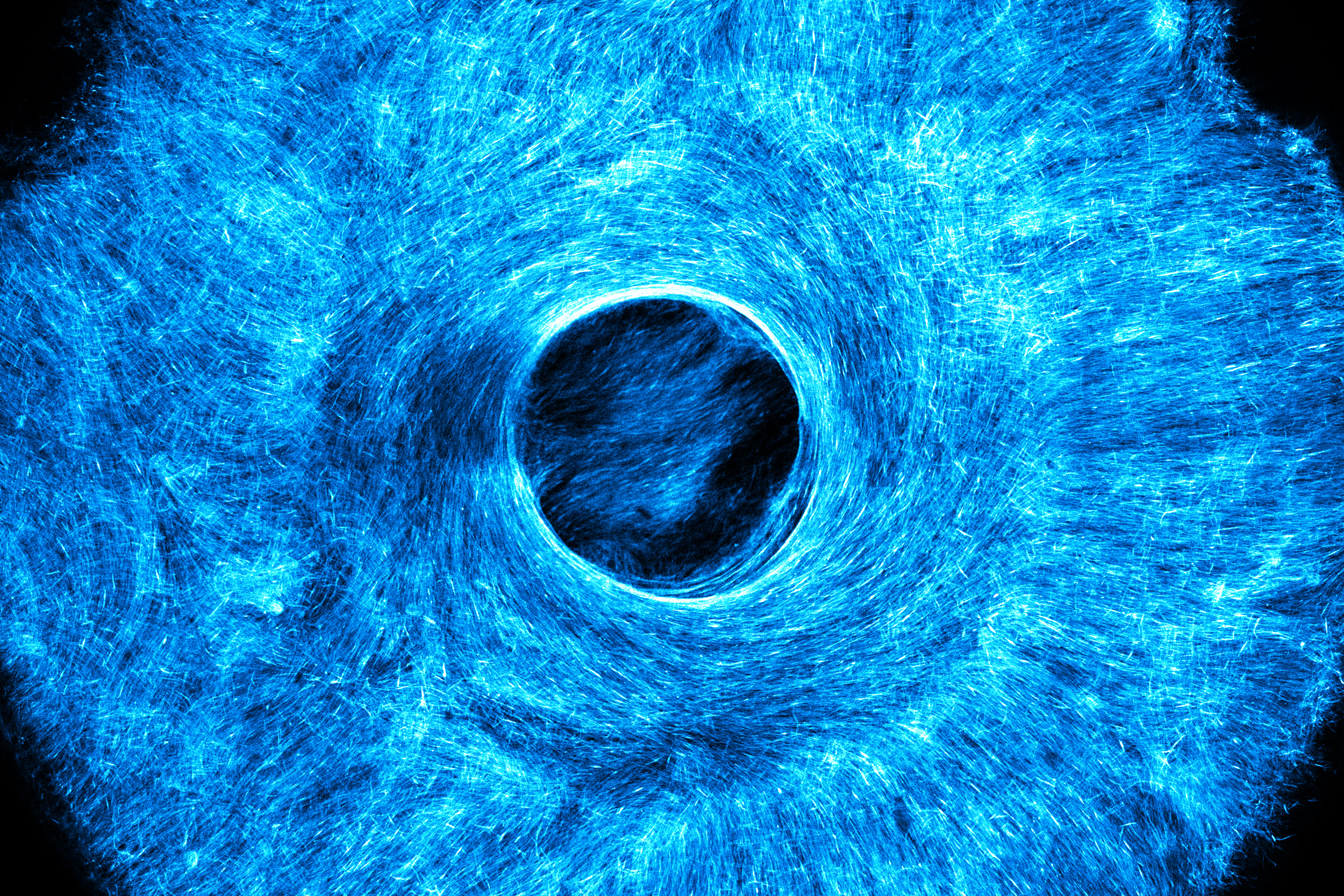
The core innovation is an artificial muscle fiber that operates on electrohydraulic principles rather than traditional pneumatic, hydraulic, or motor-driven systems. When voltage is applied to the fiber, it causes contraction through internal fluid movement rather than mechanical components. This approach eliminates the whirring, buzzing, or pumping sounds associated with conventional actuators.
Key to the system's functionality is the use of charged fluid sealed within flexible tubes. Applying voltage creates electrostatic forces that move this fluid, causing the tube to contract lengthwise. By bundling multiple fibers together, the researchers created actuators capable of substantial force generation.
Technical Implementation: Antagonistic Pairs and Fluid Dynamics
The MIT team implemented their artificial muscles in antagonistic pairs, mirroring biological systems where one muscle contracts while its opposing muscle relaxes. This arrangement enables more natural movement patterns and eliminates the need for complex return mechanisms.
Each fiber consists of:
- A flexible, sealed tube containing specialized dielectric fluid
- Electrodes that apply voltage to charge the fluid
- A mechanism that converts fluid movement into linear contraction
When voltage is applied, the charged fluid redistributes within the tube, creating pressure differences that cause the fiber to shorten. Reversing or removing the voltage allows the fiber to return to its original length, either passively or through the action of its paired muscle.
Performance Metrics and Capabilities
According to the research, bundled fibers demonstrate impressive force-to-weight ratios:
Maximum Lift >1 kg (2.2 lbs) Actuation Type Silent electrohydraulic Control Method Voltage application Muscle Mimicry Antagonistic pairs (biceps/triceps)While specific efficiency numbers, response times, and durability metrics weren't provided in the initial announcement, the ability to silently lift over 1 kilogram represents significant progress toward practical artificial muscle systems.
Applications and Implications

This technology has immediate applications in:
Robotics: Silent actuators could enable stealthier robots for surveillance, search-and-rescue, or home assistance without disturbing acoustic environments.
Prosthetics and Exoskeletons: More natural, quieter artificial muscles could improve wearable assistive devices, making them less intrusive and more socially acceptable.
Medical Devices: Silent actuation is crucial for implantable or wearable medical equipment where noise could cause patient discomfort or anxiety.
Haptic Interfaces: The technology could enable more realistic force feedback in virtual reality systems without audible distractions.
The silent operation addresses a significant limitation of current actuator technologies, particularly in applications where acoustic stealth matters—from military robotics to consumer electronics.
gentic.news Analysis
MIT's electrohydraulic artificial muscles represent a notable departure from prevailing actuator paradigms in robotics. While hydraulic and pneumatic systems dominate high-force applications, and electric motors power most precision robotics, this approach combines the force density of hydraulics with the controllability of electric systems.
This development follows increasing academic and commercial interest in biomimetic actuation. In 2025, Harvard's Wyss Institute demonstrated artificial muscles using coiled polymer fibers, while companies like Festo have commercialized pneumatic muscle technologies for industrial automation. MIT's silent operation differentiates this approach from both predecessors.
The technology aligns with broader trends toward softer, more compliant robotics that can safely interact with humans and environments. As robotics moves beyond factory cages into homes, hospitals, and public spaces, reducing acoustic footprint becomes increasingly important—a challenge this research directly addresses.
However, key questions remain unanswered in the initial announcement: energy efficiency compared to electric motors, long-term durability of the sealed fluid systems, scalability to different force ranges, and manufacturing costs. The 1kg lifting capability suggests potential for small to medium applications but doesn't indicate maximum possible force.
For practitioners, the most interesting aspect may be the control paradigm. Voltage-controlled fluid displacement suggests potentially simpler control electronics than variable-frequency drives for motors or proportional valves for pneumatics. If the system proves responsive and linear, it could simplify robotic control architectures significantly.
Frequently Asked Questions
How do MIT's artificial muscles differ from traditional actuators?
Traditional actuators like electric motors, pneumatics, and hydraulics typically involve moving mechanical parts that generate noise through friction, vibration, or fluid turbulence. MIT's approach uses electrostatic forces to move charged fluid within sealed tubes, eliminating most noise sources while maintaining substantial force output.
What are the potential applications for silent artificial muscles?
Primary applications include robotics operating in quiet environments (libraries, hospitals, homes), prosthetic limbs where noise causes user discomfort, exoskeletons for daily wear, haptic feedback systems in VR/AR, and any application where actuator noise interferes with user experience or operational requirements.
How does the antagonistic pairing work?
The system mimics biological muscles by pairing fibers that work in opposition—when one contracts, its partner relaxes. This eliminates the need for springs or other return mechanisms, allows more natural movement patterns, and enables bidirectional force application from a single control input.
What are the main limitations of this technology?
Based on available information, key unknowns include energy efficiency (how much electrical energy converts to mechanical work), durability (seal integrity over millions of cycles), response speed (how quickly fibers contract and relax), temperature sensitivity, and manufacturing scalability. These factors will determine practical viability beyond laboratory demonstrations.