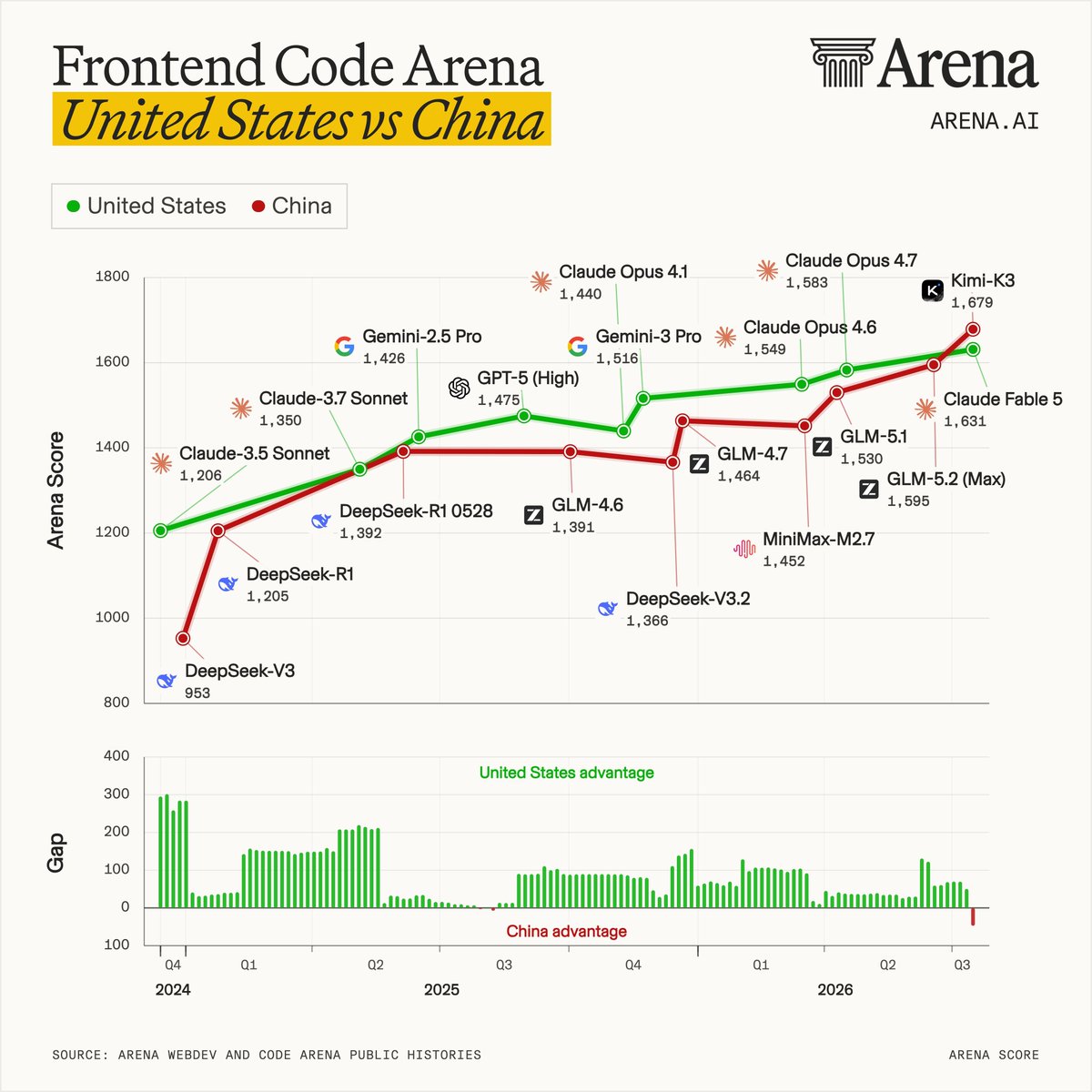
Moonshot AI paused new subscriptions for its kimi-k3" class="entity-chip">Kimi K3 model on July 20, 2026, citing GPU capacity limits. The Beijing-based startup said demand over the prior 48 hours pushed 'close to the limits of our current capacity,' underscoring China's AI chip constraints.
Key facts
- Kimi K3 has 2.8 trillion parameters and 1M token context.
- Moonshot paused new subscriptions on July 20, 2026.
- Open-weight release scheduled by July 27, 2026.
- K3 scored 89.2% on SWE-bench Front-End, beating GPT-4o.
Moonshot AI, the Beijing-based startup behind the Kimi chatbot, has temporarily stopped accepting new subscriptions for its Kimi K3 model after compute demand overwhelmed available GPU capacity. The company announced the pause on X, stating that existing subscribers are unaffected and that it is 'adding capacity as fast as we can.'
Compute Squeeze Under Export Controls
The suspension highlights a structural bottleneck for Chinese AI labs: restricted access to advanced chips under US export controls. According to the South China Morning Post, Moonshot AI's GPUs are 'feeling it' from the demand spike. The company did not disclose its current GPU count or the specific hardware it uses, but Chinese labs have been limited to domestic alternatives like Cambricon or Huawei's Ascend chips since the US tightened semiconductor export rules.
Open-Weight Release as Strategic Hedge
Moonshot plans to release Kimi K3's model weights by July 27, which would make it the world's largest open-weight frontier model so far. The move mirrors a broader strategy among Chinese AI labs: releasing weights publicly to attract developer adoption and circumvent cloud API bottlenecks. Our prior coverage noted K3's 2.8 trillion parameters and 1 million token context window, with API pricing at $3 per million input tokens. By open-sourcing the model, Moonshot shifts the compute burden to users running inference locally, potentially easing pressure on its own infrastructure.
Capacity vs. Demand: A Familiar Pattern
This is not the first time Chinese AI labs have hit compute ceilings. Moonshot's Kimi K2.5 and K2.6 models saw similar subscription throttles after launch, though the company did not specify durations. The K3 pause comes just three days after the model scored 89.2% on SWE-bench Front-End, beating GPT-4o, Claude 3.5 Sonnet, and Gemini 2.0 Pro. That benchmark performance likely drove the demand surge, as developers rushed to test a model that outperforms US alternatives in coding tasks.
Key Takeaways
- Moonshot AI paused Kimi K3 subscriptions due to GPU capacity limits.
- The open-weight release by July 27 aims to offload compute demand.
What to watch
Watch for the July 27 open-weight release — if Moonshot delivers, it will become the largest open frontier model. Also track whether the subscription pause extends beyond a few weeks, signaling deeper GPU shortages that could affect other Chinese labs.
Source: scmp.com
[Updated 21 Jul via scmp_tech]
Moonshot AI is preparing to begin discussions in August on a final round of fundraising before listing in Hong Kong, capitalizing on the excitement around Kimi K3 to raise capital at a valuation of as much as $50 billion [per Bloomberg]. The model's cybersecurity performance is 'extremely close' to OpenAI's GPT-5.6 Sol at a fraction of the cost, according to Swiss firm Aikido Security, stoking fears in Washington that US safety guard rails are putting American AI firms at a competitive disadvantage [per SCMP].