The Innovation
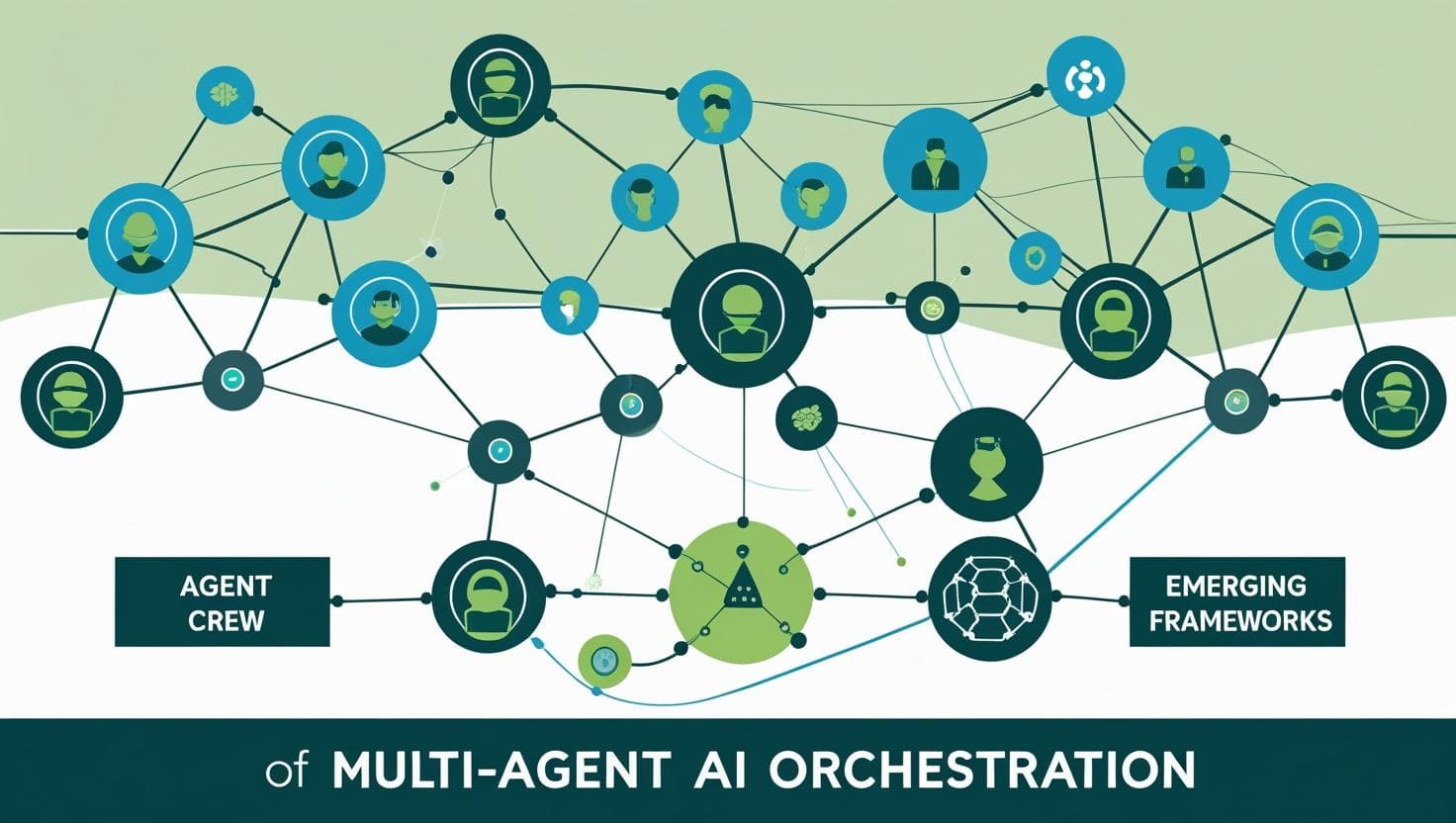
This research paper, "Conflict-Based Search as a Protocol," presents a novel framework for multi-agent motion planning in environments with heterogeneous robotic systems. The core innovation is treating Conflict-Based Search (CBS) – a well-established multi-agent pathfinding algorithm – not as a monolithic planning system, but as a standardized protocol.
The protocol requires only one specific API from each robot's onboard planner: the ability to find a collision-free path that satisfies given space-time constraints. A central coordinator (the CBS planner) then uses this common API to resolve conflicts between the independently planned paths of different robots. Crucially, it doesn't matter how each robot's internal planner works—whether it uses Heuristic Search (A*), Sampling-Based methods (RRT), Optimization, Diffusion models, or Reinforcement Learning. The protocol provides the "rules of the road," enabling dozens of robots from different manufacturers, with different capabilities and software stacks, to navigate a shared environment efficiently and without collisions while completing independent tasks.
Why This Matters for Retail & Luxury
For luxury brands managing complex, high-value logistics, this protocol addresses a fundamental barrier to automation: vendor lock-in and system heterogeneity. Consider these concrete scenarios:
- High-Value Warehouse Automation: A brand's distribution center may use KUKA robotic arms for delicate handbag handling, Boston Dynamics' Stretch for pallet moving, and Locus Robotics' AMRs for item picking. Integrating their movements is currently a proprietary nightmare. This protocol allows them to operate as a coordinated fleet.
- Boutique Backroom & Stockroom Optimization: In flagship stores, robots from different vendors might manage inventory retrieval (e.g., a Fetch mobile base), garment steaming, and secure transport of high-value items to the sales floor. The protocol ensures safe, efficient movement in cramped, shared backstage areas.
- Phygital Experience & Showroom Logistics: For immersive experiences, automated display systems, robotic mannequins, or autonomous delivery carts for refreshments need to move alongside clients without disruption. A protocol-based approach allows these diverse systems to be choreographed safely.
This directly benefits Supply Chain & Logistics and Store Operations departments, moving beyond siloed automation to create truly intelligent, flexible environments.
Business Impact & Expected Uplift
The primary impact is operational resilience and capital efficiency, rather than a direct sales uplift.

- Reduced Integration Costs & Time: Currently, integrating heterogeneous robotic systems requires extensive custom middleware and can take 6-12 months. A standardized protocol could reduce this integration effort by an estimated 40-60%, based on industry benchmarks for API standardization in industrial IoT (McKinsey, "The Internet of Things: Catching up to an accelerating opportunity," 2023).
- Increased Asset Utilization & Throughput: By enabling seamless coordination, warehouse and storage space can be used more densely and efficiently. Industry benchmarks for optimized multi-agent systems in logistics suggest a 15-25% improvement in throughput (DHL Resilience360, "Robotics in Logistics," 2024).
- Future-Proofing Investments: Brands are no longer locked into a single robotics vendor. They can select best-in-breed solutions for specific tasks (precision handling vs. heavy transport) with confidence they can work together, protecting long-term capital investments.
- Time to Value: The value is realized in two phases: (1) Faster deployment of new robotic systems (weeks instead of months), and (2) Continuous efficiency gains in operations as the coordinated system runs.
Implementation Approach
- Technical Requirements:
- Data: A digital map of the operational environment (warehouse, stockroom floor plan).
- Infrastructure: A central server to run the CBS coordinator and a reliable, low-latency network (Wi-Fi 6/6E, private 5G) for communication with all robots.
- Team Skills: Robotics integration engineers, software developers familiar with API design, and operations staff to define task workflows.
- Complexity Level: Medium to High. While the protocol simplifies high-level coordination, implementing the required API on each robot's proprietary controller may require vendor cooperation or internal development. The central planner itself is a non-trivial software component.
- Integration Points: Must integrate with the Warehouse Management System (WMS) or Inventory Management System to receive task orders. It sits as a middleware layer between the business system (issuing commands like "retrieve SKU 12345") and the individual robot controllers.
- Estimated Effort: Quarters. A pilot in a controlled environment (e.g., a single stockroom) could be staged in 3-4 months. Full-scale deployment across a distribution center is a 6-12 month program involving vendor negotiations, API development, safety validation, and phased rollout.
Governance & Risk Assessment
- Data Privacy: Low risk. The protocol coordinates physical movement and task IDs, not customer data. Operational data (paths, efficiency metrics) should be governed under standard internal data policies.
- Model Bias & Safety Risks: This is the paramount concern. The risk is not socio-cultural bias but physical safety and operational risk.
- Safety-Critical Validation: Every robot's adherence to its space-time constraints must be rigorously validated in simulation and physical testing before live deployment, especially when handling high-value luxury goods.
- Fail-Safe Protocols: The system must have robust failure detection and graceful degradation (e.g., full stop, pre-defined safe holding patterns) if communication is lost or a robot deviates from its plan.
- Human-in-the-Loop: In environments shared with staff (e.g., boutiques), clear protocols for human-robot interaction and emergency overrides are essential.
- Maturity Level: Advanced Research / Prototype. The paper demonstrates algorithmic feasibility and simulation results. It is not a commercial, off-the-shelf product. Real-world deployment, especially in the regulated and high-stakes environment of luxury logistics, requires significant hardening for safety, reliability, and performance.
- Honest Assessment: This is a strategic research direction to monitor and pilot, not a plug-and-play solution. Luxury brands with advanced automation roadmaps should engage with robotics vendors and research consortia (e.g., ROS-Industrial Consortium) to influence the development of such standards. A pilot in a non-critical, structured environment is the recommended first step.