A new arXiv paper from May 8, 2026 proposes a multi-level graph attention network with contrastive learning that outperforms existing state-of-the-art recommendation methods on three public datasets. The framework addresses sparse labels and noisy knowledge graph entities through multi-view self-supervision.
Key facts
- Paper submitted to arXiv on May 8, 2026.
- Three-level contrastive learning: Inter, Intra, Interaction.
- Outperforms state-of-the-art on three public datasets.
- Addresses sparse labels and noisy KG entities.
- Multi-view knowledge graph distillation enhances user representations.
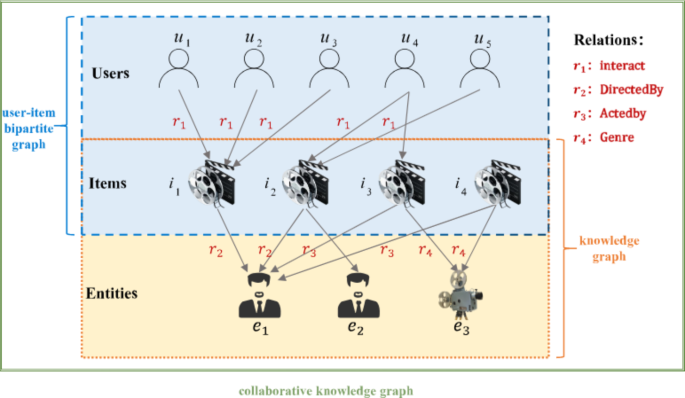
Knowledge graphs (KGs) have become a staple for improving recommendation systems by providing rich edge information about user-item interactions. However, existing graph neural network (GNN) approaches often suffer from sparse labels, insufficient graph structure learning, and noisy entities in the KG, which degrade accuracy.
The Proposed Framework

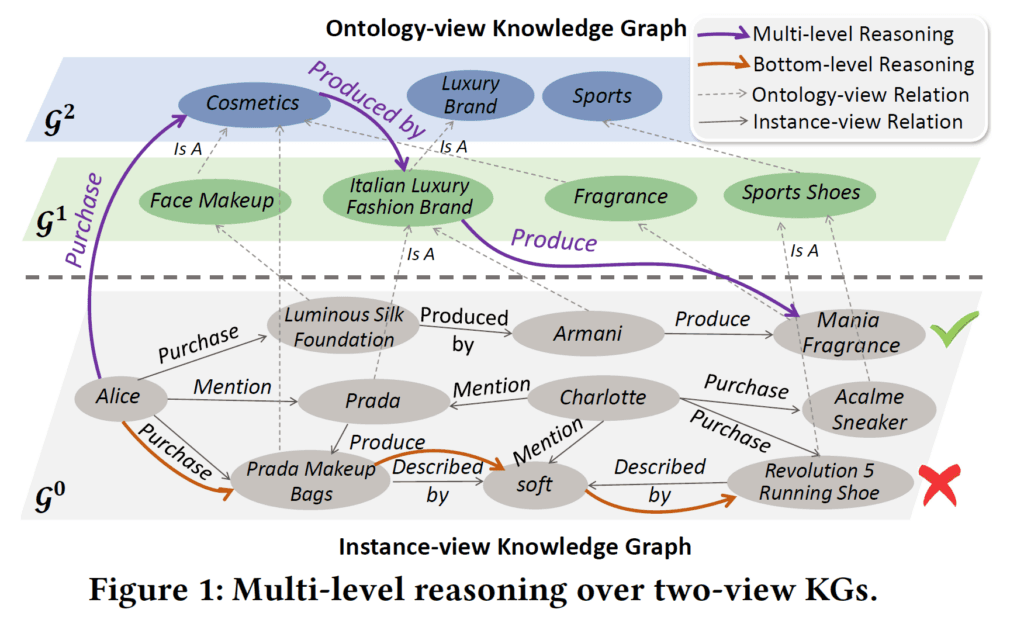
The paper introduces a multi-view graph contrastive learning framework that enhances user representations through knowledge graph distillation. The network aggregates neighborhood entity information to construct informative item representations. A key innovation is the multi-level self-supervised contrastive learning module that performs comparisons across three perspectives: Inter-Level, Intra-Level, and Interaction-Level [According to the source].
This design improves the model's ability to generalize across intra-class samples while increasing discrimination between inter-class samples, enabling more effective multi-dimensional feature modeling.
Experimental Results
The framework consistently outperforms existing state-of-the-art methods on three public datasets. Ablation studies further verify the effectiveness of each module in the proposed model. The paper does not disclose specific dataset names or performance deltas beyond stating that the framework "consistently outperforms" baselines.
Unique Take
The paper's strength lies not in any single architectural breakthrough but in combining multi-level contrastive learning with KG distillation to handle real-world noise. This contrasts with prior GNN recommendation work that often assumes clean graphs and dense labels. The three-level contrastive design (Inter, Intra, Interaction) provides a more granular self-supervision signal than existing two-level approaches.
Limitations
The paper omits training compute, model size, and inference latency. Without these metrics, practitioners cannot assess deployment feasibility. The source also does not specify which datasets were used or provide exact performance numbers.
What to watch
Watch for the authors to release code and dataset splits. Without those, reproducibility is limited. Also monitor whether the three-level contrastive design gets adopted in production recommendation systems within 6 months.