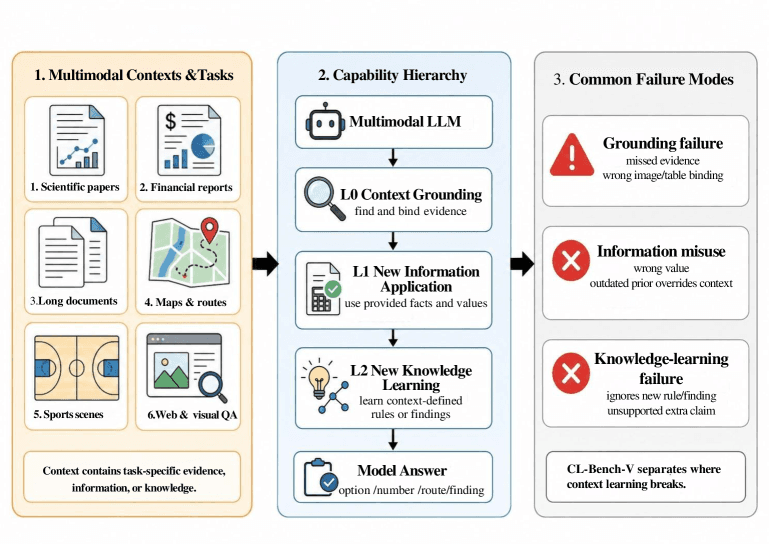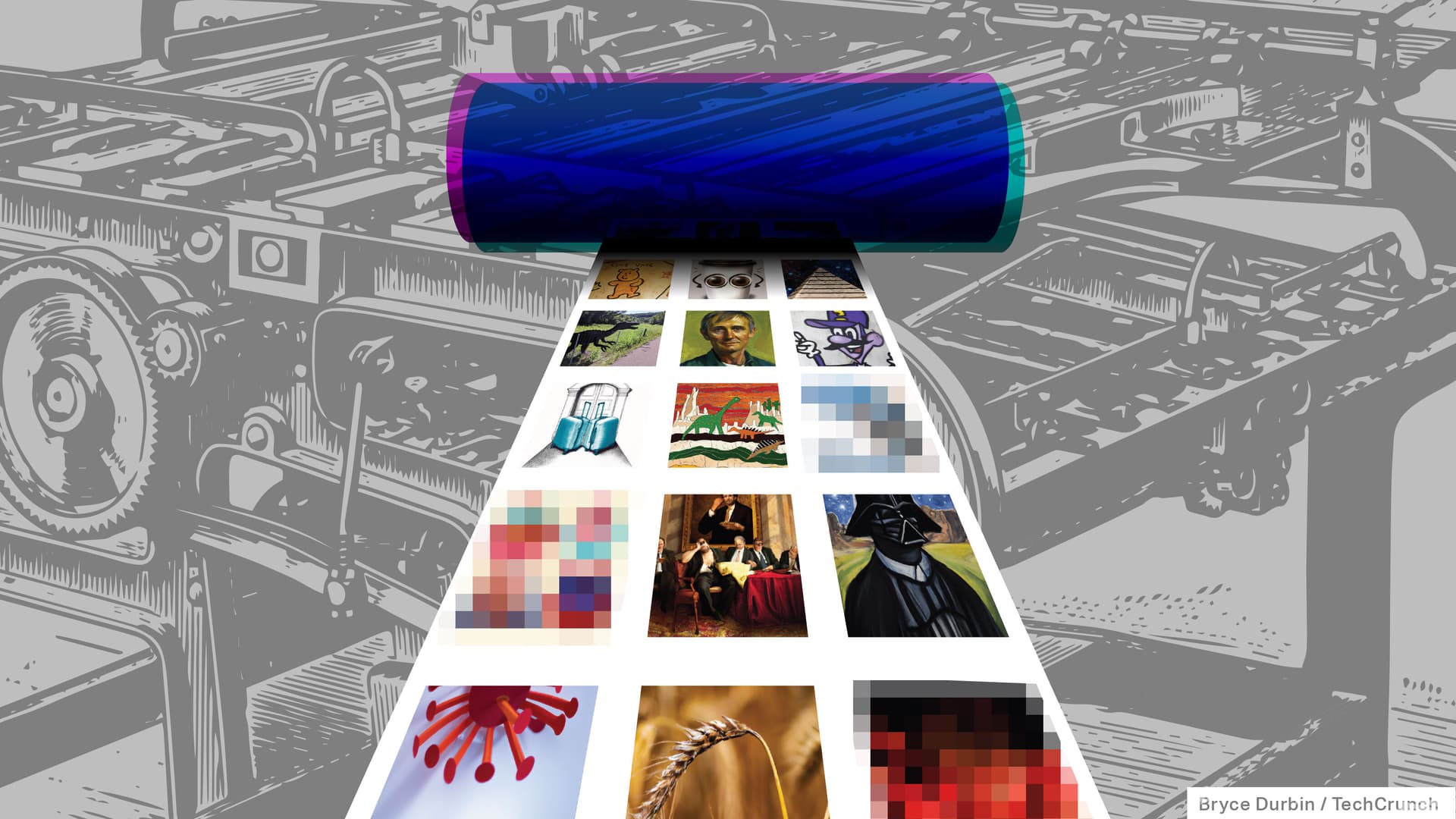
Text-to-image diffusion models like Stable Diffusion, DALL-E, and Midjourney have revolutionized creative AI, but they suffer from a critical flaw: they often memorize and regurgitate their training data rather than creating truly novel content. This memorization problem represents a fundamental failure to generalize beyond the training set and raises serious concerns about copyright infringement, privacy violations, and creative stagnation in AI-generated art.
Current approaches to mitigate memorization typically come with significant trade-offs—sacrificing either image quality or prompt alignment to reduce copying behavior. Some methods degrade the model's performance, while others require extensive retraining or architectural modifications that limit practical deployment.
The RADS Solution: Reachability-Aware Diffusion Steering
A team of researchers has proposed a groundbreaking solution called Reachability-Aware Diffusion Steering (RADS), detailed in a new paper on arXiv. Unlike previous approaches, RADS operates entirely at inference time without modifying the underlying diffusion model architecture, making it a plug-and-play solution compatible with existing systems.
The core innovation of RADS lies in its application of reachability analysis—a concept from control theory and dynamical systems—to the diffusion denoising process. The framework models the diffusion process as a dynamical system and calculates the "backward reachable tube," which represents the set of intermediate states that inevitably evolve into memorized samples.
"By identifying these problematic trajectories early in the generation process, we can intervene before the model commits to producing memorized content," explains the research team in their paper. "This allows us to prevent memorization without compromising the model's core generative capabilities."
How RADS Works: Constrained Reinforcement Learning
RADS formulates the memorization mitigation problem as a constrained reinforcement learning (RL) challenge. A policy learns to make minimal perturbations to the caption embedding space—the numerical representation of text prompts—steering the diffusion trajectory away from memorization-prone paths while maintaining fidelity to the original prompt.
The constrained RL approach ensures that interventions are subtle and targeted. Rather than applying blanket restrictions that degrade overall performance, RADS learns to make surgical adjustments only when necessary to avoid memorization. This precision allows the system to maintain high-quality outputs while effectively preventing copying behavior.
Empirical Results and Performance
Comprehensive evaluations demonstrate RADS's superiority over existing memorization mitigation techniques. The framework achieves a superior Pareto frontier across three critical metrics:
- Generation Diversity (SSCD): Measures how different generated images are from training data
- Image Quality (FID): Assesses the visual quality and realism of generated images
- Prompt Alignment (CLIP): Evaluates how well generated images match their text descriptions
Compared to state-of-the-art baselines, RADS provides more robust memorization prevention while maintaining better overall performance. The researchers note that their approach "offers a practical solution for safe generation" that can be deployed immediately with existing diffusion models.
Implications for AI Development and Deployment
The development of RADS addresses several pressing concerns in the AI community:
Copyright and Legal Compliance: By preventing exact reproductions of training data, RADS helps AI companies avoid potential copyright infringement claims and comply with emerging AI regulations.
Privacy Protection: For models trained on potentially sensitive data, RADS prevents the accidental generation of private or confidential information memorized during training.
Creative Innovation: By forcing models to generalize rather than copy, RADS encourages more diverse and innovative outputs, potentially leading to more creative AI systems.
Practical Deployment: The plug-and-play nature of RADS means it can be integrated into existing systems without costly retraining or architectural changes, making it immediately applicable to current text-to-image platforms.
Future Directions and Applications
The researchers suggest that the reachability analysis approach could extend beyond text-to-image models to other generative AI systems prone to memorization, including large language models, audio generators, and video synthesis systems. The constrained RL framework might also be adapted to address other safety concerns in generative AI, such as preventing harmful content generation or maintaining ethical boundaries.
As AI systems become increasingly capable of generating high-quality content, solutions like RADS will be essential for ensuring these technologies develop responsibly and ethically. The framework represents a significant step toward creating AI systems that can be both creative and trustworthy—generating novel content without simply recycling their training data.
The research team has made their project website available at https://s-karnik.github.io/rads-memorization-project-page/, providing additional details, visual examples, and implementation resources for the AI community.
Source: "Steering Away from Memorization: Reachability-Constrained Reinforcement Learning for Text-to-Image Diffusion" by researchers on arXiv (February 24, 2026)