Key Takeaways
- Researchers have conducted the first unified benchmark of 11 methods that generate 'what-if' explanations for recommender AI.
- The study reveals significant inconsistencies in their effectiveness and scalability, challenging prior assumptions about their practical utility.
What Happened
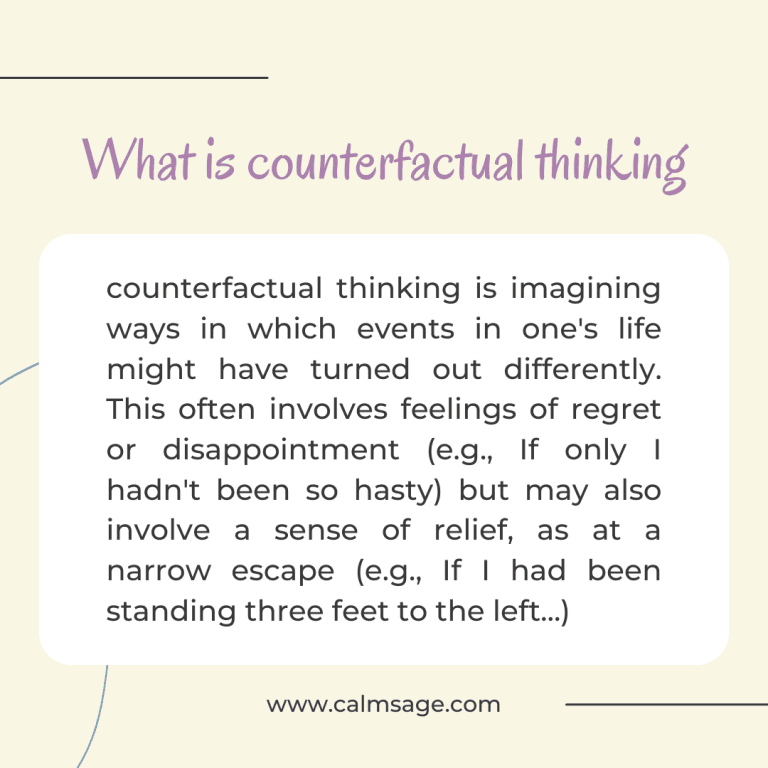
A new, comprehensive reproducibility study published on arXiv systematically evaluates the state of the art in generating counterfactual explanations (CEs) for recommender systems. For AI leaders, CEs are a critical interpretability tool: they answer the question, "What minimal change in a user's history would have led to a different recommendation?" For example, "If you had not bought that handbag, we would have recommended this jacket instead."
The core problem the research addresses is a lack of standardized evaluation. As noted in the paper, prior CE methods have been assessed using "heterogeneous protocols, using different datasets, recommenders, metrics, and even explanation formats," making it impossible to know which approach is truly best for a given business scenario.
To solve this, the authors built a unified benchmarking framework. They re-implemented and tested eleven state-of-the-art CE methods, ranging from model-agnostic techniques like LIME-RS and SHAP to specialized graph-based explainers designed for Graph Neural Networks (GNNs). Their framework evaluates each method along three key dimensions:
- Explanation Format: Implicit (e.g., "your preference for category X changed") vs. Explicit (e.g., "remove this specific item from your history").
- Evaluation Level: Item-level (explaining a single recommended item) vs. List-level (explaining a full top-K recommendation list).
- Perturbation Scope: Modifying a user's interaction vector vs. modifying the entire user-item interaction graph.
The benchmark uses three real-world datasets and six different recommender models, measuring effectiveness (does the explanation correctly flip the recommendation?), sparsity (how minimal is the suggested change?), and computational complexity.
Technical Details & Key Findings
The study's results refine—and in some cases, directly challenge—previous conclusions about CE robustness. Key technical takeaways include:
- The Trade-off is Not Universal: The assumed trade-off between explanation effectiveness and sparsity is highly dependent on the specific method and evaluation setting, particularly for explicit-format explanations. There is no single "best" method across all conditions.
- Item vs. List Consistency is a Silver Lining: Explainer performance was largely consistent between explaining a single item (Top-1) and a full recommendation list (Top-K). This suggests methods that work well for one can often be extended, simplifying practical deployment.
- Scalability is a Major Hurdle for Graph-Based Explainers: Several advanced graph-based explainers exhibited "notable scalability limitations on large recommender graphs." For luxury retailers with massive user-item graphs, this is a critical practical constraint, potentially ruling out these more sophisticated techniques for real-time explanation generation.
- Reproducibility Crisis Highlighted: The study underscores a reproducibility gap in AI explainability research for recommender systems. Performance claims from individual papers did not always hold up under standardized, cross-method comparison.
Retail & Luxury Implications
For technical leaders at luxury houses and retailers, this research is a vital reality check. The push for Explainable AI (XAI) is not just academic; it's driven by regulatory pressure (e.g., EU AI Act), internal model auditing needs, and the desire to build deeper customer trust.

- Informing Tool Selection: Before investing engineering resources to integrate a CE system, teams must now reference this benchmark. The findings caution against adopting the latest graph-based explainer for a large-scale production system without rigorous stress-testing for latency. A simpler, vector-based method like a properly tuned PRINCE or ACCENT might be more practical.
- Defining the "Right" Explanation: The framework forces a business decision: do you need implicit explanations for a marketing team ("this customer's affinity for leather goods decreased") or explicit explanations for a customer-facing feature ("remove this dress from your saved items to see new suggestions")? The study shows the optimal technical solution differs for each.
- Building Trust with Precision: A flawed or nonsensical counterfactual explanation can erode trust faster than no explanation at all. This benchmark provides the metrics—effectiveness and sparsity—to quantitatively vet an explainer's output before it reaches a customer or a merchant.
- Beyond the "Why" to the "What If": While most XAI focuses on explaining why an item was recommended, CEs empower a more interactive and editorial relationship with the algorithm. For personal stylists or concierge services using AI tools, CEs could help answer, "What one thing could this client change to discover a more suitable product?"
The path to production requires acknowledging the maturity gap. This research is a benchmarking study, not a deployment guide. The computational complexity findings are a red flag for real-time use. A likely near-term application is in offline model auditing and analyst tools, where latency is less critical than accuracy, helping data scientists debug recommendation models and curate better training data.