What Happened
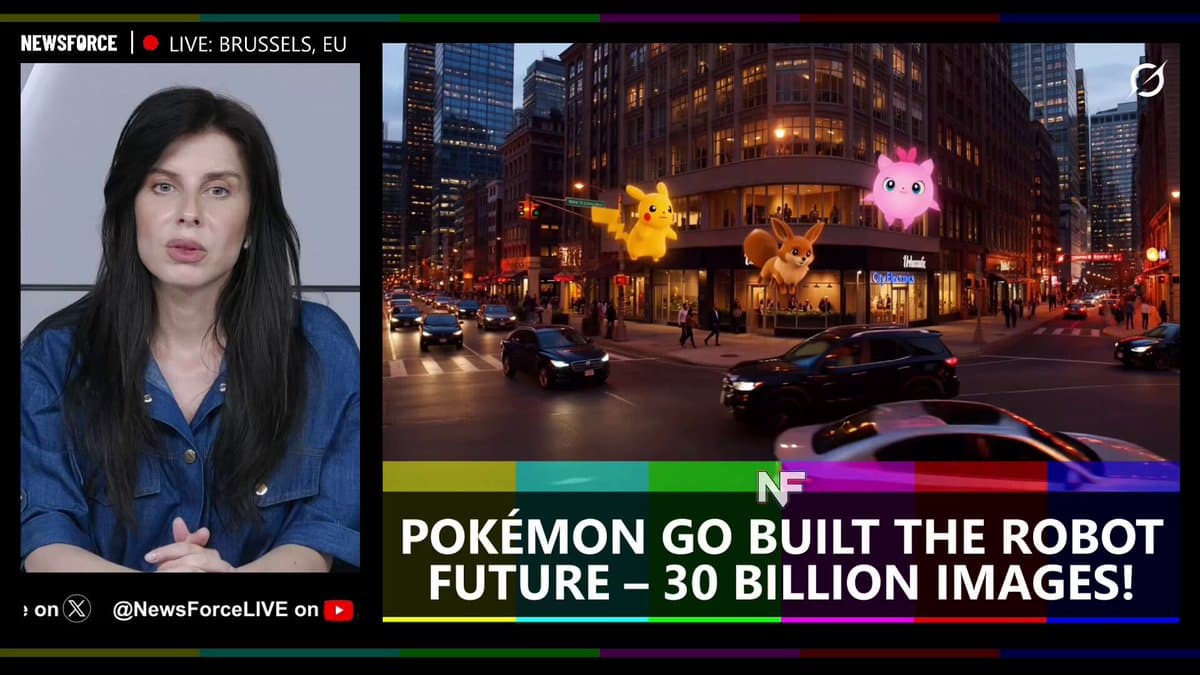
A tweet from AI researcher Rohan Paul highlights a significant, under-the-radar transfer of technology from consumer gaming to industrial robotics. According to the source, the 143 million players of Niantic's augmented reality game Pokémon GO have, since 2016, been unwittingly contributing to the creation of the "largest robotics vision dataset on Earth."
The dataset, comprising an estimated 30 billion geo-tagged images and corresponding 3D world models, was captured as players used their smartphone cameras to locate and catch virtual Pokémon in the real world. This massive, crowd-sourced visual repository forms the foundation of Niantic's Lightship Visual Positioning System (VPS).
The key development is that this technology is no longer just for finding Pikachu. The source links to a report indicating that Niantic's VPS is now being deployed to guide commercial delivery robots, providing them with "centimeter precision" for navigation in complex urban and suburban environments.
Context
Niantic, originally a Google spin-off, has long leveraged its AR platform to build a detailed, shared 3D map of the world. The Lightship VPS is the enterprise-facing product of that effort. It allows devices—from smartphones to robots—to understand their precise location and orientation by comparing a live camera view against Niantic's constantly updated 3D map, without relying solely on error-prone GPS signals.
The transition from gaming to logistics represents a major pivot for the underlying technology. While the public-facing use case was entertainment, the infrastructure being built had clear, scalable applications in autonomy and robotics, areas that require robust, real-time environmental understanding.
The report suggests that delivery robotics companies are integrating Lightship VPS to solve the "last-inch" problem: accurately aligning a robot with a doorstep or a specific package drop-off location, a task where GPS can be off by several meters.