Early glimpses of NVIDIA's GTC 2025 conference have surfaced through social media leaks, generating significant excitement within the AI community. While NVIDIA has not officially released details, the preview suggests the company is preparing to unveil substantial advancements across its AI ecosystem. These developments could have far-reaching implications for everything from data center operations to edge computing and robotics.
The Context: NVIDIA's Dominance in AI Acceleration
NVIDIA's Graphics Technology Conference (GTC) has evolved from a graphics-focused event to arguably the most important annual gathering in the AI hardware and software space. The company's GPUs have become the de facto standard for training large language models and other AI systems, giving NVIDIA unprecedented influence over the direction of AI development. Each GTC typically introduces new hardware architectures, software frameworks, and partnerships that shape the industry for years to come.
The 2025 conference arrives at a critical juncture as AI models grow increasingly complex and computationally demanding. Competitors like AMD, Intel, and various AI chip startups are challenging NVIDIA's dominance, making each successive product launch crucial for maintaining market leadership.
Leaked Highlights: What We're Seeing
While the original source provides limited specific details, the enthusiastic reaction from industry observers suggests several likely focus areas based on NVIDIA's recent trajectory and industry trends:
Next-Generation AI Processors
Industry analysts anticipate NVIDIA will unveil successors to their current Blackwell architecture, potentially introducing significant improvements in:
- Energy efficiency for sustainable AI scaling
- Memory bandwidth and capacity for larger models
- Specialized tensor cores for mixed-precision computing
- Interconnect technology for massive-scale AI clusters
AI Software Ecosystem Expansion
NVIDIA has increasingly emphasized software as a competitive differentiator. GTC 2025 will likely showcase:
- Enhanced CUDA capabilities for more efficient AI development
- New libraries and frameworks for specific AI applications
- Improved tools for AI deployment and management
- Advancements in NVIDIA's AI Enterprise software suite
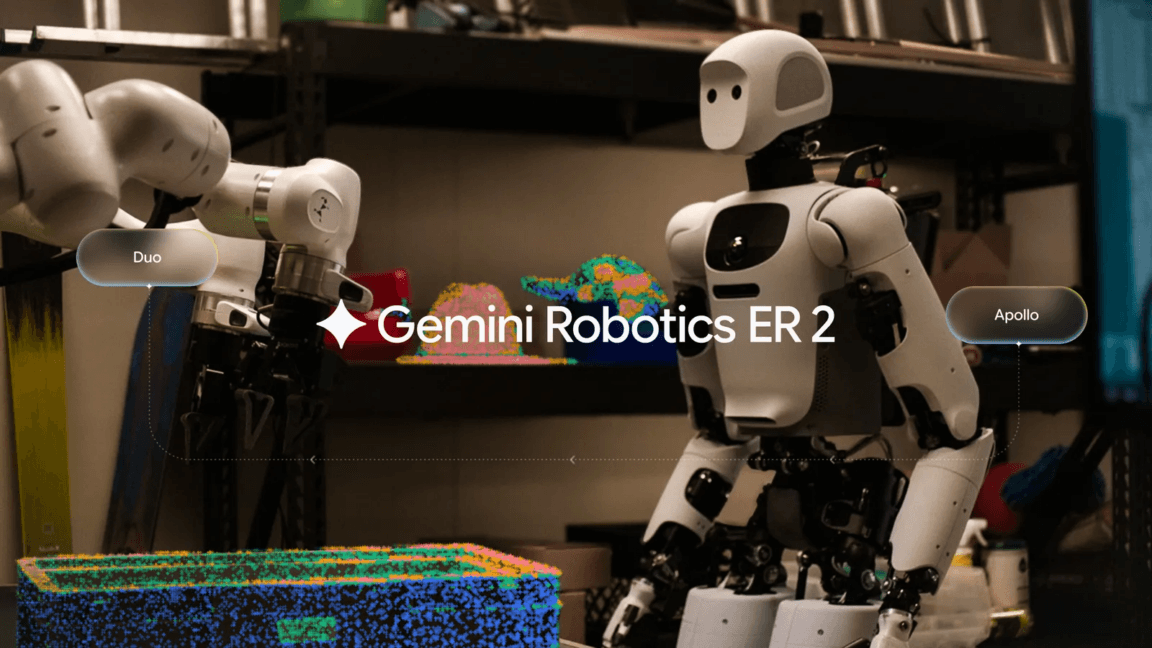
Robotics and Edge AI Integration
Recent NVIDIA initiatives suggest increased focus on bringing AI capabilities to physical systems:
- Improved platforms for autonomous machines and robotics
- Edge computing solutions with lower latency and power requirements
- Simulation environments for training AI in virtual worlds
- Integration between AI models and sensor systems
Industry Implications
These developments would arrive as organizations worldwide are grappling with the practical challenges of implementing AI at scale. More efficient hardware could lower the barrier to entry for sophisticated AI applications, while improved software tools might accelerate development cycles and reduce implementation costs.
The timing is particularly significant given the growing emphasis on AI sovereignty and regional AI development. More accessible and powerful AI infrastructure could enable smaller organizations and nations to develop competitive AI capabilities without relying exclusively on hyperscalers.
Competitive Landscape Considerations
NVIDIA's announcements will likely trigger responses across the semiconductor and AI industries. AMD has been gaining traction with its Instinct accelerators, while Intel continues to develop its Gaudi AI chips. Several well-funded startups are also targeting specific segments of the AI acceleration market.
Additionally, cloud providers like Amazon, Google, and Microsoft are developing their own AI chips, creating a complex competitive environment where NVIDIA must balance being a supplier to these companies while competing with their in-house solutions.
Looking Ahead to Official Announcements
While leaks generate excitement, the full picture will only emerge during NVIDIA's official presentations. The company typically uses GTC to not only announce products but also to articulate its vision for the future of AI computing. This vision has increasingly emphasized full-stack solutions rather than just hardware components.
As AI models continue to evolve toward multimodal systems, real-time applications, and increasingly complex reasoning capabilities, the underlying hardware and software infrastructure must advance accordingly. GTC 2025 will likely reveal how NVIDIA plans to support these next-generation AI requirements.
Source: Twitter leak from @kimmonismus highlighting GTC 2025 preview materials