What Happened: A New Benchmark in Agentic Retrieval
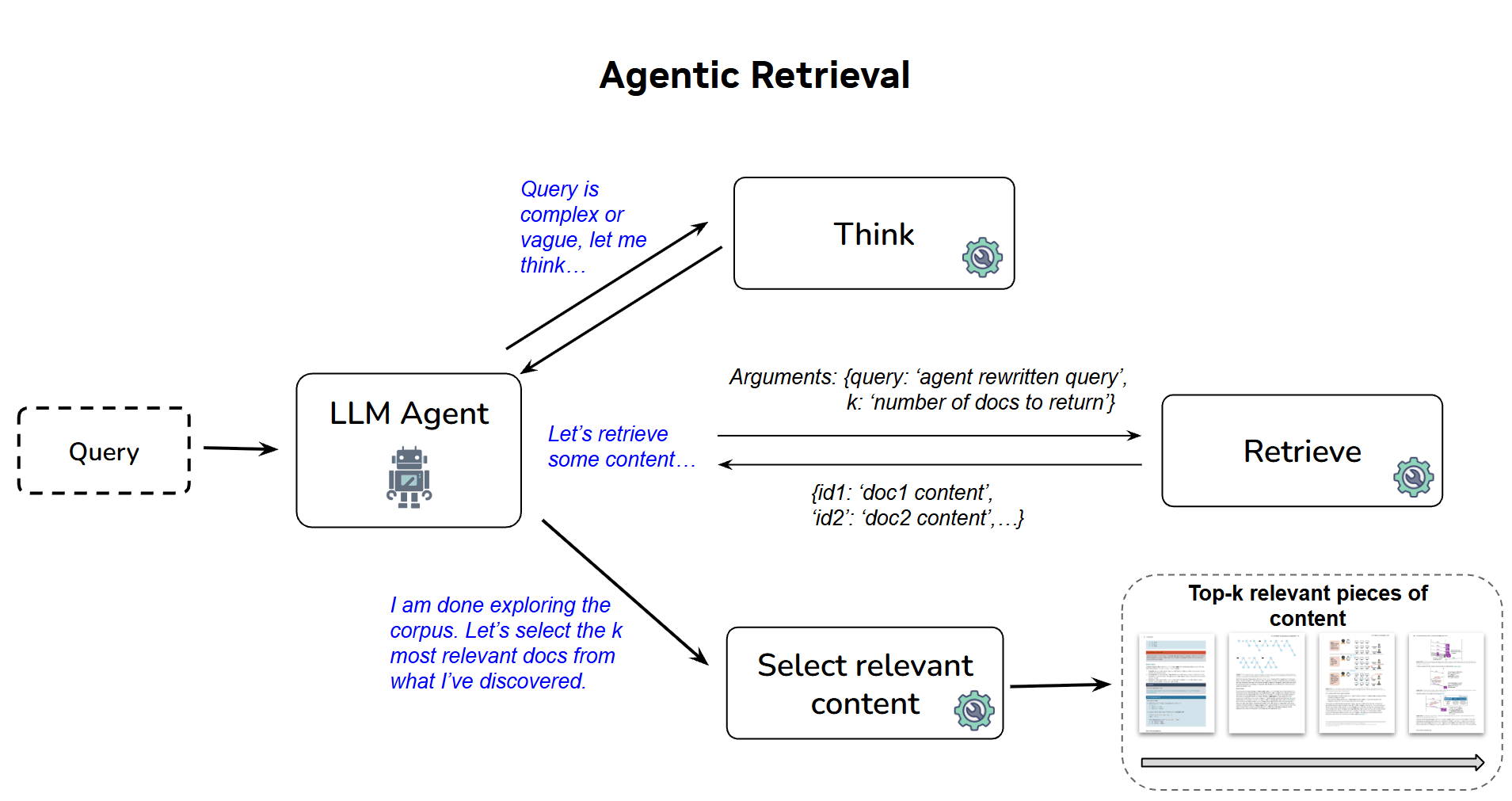
NVIDIA has announced a significant advancement in AI-powered information retrieval with its NeMo Retriever team's development of a new agentic retrieval pipeline. This system has achieved the #1 position on the ViDoRe v3 pipeline leaderboard and secured the #2 spot on the reasoning-intensive BRIGHT leaderboard using the same underlying architecture.
The core innovation lies in moving beyond traditional semantic similarity-based dense retrieval, which has been the industry standard for years. While effective for straightforward queries, semantic similarity approaches struggle with complex, real-world enterprise scenarios that require understanding visual layouts, logical reasoning, and multi-domain knowledge.
Technical Details: How the Agentic Pipeline Works
The NVIDIA team prioritized generalizability over narrow specialization. Instead of building systems optimized for specific datasets with custom heuristics, they created a pipeline that dynamically adapts its search and reasoning strategy based on the data it encounters.
Key Architectural Principles:
Agentic Decision-Making: The pipeline employs AI agents that can make contextual decisions about how to approach retrieval tasks, choosing different strategies based on the nature of the query and available data.
Multi-Modal Understanding: While the source doesn't specify all modalities, the reference to "parsing complex visual layouts" suggests the system can handle both textual and visual information, crucial for documents with mixed content.
Reasoning Capabilities: The strong performance on the BRIGHT benchmark—known for its reasoning demands—indicates the pipeline incorporates logical inference beyond simple pattern matching.
Unified Architecture: The same pipeline architecture achieves top results across vastly different benchmarks (ViDoRe v3 and BRIGHT), demonstrating true generalization rather than benchmark-specific optimization.
The Limitations of Semantic Similarity
Traditional retrieval systems encode documents and queries into vector embeddings, then find matches based on cosine similarity in this high-dimensional space. This works well when users ask questions using similar language to the target documents, but fails when:

- Queries require inference or logical deduction
- Documents contain structured information (tables, charts, forms)
- Information is distributed across multiple documents that must be synthesized
- The relevant answer isn't expressed in semantically similar language
NVIDIA's agentic approach addresses these limitations by enabling the system to understand not just what the words mean, but how they relate to each other logically and contextually.
Retail & Luxury Implications
While the announcement doesn't specifically mention retail applications, the technology has significant potential for luxury and retail enterprises facing complex information retrieval challenges.
Potential Use Cases:
Unified Customer Intelligence: Luxury brands maintain data across CRM systems, purchase histories, clienteling notes, social media interactions, and visual mood boards. An agentic retrieval system could connect these disparate sources to answer complex questions like: "Which clients who purchased handbags in the last quarter have expressed interest in our upcoming resort collection, and what visual themes resonate with them?"
Supply Chain & Sustainability Queries: Retailers need to trace product journeys from raw materials to finished goods. A query like "Show all suppliers for our cashmere products manufactured in facilities with specific sustainability certifications" requires reasoning across procurement databases, certification records, and production logs.
Visual Product Discovery: Customers often search using images or describe aesthetic preferences rather than product names. An agentic system could understand that a query about "elegant evening wear with art deco influences" should retrieve items matching that visual style, not just those with "art deco" in the description.
Regulatory Compliance: Luxury brands must comply with regulations around materials (like CITES for exotic materials), labeling requirements, and international trade rules. Finding relevant regulations requires understanding legal language and applying it to specific product scenarios.
Knowledge Management for Client Advisors: New sales associates could ask complex questions like "What gift recommendations were successful for clients with similar profiles to this one during the holiday season?" pulling from past transactions, client notes, and product catalogs.
Implementation Considerations:
- Data Integration: The system's effectiveness depends on connecting siloed data sources—product catalogs, CRM, inventory systems, supplier databases.
- Domain Adaptation: While generalizable, the pipeline would need fine-tuning on luxury-specific terminology, product attributes, and brand language.
- Privacy & Security: Client data in luxury retail is highly sensitive; any retrieval system must maintain strict access controls and data governance.
- Performance Requirements: Real-time retrieval for client-facing applications demands low latency, especially for in-store use cases.
The Competitive Landscape
NVIDIA's achievement positions them strongly in the enterprise retrieval market, competing with:
- Vector database providers (Pinecone, Weaviate, Qdrant) offering semantic search capabilities
- LLM-powered search systems using RAG (Retrieval-Augmented Generation)
- Specialized retail AI platforms with built-in search functionality
The differentiation lies in NVIDIA's focus on generalizability—a single system that adapts to different domains without architectural changes, reducing the need for multiple specialized retrieval solutions.
Looking Ahead
The ViDoRe v3 and BRIGHT leaderboard results demonstrate technical capability, but real-world enterprise deployment will be the true test. Luxury retailers considering this technology should:
- Identify high-value, complex retrieval use cases that current systems cannot handle
- Assess data readiness—are relevant sources accessible and structured?
- Start with pilot projects in controlled environments before client-facing deployment
- Evaluate total cost including integration, customization, and ongoing maintenance
As NVIDIA continues to develop its NeMo ecosystem (recently launching the Nemotron 3 Super model for agentic AI), we can expect tighter integration between retrieval capabilities and generative AI for comprehensive question-answering systems.
The agentic retrieval approach represents an evolution from finding documents that look similar to understanding what information actually solves a problem—a distinction that matters profoundly for enterprises where decisions depend on synthesizing information across domains.