Nvidia Corporation, the world's most valuable company, announced on Wednesday a $2 billion strategic investment in Amsterdam-based AI cloud company Nebius Group NV. This move represents the latest and most significant expansion of Nvidia's growing portfolio of investments in artificial intelligence infrastructure companies—many of which are also its customers.
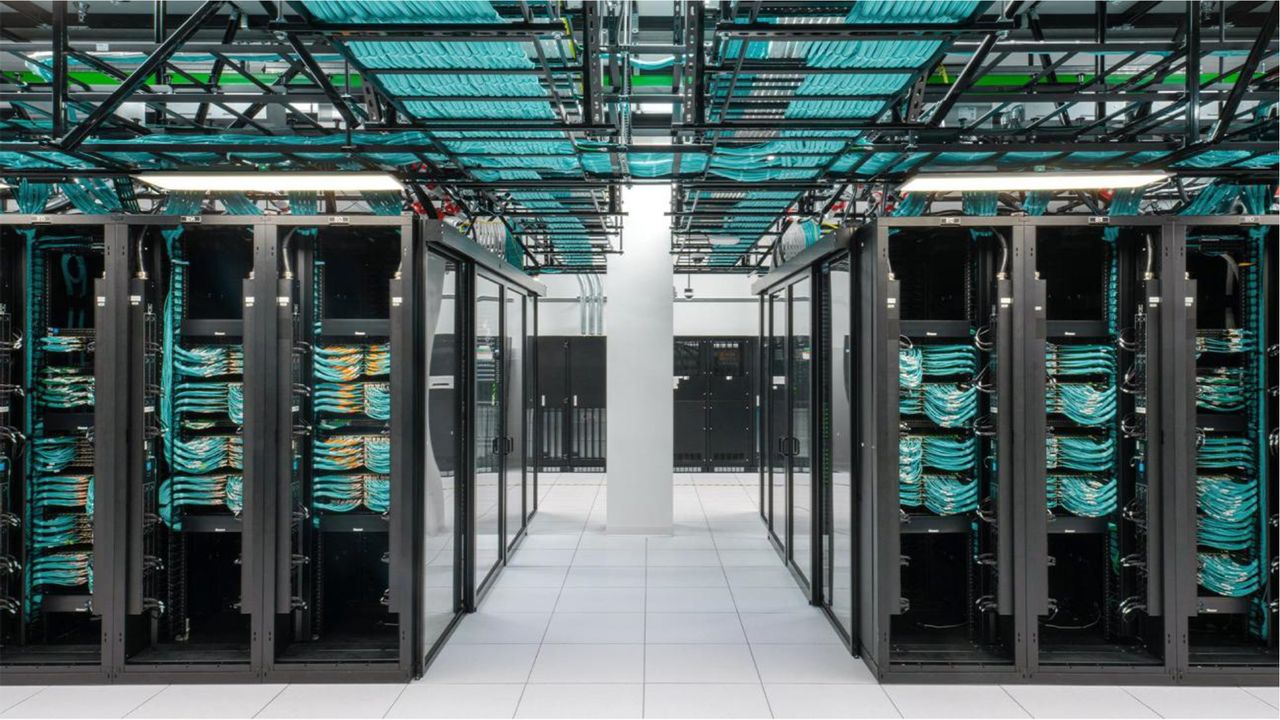
According to the announcement, Nebius will deploy more than 5 gigawatts of data center capacity by the end of 2030 through this partnership. To put this staggering figure in perspective, 5 gigawatts represents enough power to meet the needs of more than 4 million U.S. households. The investment sent Nebius's U.S.-listed shares soaring over 10% in premarket trading following the announcement.
The Rise of the "Neocloud" Specialists
Nebius belongs to an emerging category of cloud providers known as "neoclouds"—companies that differentiate themselves from traditional hyperscalers by focusing specifically on AI-optimized infrastructure. Unlike broader cloud platforms like AWS, Google Cloud, or Microsoft Azure that serve diverse industries, neoclouds primarily cater to technology companies requiring specialized capacity for AI workloads.
This specialization has positioned Nebius and similar companies like Coreweave for high-profile deals with major tech firms. Nebius has secured substantial contracts including a $17 billion deal with Microsoft and a $3 billion agreement with Meta Platforms. These partnerships demonstrate the growing demand for dedicated AI infrastructure as companies race to deploy increasingly sophisticated AI models.
Nvidia CEO Jensen Huang emphasized the strategic nature of the partnership in a statement: "Nebius is building an AI cloud designed for the agentic era. This partnership will scale the cloud firm to meet the surging global demand for intelligence."
Nvidia's Expanding AI Ecosystem Strategy
The Nebius investment follows a pattern of strategic moves by Nvidia to solidify its position at the center of the AI revolution. Last year, the company agreed to deploy at least 10 gigawatts of its systems for OpenAI and announced a massive $30 billion investment in the startup. These investments create what some analysts describe as "circular deals"—arrangements where Nvidia invests in companies that then become significant customers for its chips and systems.
This strategy has raised questions about market concentration and potential conflicts of interest, but it has also proven remarkably effective at accelerating AI infrastructure development. By providing both capital and technology to specialized infrastructure providers, Nvidia ensures its hardware remains at the foundation of the AI ecosystem while simultaneously creating new markets for its products.
The Infrastructure Race Accelerates
The timing of this announcement coincides with several significant developments in Nvidia's broader strategy. Just days before the Nebius investment was revealed, CEO Jensen Huang published what he calls the "5-layer cake" framework—a conceptual model that redefines AI as industrial infrastructure rather than merely software or algorithms. This framework positions compute infrastructure as the foundational layer upon which the entire AI economy is built.
Recent weeks have also seen Nvidia announce a gigawatt-scale strategic partnership with Thinking Machines Lab and reveal plans to deploy next-generation NVIDIA Vera Rubin systems early next year. The company is reportedly developing a new hybrid AI chip combining Nvidia GPU technology with Groq hardware innovations, further expanding its technological portfolio.
Implications for the Global AI Landscape
Nvidia's $2 billion investment in Nebius represents more than just another corporate partnership—it signals a fundamental shift in how AI infrastructure is being built and deployed. The scale of the planned deployment (5+ gigawatts by 2030) suggests that Nvidia and its partners are preparing for exponential growth in AI compute demand, potentially driven by advances toward artificial general intelligence (AGI) and increasingly sophisticated AI agents.
The investment also highlights the growing importance of specialized infrastructure providers in the AI ecosystem. As AI models become larger and more complex, generic cloud infrastructure may prove insufficient for the most demanding applications. Companies like Nebius that can offer optimized, high-performance environments for AI workloads are positioning themselves as critical enablers of the next phase of AI development.
For the broader technology industry, Nvidia's expanding web of investments creates both opportunities and challenges. On one hand, the accelerated development of AI infrastructure benefits all companies seeking to leverage artificial intelligence. On the other hand, Nvidia's growing influence over both the hardware and infrastructure layers of the AI stack raises questions about competition, innovation, and market dynamics in the rapidly evolving AI landscape.
Source: Bloomberg, Reuters