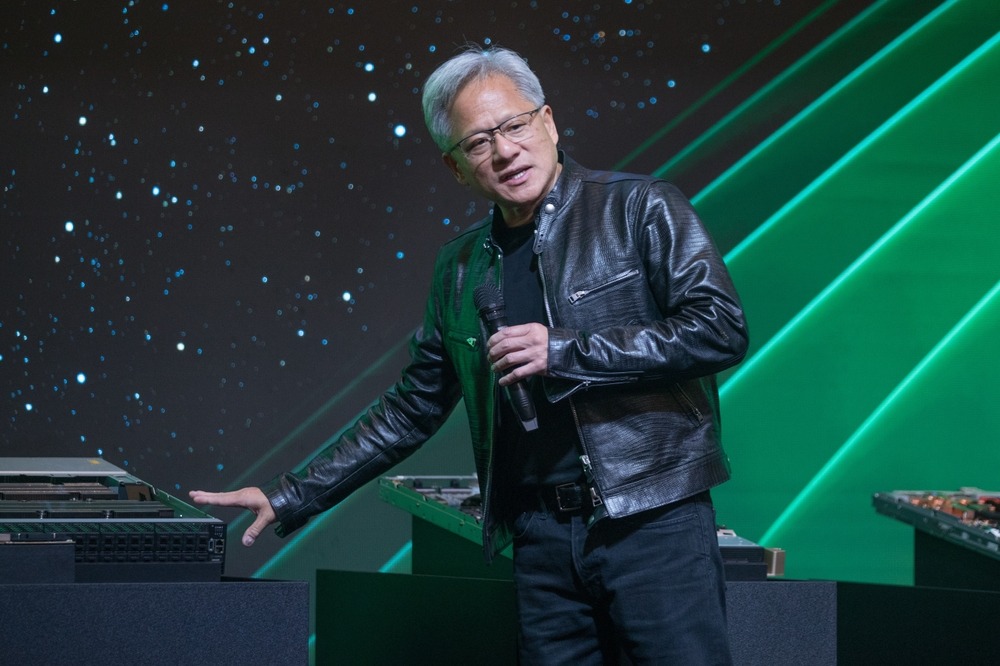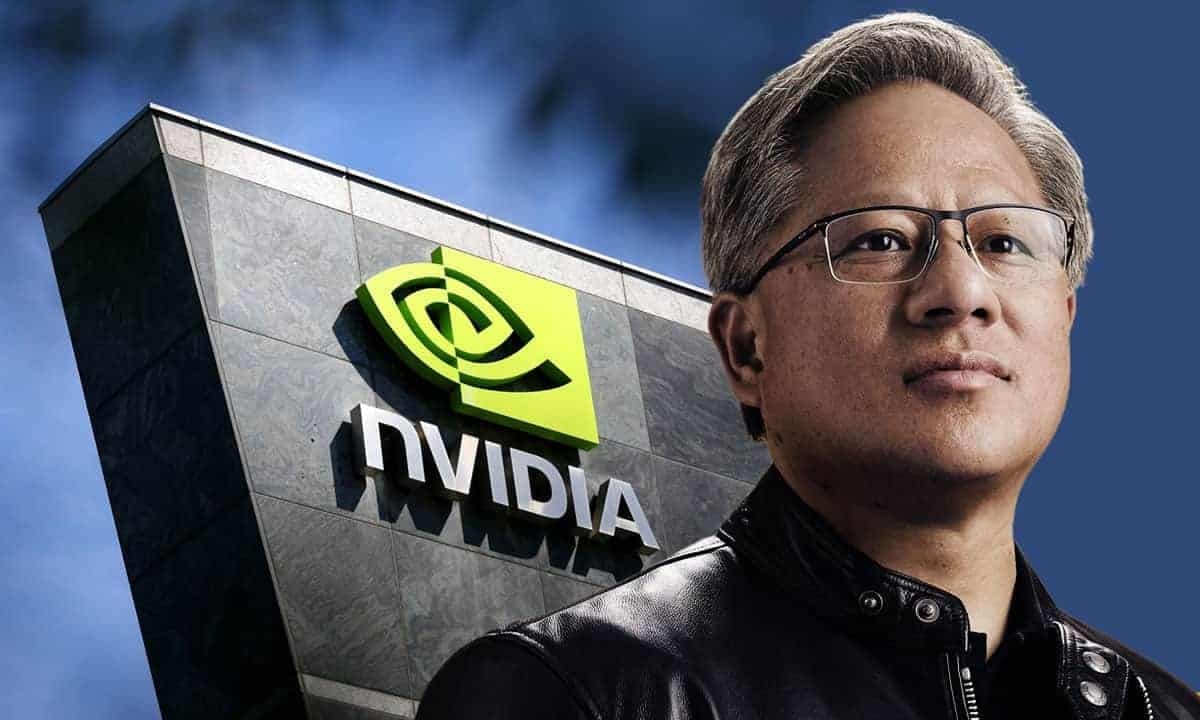
In a recent interview, Nvidia CEO Jensen Huang offered a succinct metaphor to define his company's strategic position in the AI era: "We’re not a car."
Key Takeaways
- Nvidia CEO Jensen Huang, in a new interview, argued that Nvidia is a 'computing company' and not a car—a product that can be easily interchanged.
- This distinction underscores Nvidia's strategy to be the indispensable platform for AI infrastructure.
What Happened
During the interview, Huang elaborated on the difference between a product and a platform. "We can interchange cars," he stated, implying that consumer products are replaceable commodities. "Computing is not like that. There’s a reason…" The quote, shared via a retweet by AI commentator Rohan Pandey (@rohanpaul_ai), cuts off, but the implication is clear: foundational computing platforms, especially in AI, create deep, structural dependencies that are not easily swapped out.
This framing directly counters a common market narrative that Nvidia's dominance in AI accelerators (GPUs) could be eroded by competitors like AMD, Intel, or custom silicon from hyperscalers (AWS, Google, Microsoft). Huang's argument is that Nvidia has evolved beyond selling discrete hardware components (the "car") to providing an entire vertically integrated stack—from silicon to systems to software like CUDA and AI enterprise suites—that constitutes a full-stack "computing company."
Context
This is not a new theme for Huang, but its repetition amid Nvidia's unprecedented financial and technological dominance is significant. For years, he has described Nvidia's moat as its "full-stack acceleration" and the vast ecosystem built around CUDA. The "car" analogy sharpens this point for a broader audience: you can switch from a Ford to a Toyota with minimal friction, but rebuilding an entire AI development and deployment pipeline on a new, incompatible architecture is a monumental task for enterprises.
The comment arrives as competition in the AI hardware space intensifies. In 2025, AMD launched its MI400 series accelerators, and Intel continued to push its Gaudi 3 platform. More critically, major cloud providers are deploying their own AI chips at scale, such as Google's TPU v5, AWS Trainium2, and Microsoft's Maia. Huang's statement is a public rebuttal to the idea that these alternatives are direct, drop-in replacements that threaten Nvidia's core business.
gentic.news Analysis

Huang's "not a car" declaration is a masterclass in strategic framing, aimed directly at investors, developers, and enterprise customers. It reinforces the narrative that Nvidia's value is systemic, not component-based. This aligns with our previous analysis of Nvidia's 2025 GTC conference, where the company's announcements focused heavily on sovereign AI, robotics platforms, and the Nvidia Inference Microservice (NIM) ecosystem—initiatives designed to embed Nvidia deeper into the operational fabric of global industries.
Historically, Huang has used similar platform analogies, often comparing Nvidia to the iPhone's App Store ecosystem rather than a mere chip supplier. The persistence of this message indicates its central role in Nvidia's long-term strategy to avoid the fate of other hardware giants that were commoditized. The key risk, which Huang's metaphor seeks to mitigate, is the potential for a software abstraction layer (like OpenAI's Triton or Mojo) to eventually decouple AI workloads from CUDA, effectively making the underlying hardware "interchangeable." Nvidia's counter-strategy is to make its full stack so performant and feature-rich that such abstraction comes at a significant performance and time-to-market cost.
Looking at the competitive landscape we've covered, from Cerebras's wafer-scale engines to Groq's LPU inference engines, each player attacks a specific segment. Huang's comment implicitly groups all these competitors into the "car" category—potentially superior in narrow, spec-sheet metrics—while positioning Nvidia as the "road system, traffic laws, and vehicle manufacturing plant" all in one. For AI practitioners, the takeaway is that the lock-in risk and switching cost of the Nvidia ecosystem remain extremely high, a fact that will continue to shape procurement and research directions for the foreseeable future.
Frequently Asked Questions
What did Jensen Huang mean by "We're not a car"?
He was using a metaphor to argue that Nvidia is not a simple, interchangeable product like a car. Instead, he positions it as a foundational computing platform. The ecosystem of software (CUDA, libraries, AI models), systems (DGX, HGX), and services built around Nvidia hardware creates significant switching costs, making it a deeply embedded infrastructure, not a commodity component.
Is Nvidia's hardware actually interchangeable with competitors like AMD?
At a purely hardware level, for specific workloads, yes—alternative accelerators exist. However, the practical interchangeability is low due to Nvidia's software moat. Millions of developers and nearly every major AI framework are optimized for CUDA. Porting a complex AI training pipeline from Nvidia GPUs to a different architecture requires significant engineering effort, making a full switch costly and time-consuming for most organizations.
How does this relate to cloud providers building their own AI chips?
Cloud providers like Google, AWS, and Microsoft are building their own AI silicon (TPUs, Trainium, Maia) primarily to control costs and optimize their internal infrastructure. Huang's statement acknowledges this competition but argues that Nvidia's platform offers a universal, vendor-agnostic standard that runs across all clouds and on-premises data centers. He is betting that enterprises will prefer a consistent platform over being locked into a single cloud provider's proprietary silicon stack.
What is the biggest threat to Nvidia's "not a car" strategy?
The largest threat is the emergence of a robust, high-performance software abstraction layer that successfully decouples AI workloads from proprietary hardware interfaces like CUDA. Initiatives like OpenAI's Triton, MLIR, and the growing PyTorch ecosystem show early steps in this direction. If such a layer becomes universally adopted and performs nearly as well as native CUDA, it could reduce switching costs and make the hardware market more commoditized, effectively turning GPUs back into "cars."