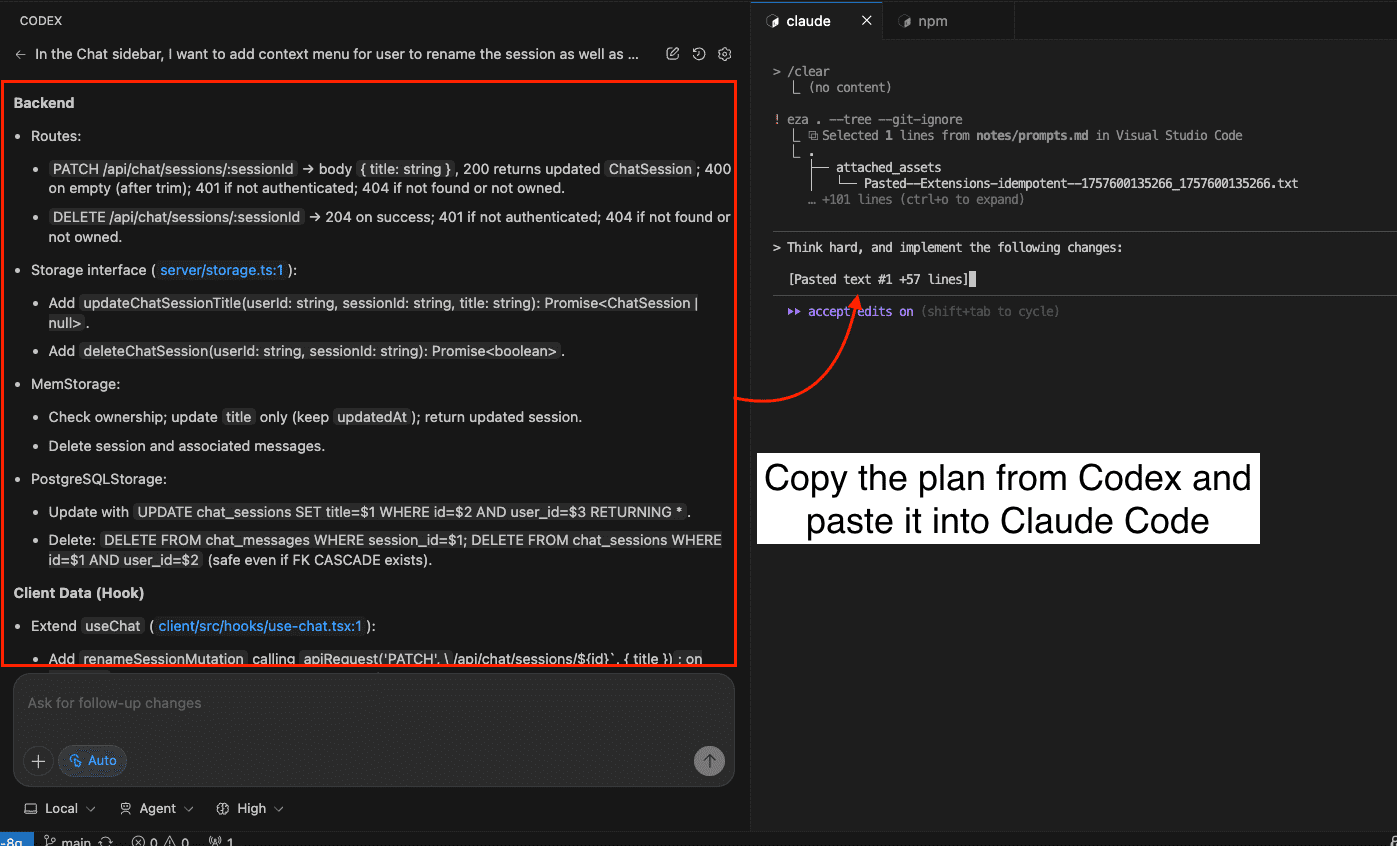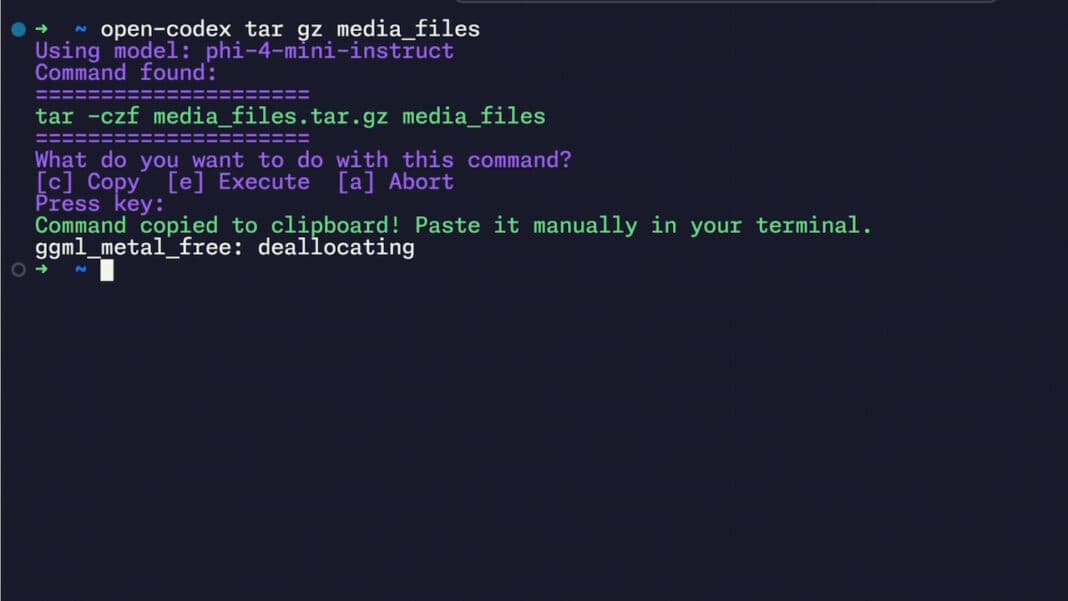
A new open-source command-line tool called Codex CLI is positioning itself as a free and more capable alternative to OpenAI's developer tools for code generation and assistance. According to its creators, the tool orchestrates 30 specialized AI agents and is designed to integrate with any development workflow.
The announcement, made via social media by developer Hasan Töre, frames the release as "another blow to OpenAI," suggesting a growing trend of open-source alternatives challenging proprietary AI coding assistants.
What the Tool Claims to Do
Based on the available information, Codex CLI appears to be a multi-agent system for software development. The key claimed features are:
- Multi-Agent Architecture: The core differentiator is the use of 30 distinct, specialized agents. In AI agent systems, this typically means different agents are fine-tuned or prompted for specific sub-tasks—like writing documentation, generating tests, refactoring code, debugging, or writing specific functions in different programming languages.
- Workflow Agnostic: The tool is described as working with "any workflow," implying it can be integrated into existing CI/CD pipelines, IDEs, or custom scripting environments via its CLI interface.
- Free and Open-Source: The project is explicitly free, contrasting with the API-based, pay-per-token model of OpenAI's Codex and the newer GPT-based models powering GitHub Copilot.
Technical Context & The Competitive Landscape
The release taps into two significant trends in the AI developer tools space:
- The Rise of Open-Source Coding Models: Models like StarCoder (BigCode), Code Llama (Meta), and DeepSeek-Coder have closed much of the performance gap with proprietary models like OpenAI's. These models provide a viable base for building free, self-hosted alternatives.
- The Shift to Multi-Agent Workflows: The concept of using multiple, specialized AI agents to break down complex tasks (like software development) is gaining traction. This approach, seen in research frameworks like AutoGen (Microsoft) and CrewAI, can potentially outperform a single, general-purpose model by applying domain-specific expertise at each step.
If Codex CLI successfully implements a robust multi-agent system on top of a capable open-source code model, it could offer a compelling alternative for developers and organizations concerned about cost, data privacy, or vendor lock-in.
Key Unknowns and Limitations
The initial announcement lacks critical technical details needed for a full assessment:
- Base Model: Which code generation model(s) power the agents? Is it Code Llama 70B, DeepSeek-Coder, or a custom fine-tune?
- Benchmarks: No performance metrics (e.g., pass@1 on HumanEval, MBPP) are provided to substantiate the claim of being "better."
- Orchestration Framework: How are the 30 agents coordinated? Is it a custom system or built on an existing framework?
- Availability: The source repository or installation instructions were not linked in the initial announcement.
Without these details, the claim remains a provocative assertion rather than a verified technical advancement.
gentic.news Analysis
This announcement is a direct symptom of the ongoing Open-Source vs. Proprietary AI war in the developer tools arena, a conflict we've tracked since the release of Meta's Code Llama in August 2023. The narrative of an "open-source blow" to OpenAI is becoming a common refrain, following similar positioning from projects built around Llama and Mistral models.
The specific angle of a multi-agent CLI tool is particularly noteworthy. It suggests developers are moving beyond simple chat-based code completion (Copilot) or single-model API calls (OpenAI's API) toward more complex, automated workflows. This aligns with the broader industry trend of AI agents moving from research to production, a shift we highlighted in our analysis of Devin by Cognition AI in March 2024. While Devin aimed to be a fully autonomous AI engineer, Codex CLI appears to be a toolset that augments a human developer's workflow through orchestrated specialization.
The success of Codex CLI will hinge entirely on execution. The concept is sound, but the devil is in the details: the latency of coordinating 30 agents, the reliability of the handoffs between them, and the actual quality of the generated code. If it delivers, it could accelerate the adoption of agentic workflows in everyday development. If it's clunky or unreliable, it will remain a niche experiment. This release puts pressure on both OpenAI and GitHub to demonstrate why their integrated, proprietary solutions are worth the cost compared to a modular, free, and potentially more powerful assemblage of open-source parts.
Frequently Asked Questions
What is Codex CLI?
Codex CLI is a newly announced, open-source command-line tool that uses a system of 30 specialized AI agents to assist with software development tasks. Its creators claim it is a free and better alternative to OpenAI's code generation tools.
How is Codex CLI different from GitHub Copilot?
GitHub Copilot is a proprietary, subscription-based service powered by OpenAI models that integrates directly into your IDE as an autocomplete-style assistant. Codex CLI is described as a free, open-source CLI tool that uses a multi-agent system, suggesting it may be designed for more complex, orchestrated workflows beyond inline completion.
Where can I find the Codex CLI repository?
The initial announcement did not include a direct link to the source code or documentation. Developers interested in trying it should monitor the social media account of the creator, Hasan Töre (@hasantoxr), for follow-up posts with installation details and repository links.
What does a "multi-agent" system mean for coding?
In this context, it means instead of one AI model trying to do everything, the system uses different, specialized AI "agents." One agent might be best at writing Python functions, another at debugging errors, another at writing documentation, and another at suggesting security fixes. The CLI tool would coordinate these agents to tackle a complex development task step-by-step.