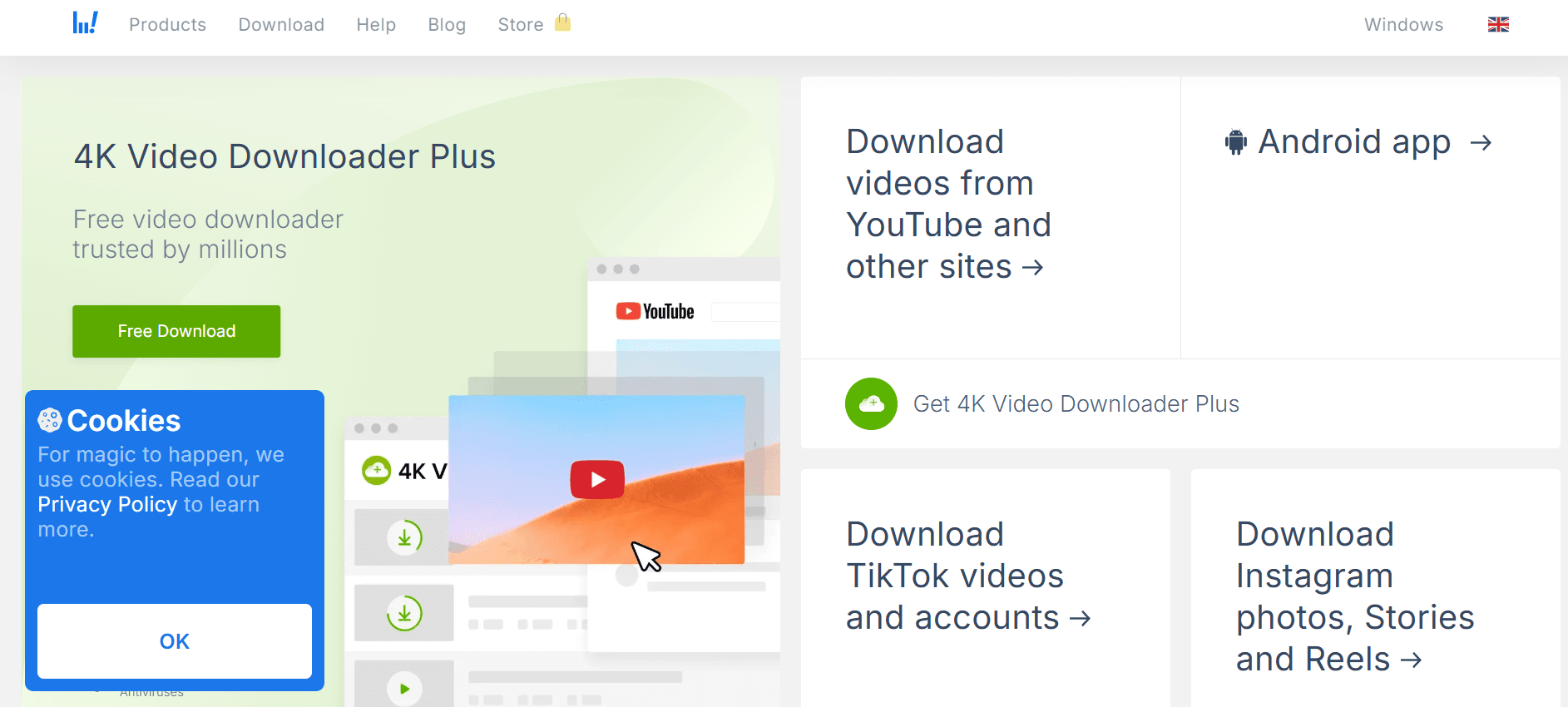
A developer has open-sourced a desktop application that enables users to download videos from over 1,000 websites, including major platforms like YouTube, TikTok, Instagram, and others. The announcement was made via a social media post, highlighting the tool's broad compatibility.
Key Takeaways
- A developer has open-sourced a desktop application capable of downloading videos from more than 1,000 platforms.
- This tool addresses a common user need but operates in a legally complex area of content scraping.
What Happened

The tool appears to be a standalone desktop application, released with its source code publicly available. Its primary function is to accept a video URL from a supported site and download the video file to a user's local machine. The post specifically names YouTube, TikTok, and Instagram, indicating support for some of the most popular and restrictive video-sharing platforms.
Context & Technical Implications
While the specific technical implementation is not detailed in the brief source, tools of this nature typically work by one of two methods:
- Direct Stream Parsing: Identifying and accessing the video stream files served by a website's content delivery network (CDN), often by mimicking a web browser or mobile app.
- API Utilization: Interacting with unofficial or reverse-engineered public APIs used by the platforms themselves.
Such applications sit at the intersection of user utility, platform terms of service, and copyright law. Most social media platforms explicitly prohibit the downloading of content without permission in their Terms of Service. However, tools that facilitate this remain in persistent demand for archival, offline viewing, content creation, and data collection purposes.
The "open-source" nature is significant. It allows for community auditing, modification, and distribution, but also makes the tool's methods transparent to the platforms it targets, which can lead to rapid countermeasures like API changes or more aggressive obfuscation of video streams.
gentic.news Analysis

The release of this tool is a single data point in a long-running cat-and-mouse game between content platforms and the developer community. Platforms invest heavily in DRM (Digital Rights Management) and obfuscation to lock content into their ecosystems, while developers continuously find workarounds. This dynamic is a core tension in the web scraping and data accessibility space.
For AI and ML practitioners, reliable, large-scale video datasets are crucial for training multimodal models, especially for video understanding, speech recognition, and cultural trend analysis. While ethical and legal sourcing is paramount, the existence of robust downloading tools lowers the technical barrier for assembling such datasets from public web video. However, practitioners must navigate complex licensing; using this tool does not grant copyright clearance. The trend towards more restrictive platform APIs, as seen with Twitter/X's changes in 2023, makes open-source utilities that maintain access increasingly valuable, if legally precarious, for research workflows.
Looking forward, the longevity of this specific app will depend on its architecture's resilience to countermeasures and the maintenance commitment of its developer. Its open-source status could foster a community that keeps it functional, similar to the history of tools like youtube-dl. Its emergence now may also reflect increased user frustration with platform-specific download features (like YouTube Premium) or the fragmentation of content across too many streaming services.
Frequently Asked Questions
Is it legal to use this video downloader?
The legality depends entirely on your jurisdiction, the website's Terms of Service, and your intended use. Downloading copyrighted content without permission for redistribution is generally illegal. Downloading for personal, offline viewing ("fair use" or "private copying") may have exceptions in some countries, but often still violates the platform's ToS, which could result in account suspension.
How does an app download videos from so many sites?
It likely uses a combination of techniques: a library of site-specific "extractors" that know how to find the video file within each website's structure, HTTP request manipulation to mimic a legitimate browser or app, and sometimes the use of public but undocumented APIs. The open-source code would reveal the exact methods.
Will this app stop working if websites update their systems?
Almost certainly. This is the primary challenge for such tools. When a site like YouTube changes how it delivers video streams, the app's extractor for that site will break until a developer updates the code to understand the new system. An active open-source community can speed up these fixes.
What are the risks of using an open-source tool like this?
Beyond legal and ToS risks, technical risks include downloading malicious files if the tool is misled by a website, or the tool itself being modified with malware in unofficial builds. Users should only download the application from its official, trusted repository and inspect the code if possible.