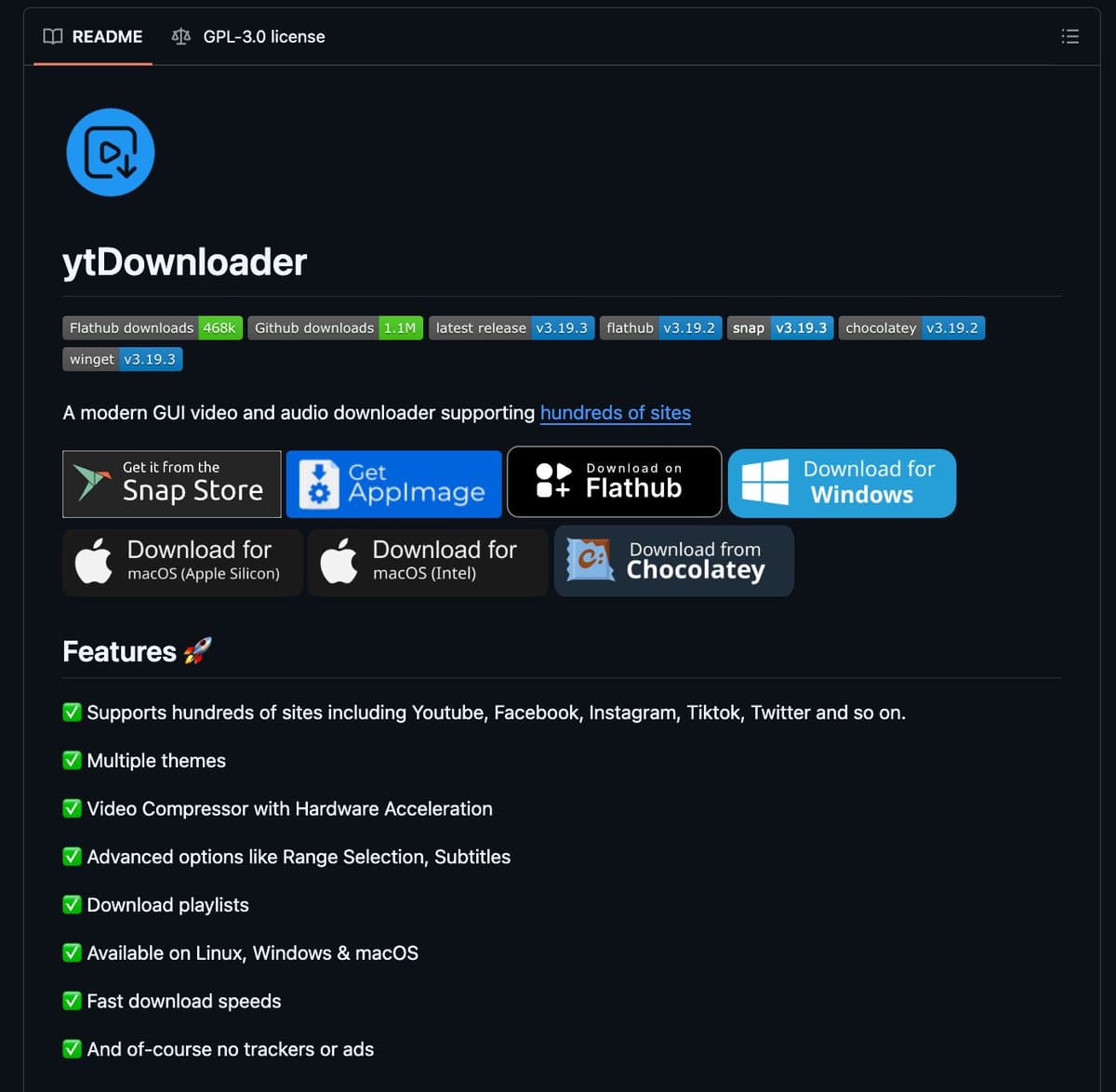
In a significant development for digital content accessibility, an anonymous developer has open-sourced ytDownloader—a desktop application capable of downloading videos from over 1,000 websites without advertisements, browser extensions, or questionable third-party services. The tool represents a major shift in how users interact with online video content, offering a streamlined approach to content preservation across platforms including YouTube, Instagram, TikTok, Twitter, Facebook, and hundreds of specialized sites.
Technical Architecture and Capabilities
ytDownloader operates as a standalone desktop application that bypasses the need for browser-based solutions. Users simply paste a video URL into the interface, and the software handles the extraction and download process automatically. The application's broad compatibility stems from its modular architecture, which incorporates multiple extraction libraries and adapters for different video hosting platforms.
Unlike many commercial downloaders that rely on proprietary parsing engines, ytDownloader leverages open-source extraction libraries that have been refined through community contributions. This approach allows the application to maintain compatibility with platform updates more rapidly than closed-source alternatives. The software reportedly handles various video formats, resolutions, and streaming protocols, though specific technical documentation remains limited in the initial release.
The Open-Source Advantage
The application's GPL (General Public License) licensing represents a deliberate choice that distinguishes it from both commercial downloaders and questionable "free" services. Under this license, anyone can examine, modify, and redistribute the software, ensuring complete transparency about how the application functions and what data it accesses.
This open-source model addresses longstanding concerns about privacy and security in video downloading tools. Many browser extensions and websites in this category have been found to contain malware, track user behavior, or serve excessive advertisements. By making the source code publicly available, ytDownloader allows security researchers and technically-inclined users to verify that the software operates as advertised without hidden functionalities.
Legal and Ethical Considerations
The release of ytDownloader inevitably raises questions about copyright and terms of service compliance. While the technology itself is neutral, its application exists in a complex legal landscape where platform terms frequently prohibit downloading content without explicit permission. The developer appears to have anticipated these concerns by emphasizing the tool's utility for downloading publicly available content that users have legitimate rights to access.
Educational institutions, researchers, and content creators who need to archive reference materials may find particular value in such tools, provided they respect copyright limitations. The open-source nature of the project also allows for community development of features that support ethical use cases, such as downloading content for accessibility purposes or creating local backups of personally-created content.
Impact on Digital Content Ecosystem
ytDownloader's emergence reflects growing user frustration with platform restrictions on content portability. As streaming services and social media platforms increasingly wall off content within their ecosystems, tools that enable basic content preservation fill an important niche. The application's ability to work across 1,000+ sites suggests a comprehensive approach to video extraction that could influence how platforms design their content delivery systems.
The timing of this release coincides with increasing platform consolidation and changing content policies across major social networks. Users seeking to preserve content that might be removed due to policy changes or platform shutdowns now have a more reliable, transparent tool for creating personal archives.
Community Response and Future Development
Initial reactions from the open-source community have been largely positive, with many users appreciating the no-nonsense approach to video downloading. The absence of advertisements and the clean interface represent a departure from the typical experience with video download utilities.
As an open-source project, ytDownloader's future development will depend on community contributions. Potential enhancements could include batch downloading capabilities, scheduled downloads, format conversion features, and improved user interface options. The modular architecture suggests that adding support for new platforms should be relatively straightforward for developers familiar with video extraction protocols.
Security Implications and Best Practices
While the open-source nature provides transparency, users should still exercise caution when downloading content. The application itself appears designed with security in mind, but the act of downloading videos always carries some risk, particularly when dealing with unofficial sources. Users are advised to:
- Keep the application updated to benefit from security patches
- Only download content they have legitimate rights to access
- Use antivirus software to scan downloaded files
- Be mindful of storage limitations when downloading high-resolution content
Conclusion
ytDownloader represents a significant milestone in open-source video utility development. By combining broad platform compatibility with complete transparency through its GPL license, the application addresses longstanding user needs while avoiding the pitfalls of commercial alternatives. As the digital content landscape continues to evolve, tools like ytDownloader will likely play an increasingly important role in how users interact with and preserve online video content.
The project's success will ultimately depend on community support and responsible use, but its initial release demonstrates the continued vitality of open-source solutions to common digital challenges. As platforms and content delivery methods continue to change, having transparent, user-controlled tools for content accessibility remains valuable for researchers, educators, and everyday users alike.