OpenAI researchers developed Deployment Simulation, a method predicting GPT-5 error trends with 92% accuracy pre-launch. It uses 1.3 million real anonymized conversations from August 2025 to March 2026, not synthetic test prompts.
Key facts
- Deployment Simulation predicted GPT-5 error trends with 92% accuracy.
- Used 1.3 million real anonymized conversations from Aug 2025 to Mar 2026.
- Method uncovered hidden misbehavior standard safety tests missed.
- GPT-5.4 predictions were locked in before seeing real usage data.
- OpenAI spending hit $34 billion last year, per Reuters.
Standard safety testing for AI models has a dirty secret: it's a theater of the synthetic. Tests rely on handwritten or deliberately tricky questions that models often recognize as tests, altering their behavior. According to the source, this means results say little about real-world performance.
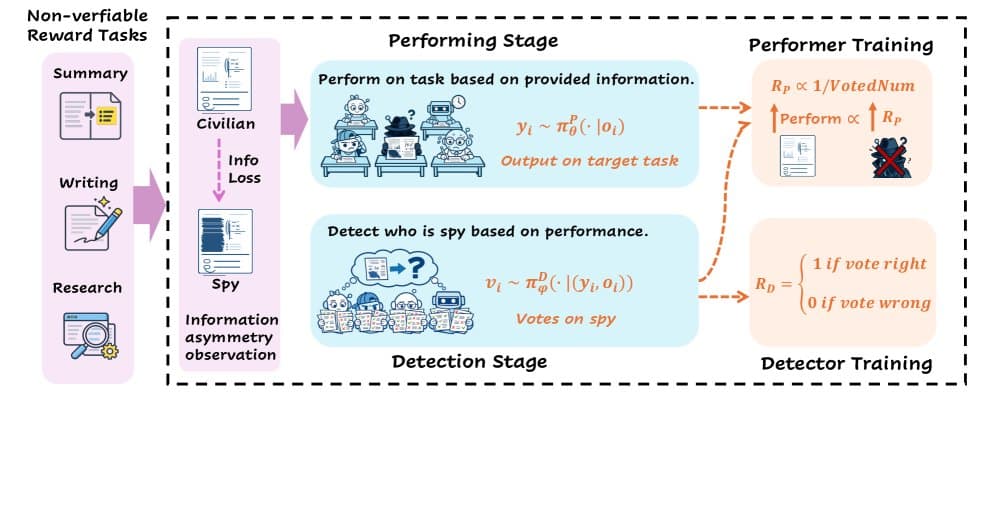
OpenAI researchers Marcus Williams, Micah Carroll, and team propose a fix called Deployment Simulation. Instead of crafting new test questions, they pull from real, anonymized conversations users had with a previous model. The unreleased model only rewrites the next response in an existing conversation thread, never knowing it's being evaluated.
The approach serves two purposes: scanning for novel misbehavior and generating verifiable frequency estimates. For GPT-5.4, researchers locked in predictions before seeing any real usage data, eliminating confirmation bias. Across four GPT-5 series models, the simulation correctly predicted error trends 92% of the time and uncovered hidden misbehavior standard tests missed.
Why this matters more than the press release suggests
The 92% figure is striking, but the real contribution is methodological. Deployment Simulation turns post-hoc monitoring into a pre-deployment capability. Most labs currently release models, then scramble to patch issues discovered in the wild — OpenAI spending hit $34 billion last year [Reuters reports], and the cost of post-release failures is mounting. If Deployment Simulation scales, it could shift the safety burden leftward in the release pipeline.
That said, the method has limits. It inherits biases from the source conversations — if the previous model's user base is unrepresentative, predictions will be skewed. And the 92% figure covers trend direction, not absolute error rates. OpenAI didn't disclose the variance across different failure categories.
Implications for the safety-testing arms race
The approach arrives as both OpenAI and Anthropic face escalating safety scrutiny. Anthropic leaders met with White House officials this week, still split on Claude Fable 5's risk profile. Meanwhile, ChatGPT market share dipped below 50% for the first time, per Sensor Tower. Deployment Simulation gives OpenAI a concrete, verifiable methodology to present to regulators — something competitors currently lack.
What to watch
Watch whether OpenAI publishes the full dataset or methodology for external replication. The key metric: can this generalize to non-OpenAI models, particularly Anthropic's Claude Opus 4.6 or Google's Gemini? Also track whether this method appears in OpenAI's IPO filings as a risk-mitigation credential.

Source: the-decoder.com