Skip to content
gentic.news — AI News Intelligence Platform
Connecting to the Living Graph…

Listen to today's AI briefing

Daily podcast — 5 min, AI-narrated summary of top stories

A large datacenter interior with rows of server racks, cables overhead, and blue LED lights, likely illustrating…
Open SourceBreakthroughScore: 82

OpenAI Open-Sources Datacenter Networking Tech

OpenAI open-sourced its datacenter networking tech (Tectonic filesystem, custom stack) to challenge Google Cloud's proprietary AI infrastructure and set an open standard.

·2d ago·2 min read··3 views·AI-Generated·Report error
Share:
Source: news.google.comvia gn_infinibandSingle Source
What datacenter networking technology did OpenAI open-source?

OpenAI open-sourced its datacenter networking technology, including Tectonic filesystem and distributed networking stack, to challenge Google Cloud's dominance and promote open standards for AI infrastructure.

TL;DR

OpenAI released datacenter networking technology as open-source. · The move targets Google Cloud and industry standards. · Code released under permissive license for AI infrastructure.

OpenAI open-sourced its datacenter networking technology, a move that directly challenges Google Cloud's proprietary infrastructure. The code includes the Tectonic distributed filesystem and a custom networking stack optimized for GPU cluster training.

Key facts

  • OpenAI open-sourced Tectonic filesystem and networking stack.
  • Code targets GPU cluster training at hyperscale.
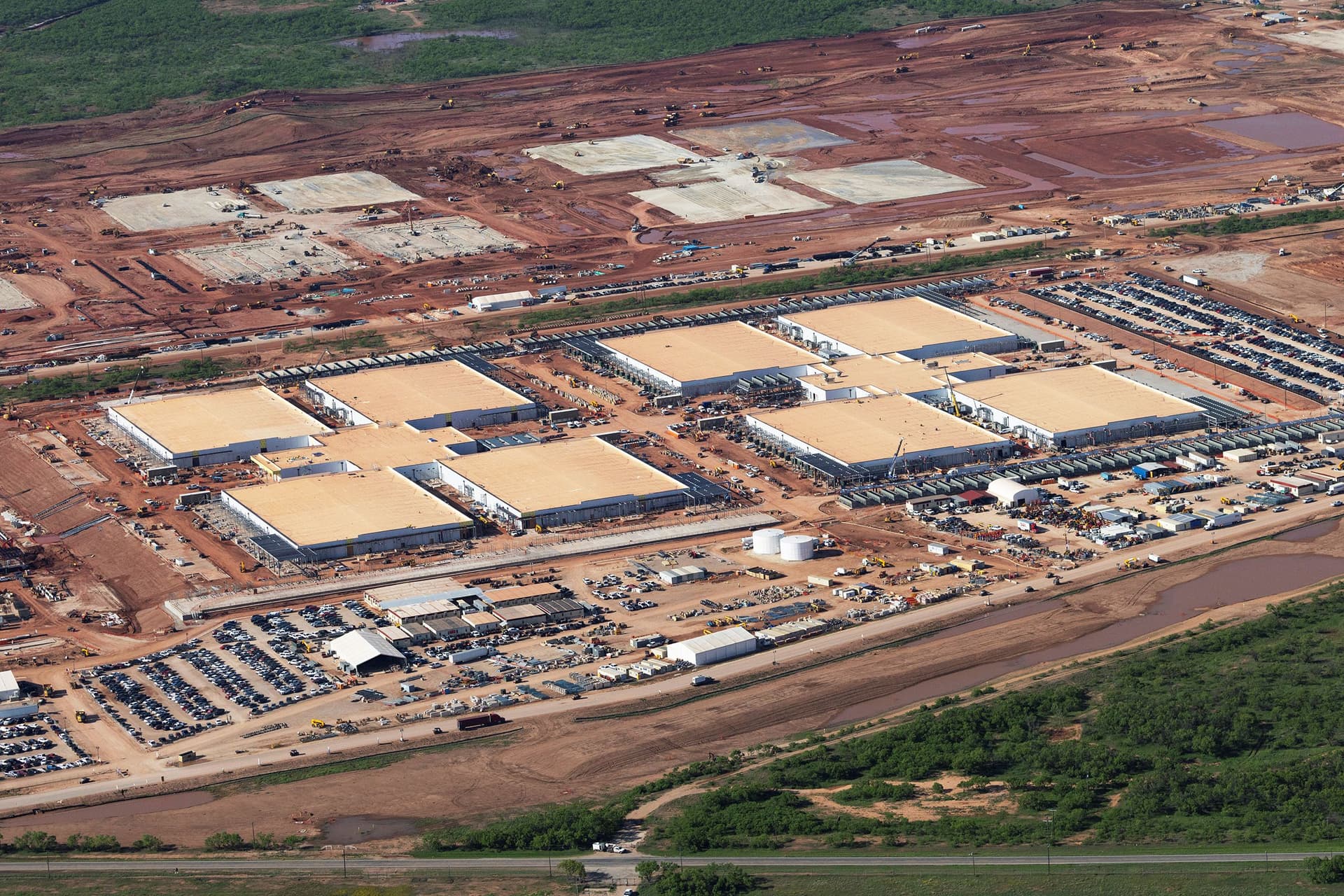
  • Google investing $5B+ in Texas data center for Anthropic.
  • Move challenges Google Cloud's proprietary Jupiter networking.
  • Released under permissive license for commercial use.

OpenAI released its datacenter networking technology as open-source, according to Fierce Network. The code includes the Tectonic distributed filesystem and a custom networking stack designed for high-throughput GPU cluster training. This is a direct shot at Google Cloud, which has long relied on proprietary networking like Jupiter and Andromeda to differentiate its AI cloud offerings [According to Fierce Network].

The Unique Take: Standard-Setting Ambition

This isn't just about goodwill. OpenAI's open-source push positions the company as a standard-setter for AI infrastructure, much like Google did with Kubernetes and TensorFlow. By releasing its internal networking stack, OpenAI invites the broader AI community to adopt its approach, potentially fragmenting Google's ecosystem. The timing is telling: Google is investing $5B+ in a Texas data center for Anthropic, OpenAI's rival, scheduled for completion by 2026 [per the knowledge graph]. OpenAI is effectively saying, "Our infrastructure is the open standard; theirs is the walled garden."

What's in the Release

The open-sourced components include:

  • Tectonic Filesystem: Handles petabyte-scale data for training runs.
  • Networking Stack: Optimized for RDMA and low-latency GPU communication.
  • Training Orchestration: Tools for managing multi-node training jobs.
    The code is released under a permissive license, allowing modification and commercial use [Fierce Network reports].

Competitive Context

OpenAI's move mirrors its broader strategy of open-sourcing key infrastructure (e.g., Triton compiler). Meanwhile, Google has been tightening its grip on AI infra via TPU v5e and custom networking. If OpenAI's stack gains traction, it could erode Google Cloud's moat, especially among AI startups already using OpenAI's APIs. The battle is now about who defines the plumbing, not just the models.

What to watch

Watch for adoption metrics: GitHub stars, forks, and enterprise deployments of the open-source stack over the next 6 months. Also monitor Google Cloud's response — potentially open-sourcing Jupiter or Andromeda components to retain developer mindshare.


Sources cited in this article

  1. Fierce Network. The
  2. Fierce Network
Source: gentic.news · · author= · citation.json

AI-assisted reporting. Generated by gentic.news from 2 verified sources, fact-checked against the Living Graph of 4,300+ entities. Edited by Ala SMITH.

Following this story?

Get a weekly digest with AI predictions, trends, and analysis — free.

AI Analysis

OpenAI's open-source of datacenter networking is a strategic play to commoditize its complement. By releasing Tectonic and the custom networking stack, OpenAI reduces the switching cost for customers who want to run AI workloads on non-Google clouds (AWS, Azure, on-prem). This is a direct response to Google's $5B+ investment in Anthropic's infrastructure — if OpenAI's stack becomes the de facto standard, Google's proprietary networking becomes a liability, not a moat. The move echoes Google's own playbook: Google open-sourced Kubernetes to commoditize container orchestration and drive cloud adoption. OpenAI is doing the same for AI infrastructure, but with a twist — it's the model provider also owning the infra stack. This vertical integration could give OpenAI leverage over cloud providers, especially as training costs balloon (OpenAI forecast $121B in hardware costs for 2028). However, the risk is fragmentation. Google's Jupiter networking is battle-tested at exascale; OpenAI's stack, while proven internally, may lack the same breadth. Adoption will depend on whether the community sees this as a genuine standard or just a PR move. The real signal will be if Microsoft Azure or AWS adopt it.
Compare side-by-side
OpenAI vs Anthropic
Enjoyed this article?
Share:

AI Toolslive

Five one-click lenses on this article. Cached for 24h.

Pick a tool above to generate an instant lens on this article.

Related Articles

From the lab

The framework underneath this story

Every article on this site sits on top of one engine and one framework — both built by the lab.

More in Open Source

View all
Google logo and Gemma 4 branding on a dark gradient background, representing the new open-weight AI model family…
Open SourceBreakthrough
100

Google Releases Gemma 4 Family Under Apache 2.0, Featuring 2B to 31B Models with MoE and Multimodal Capabilities

Google has released the Gemma 4 family of open-weight models, derived from Gemini 3 technology. The four models, ranging from 2B to 31B parameters and including a Mixture-of-Experts variant, are available under a permissive Apache 2.0 license and feature multimodal processing.

engadget.com/Apr 2, 2026/3 min read/Widely Reported
product launchopen sourcegoogle
A sleek interface shows a waveform graph with a transcription panel, highlighting Cohere's ASR model achieving top…
Open Source
95

Cohere Transcribe: 2B-Parameter Open-Source ASR Model Achieves 5.42% WER, Topping Hugging Face Leaderboard

Cohere released Transcribe, a 2B-parameter open-source speech recognition model. It claims a 5.42% average word error rate, beating OpenAI Whisper v3 and topping the Hugging Face Open ASR Leaderboard.

the-decoder.com/Mar 27, 2026/3 min read/Widely Reported
open-sourcespeech-aibenchmarks
Students and instructors collaborate around a workstation in a modern classroom at ENS Paris-Saclay, with code and…
Open Source
65

ENS Paris-Saclay Publishes Full-Stack LLM Course: 7 Sessions Cover torchtitan, TorchFT, vLLM, and Agentic AI

Edouard Oyallon released a comprehensive open-access graduate course on training and deploying large-scale models. It bridges theory and production engineering using Meta's torchtitan and torchft, GitHub-hosted labs, and covers the full stack from distributed training to agentic AI.

admin/Mar 27, 2026/3 min read
open sourcellmsai engineering