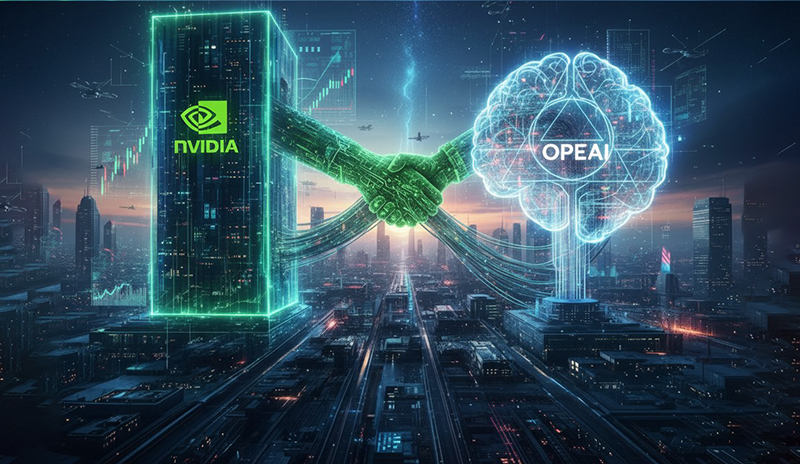
In a landmark announcement that underscores the accelerating pace of artificial intelligence adoption, OpenAI CEO Sam Altman has revealed explosive growth metrics for ChatGPT as the company approaches a staggering $100 billion funding milestone. This development, reported by CNBC, represents not just a financial achievement but a fundamental shift in how AI technologies are being integrated into global business and society.
The Growth Metrics That Redefine Scale
While specific numbers weren't disclosed in the CNBC report, the implications of "explosive growth" for ChatGPT suggest adoption rates that likely dwarf even the most optimistic projections from just a few years ago. ChatGPT's journey from research project to ubiquitous tool has been nothing short of revolutionary, with the platform now serving millions of users across enterprise, education, and consumer sectors.
This growth trajectory mirrors the broader AI market expansion, but at a scale that positions OpenAI not just as a participant in the industry, but as its defining architect. The company's products have become the de facto standard for conversational AI, setting expectations for what's possible with large language models.
The $100 Billion Funding Context
The approaching $100 billion funding mark represents more than just capital—it's a statement about confidence in AI's future. This funding level places OpenAI in rarified air, comparable to the most valuable technology companies in history during their growth phases. The capital infusion will likely accelerate several key initiatives:
Infrastructure Expansion: Building and maintaining the computational resources required for advanced AI models represents one of the most significant expenses in the industry. This funding will enable OpenAI to scale its infrastructure to meet growing demand while developing next-generation models.
Research Acceleration: With substantial resources, OpenAI can pursue more ambitious research directions simultaneously, potentially accelerating breakthroughs in areas like reasoning, multimodality, and efficiency.
Product Ecosystem Development: Beyond ChatGPT, OpenAI has been expanding its product offerings, including API services, enterprise solutions, and specialized tools. This funding will fuel that expansion.
The Competitive Landscape Transformation
OpenAI's growth and funding success are reshaping the entire AI competitive landscape. The company's success has:
- Validated the market for generative AI applications, encouraging massive investment across the sector
- Set performance benchmarks that competitors must match or exceed
- Created network effects as developers build on OpenAI's platforms, creating switching costs and ecosystem advantages
- Accelerated the talent war as companies compete for limited AI expertise
This competitive dynamic is creating both opportunities and challenges across the technology sector, with established giants and startups alike recalibrating their AI strategies in response to OpenAI's trajectory.
The Business Model Evolution
OpenAI's journey from nonprofit research organization to one of the world's most valuable AI companies represents a fascinating case study in technology business model evolution. The company has successfully navigated:
- The research-to-product transition that has challenged many AI labs
- Enterprise adoption while maintaining consumer accessibility
- Pricing strategy development for different market segments
- Partnership ecosystems with major technology companies
This business model sophistication, combined with technical excellence, has created a virtuous cycle of growth, investment, and further innovation.
Ethical and Governance Considerations
With great scale comes great responsibility. OpenAI's growth raises important questions about:
AI Safety and Alignment: As models become more powerful, ensuring they remain aligned with human values becomes increasingly critical and challenging.
Market Concentration: The concentration of advanced AI capabilities in a single company raises questions about competition, innovation diversity, and access.
Societal Impact: The widespread adoption of ChatGPT and similar tools is transforming education, employment, creativity, and information ecosystems in ways we're only beginning to understand.
OpenAI has established governance structures and safety initiatives, but these will face increasing scrutiny as the company's influence grows.
The Global Implications
OpenAI's success is not just a Silicon Valley story—it has global implications:
Geopolitical Dimensions: AI leadership has become a national priority for many countries, with OpenAI's dominance raising questions about technological sovereignty and international competition.
Economic Transformation: The productivity gains enabled by AI tools like ChatGPT could reshape global economic competitiveness and labor markets.
Regulatory Development: Governments worldwide are developing AI regulations, with OpenAI's scale making it a focal point for policy discussions.
Looking Ahead: What Comes After $100 Billion?
The approaching funding milestone raises questions about what's next for OpenAI and the AI industry more broadly. Several possibilities emerge:
AGI Pursuit: OpenAI's stated mission is to develop artificial general intelligence (AGI) that benefits all of humanity. This funding could accelerate those efforts.
Vertical Integration: The company might expand further into hardware, specialized chips, or other infrastructure elements.
Global Expansion: While already international, OpenAI could deepen its presence in key markets worldwide.
New Product Categories: Beyond language models, the company might expand into other AI domains or application areas.
Conclusion: A Defining Moment for AI
Sam Altman's announcement of ChatGPT's explosive growth as OpenAI approaches $100 billion in funding represents more than corporate success—it marks a defining moment in the AI revolution. The scale of adoption, investment, and impact demonstrates that AI has moved from experimental technology to fundamental infrastructure.
As reported by CNBC, this development signals that we're entering a new phase of AI development where scale, integration, and real-world impact become the primary metrics of success. The challenges—technical, ethical, competitive, and societal—are substantial, but so too are the opportunities for transformation across every sector of human endeavor.
The coming years will reveal whether OpenAI can maintain its trajectory while navigating the complex responsibilities that come with being at the forefront of one of history's most transformative technologies. What's certain is that the decisions made today will shape the AI landscape for decades to come.