A recent O'Reilly Media piece compared OpenClaw, Claude Cowork, and Claude Code. For developers using Claude Code daily, the key takeaway is understanding where a general-purpose, open-source agent framework fits into your workflow versus the specialized tool you already know.
The Open-Source Alternative: OpenClaw
OpenClaw is a free and open-source autonomous AI agent framework developed by Peter Steinberger. It's designed as a flexible system where you can chain large language models (like Claude or Gemini) to execute complex, multi-step tasks via a messaging architecture. Recent examples from our coverage show it being used for personal automation like booking repairs, ranking friends, or automatically converting YouTube links into ready-to-post Shorts.
Its core value is customizability and task orchestration. You define the steps, tools, and logic, and OpenClaw executes the plan.
The Specialized Tool: Claude Code
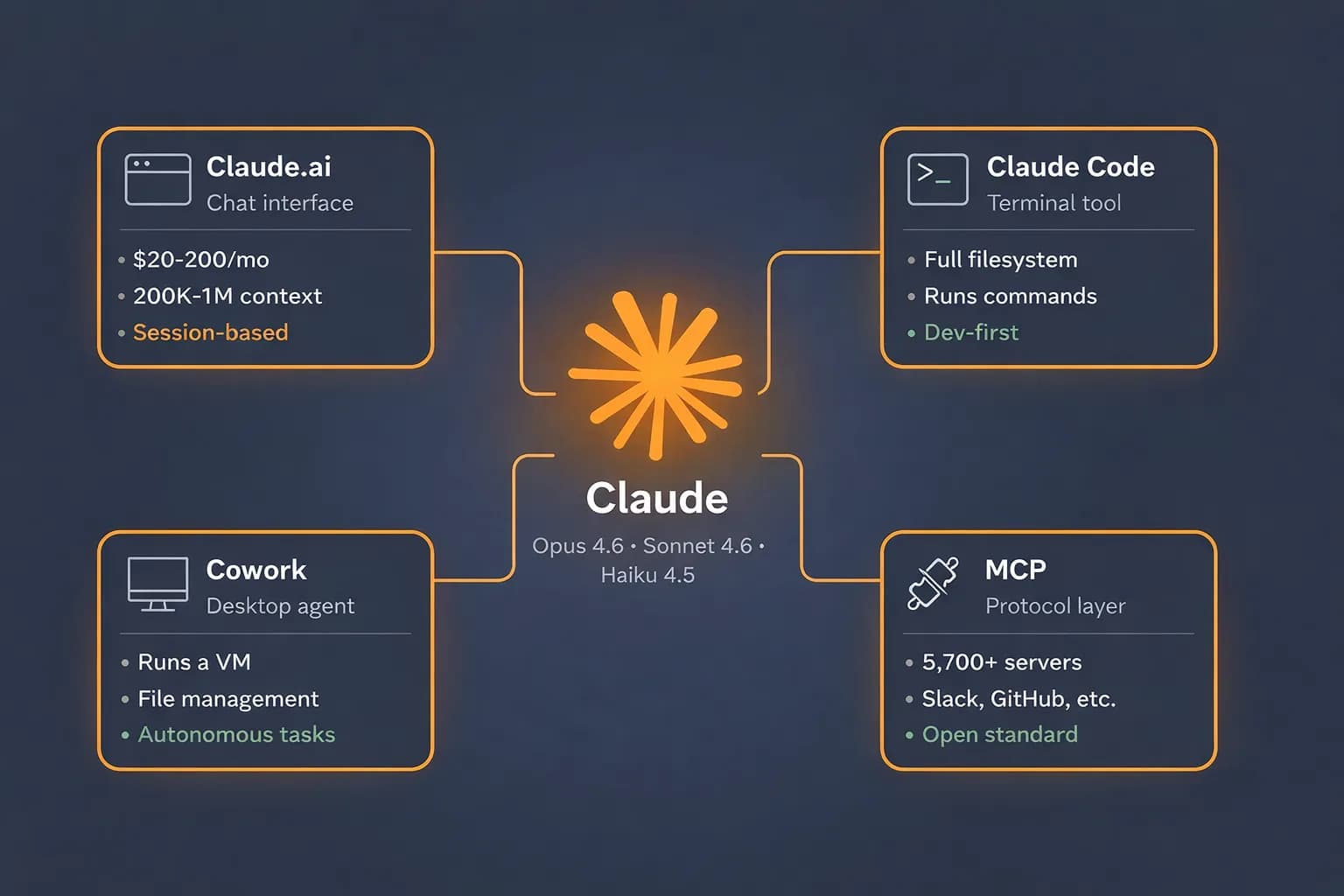
Claude Code is Anthropic's agentic command-line coding tool, released in 2025. It’s built for one job: letting developers delegate software engineering tasks directly from the terminal. It can edit files, run commands, and reason about codebases. Its architecture is built on the Model Context Protocol (MCP), allowing it to connect to various data sources and tools, but its interface and design are singularly focused on coding.
The Decision Matrix: Which Tool When?
Your choice depends on the task's scope and required control.
Use Claude Code for:
- Direct coding tasks: "Refactor this function," "Write tests for this module," "Debug this error."
- Integrated terminal work: When you want an AI that can directly run
gitcommands or linters in your project context. - Fast, context-aware assistance: Leveraging its deep integration with your local filesystem and development environment.
Consider OpenClaw for:
- Multi-platform workflows: Tasks that involve steps outside your IDE, like gathering data from a web API, processing it, and then generating a report and an email.
- Highly customized agent logic: When you need to design a specific sequence of decisions, verifications, and fallbacks that a general-purpose coding assistant isn't built for.
- Cost-sensitive prototyping: As an open-source framework, it can be configured to use various LLM backends, potentially offering more control over API costs for complex, long-running agents.
Try It Now: Connecting the Ecosystems
You don't necessarily have to choose. Claude Code's MCP foundation means it can, in theory, interact with other tools in the ecosystem. The trend towards machine-enforced rules and verification, as seen in our coverage of the terraphim-agent for Claude Code, mirrors the need for oversight in any autonomous system, whether it's OpenClaw or Claude Code.
If you want to experiment with OpenClaw-style orchestration for a coding task, try breaking the task down for Claude Code with explicit, verifiable steps in your CLAUDE.md file. For example:
## Task: Update Dependencies and Test
1.  Run `npm outdated` and list the packages with major updates.
2.  For each package, check the changelog URL (find it) for breaking changes.
3.  Propose a updated `package.json` with changes, grouping non-breaking updates separately.
4.  After I approve, run the install and execute the test suite.
This brings structured, multi-step planning into your Claude Code workflow.
gentic.news Analysis
This comparison highlights the maturation of the AI agent landscape. Claude Code, appearing in 139 articles this week alone, is solidifying its role as the focused, daily driver for developers. Meanwhile, frameworks like OpenClaw cater to users building custom, cross-platform automation. This follows Anthropic's recent push to promote Claude Code features and best practices, including its CLI and dashboard, as covered on March 29th.
The relationship map is instructive: Anthropic both develops Claude Code and, according to our knowledge graph, uses OpenClaw. This isn't pure competition; it's a spectrum of tools. The key trend is specialization. Claude Code is specializing in the coding workflow, while open-source frameworks specialize in flexibility. For developers, the winning strategy is to use Claude Code for its unparalleled coding integration and only reach for a broader framework like OpenClaw when a task genuinely escapes the bounds of the IDE and terminal.
This aligns with our article, "Stop Reviewing AI Code. Start Reviewing CLAUDE.md." The future is less about picking one agent and more about designing clear, reviewable processes—whether they're executed by a single-purpose tool like Claude Code or a bespoke OpenClaw agent.