Key Takeaways
- Retail media platform Pacvue has announced its entry into the AI agent space with a tool specifically designed to automate Amazon advertising campaigns.
- This move signals intensifying competition in the retail media automation sector.
The Innovation — What the source reports
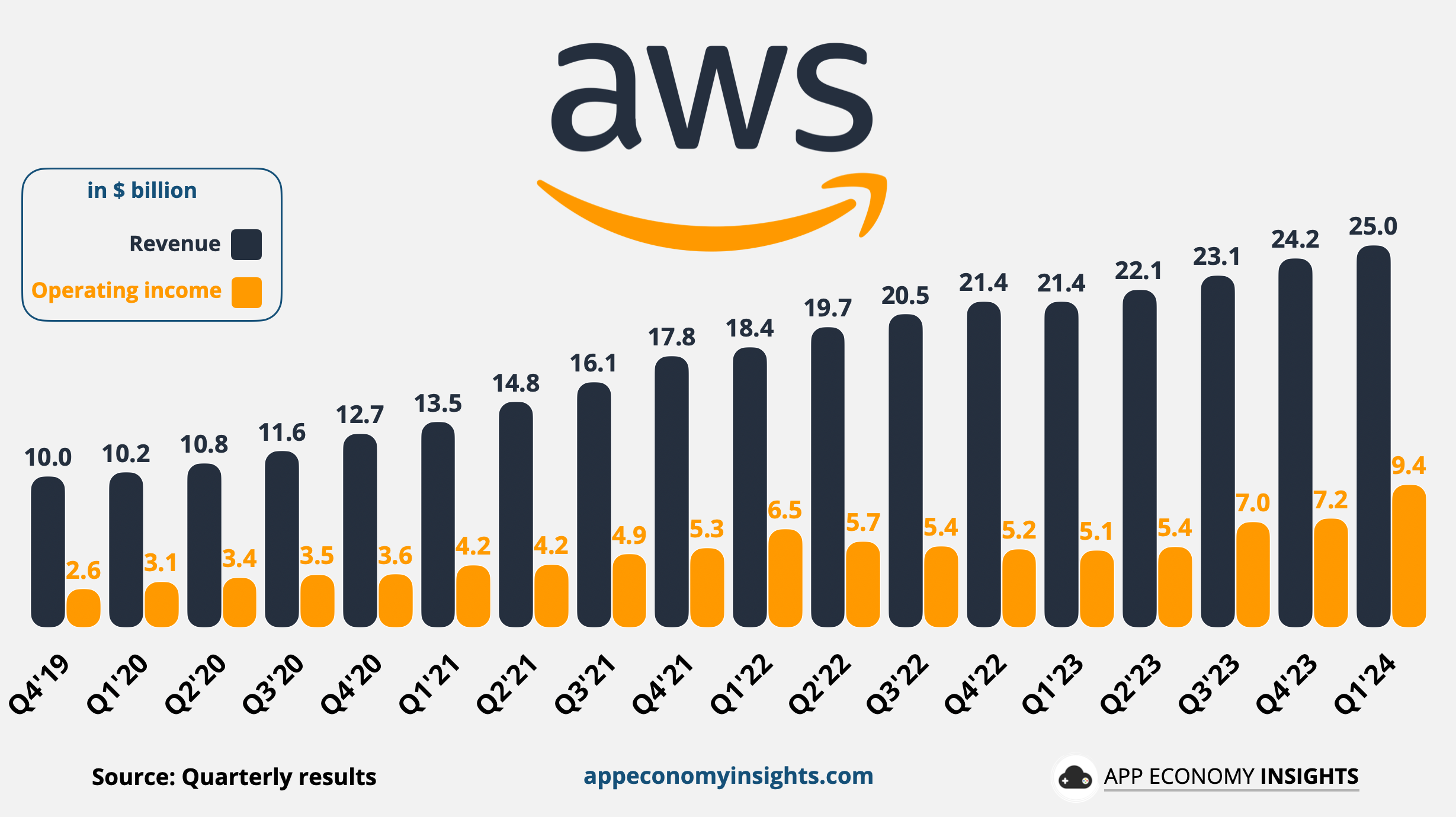
According to ADWEEK, Pacvue, a prominent retail media platform, has officially entered the competitive landscape of AI agents. The company has launched a new AI-powered tool specifically designed to manage and optimize advertising campaigns on Amazon. While the source provides limited technical detail, the announcement positions Pacvue's offering as part of the broader "AI agent race," where software is designed to autonomously execute complex tasks—in this case, managing Amazon Sponsored Products, Sponsored Brands, and Sponsored Display ads.
The core promise of such an agent is to automate the labor-intensive, data-driven processes of retail media: keyword research, bid management, budget allocation, and campaign structuring. For brands selling on Amazon, this represents a potential shift from manual, rules-based optimization to a more dynamic, AI-driven approach.
Why This Matters for Retail & Luxury
For luxury and premium retail brands, Amazon represents a complex but increasingly critical channel. While not the traditional home for high-end goods, Amazon's Luxury Stores and growing consumer base make it an unavoidable part of the omnichannel strategy for many. Managing performance marketing on the platform is notoriously challenging due to its auction-based system, vast competition, and constant flux.
An AI agent like Pacvue's proposes to address several key pain points:
- Scalability: Automating campaign management allows brands to scale their Amazon advertising efforts without linearly increasing headcount.
- Real-Time Optimization: AI can process marketplace signals (competitor bids, conversion rates, inventory levels) faster than any human team, adjusting bids and budgets in near real-time to maximize ROAS (Return on Ad Spend).
- Consistency: It removes human error and fatigue from repetitive optimization tasks, ensuring campaigns are continuously tuned.
- Strategic Liberation: It frees up brand and performance marketing teams from day-to-day tactical execution to focus on higher-level strategy, creative, and cross-channel alignment.
Business Impact — Quantified if available, honest if not
The source does not provide specific performance metrics for Pacvue's new tool. The business impact, therefore, must be framed in terms of the category's potential. In theory, effective AI agents in retail media can directly impact the bottom line by improving advertising efficiency. A marginal improvement in ACOS (Advertising Cost of Sale) or ROAS, when applied to large media budgets, translates to significant savings or incremental revenue.
However, the impact is contingent on the agent's actual intelligence and reliability. A poorly configured or "black box" agent could waste budget just as easily as it could save it. The value proposition for brands will be determined by the tool's transparency, controllability, and proven ability to outperform both manual management and simpler rule-based automation.
Implementation Approach — Technical requirements, complexity, effort
Implementing an AI agent like this is typically a SaaS (Software-as-a-Service) model. Brands would grant the platform access to their Amazon Advertising API, along with likely connecting their product catalog and sales data. The technical complexity is borne by Pacvue; the brand's effort shifts to integration, goal-setting, and oversight.
The key implementation considerations for a luxury brand would be:
- Data Integration: Ensuring clean, accurate product and sales data feeds into the system.
- Goal Alignment: Precisely configuring the AI's objectives (e.g., "maximize new customer acquisition" vs. "defend market share for hero SKUs") to align with broader brand goals.
- Guardrails and Control: Establishing budget caps, approved keyword lists, and negative targets to ensure the AI operates within brand safety and strategic parameters. Luxury brands, in particular, need tight control over brand adjacency and keyword associations.
- Human-in-the-Loop: Designing a review process where human experts audit the AI's major decisions and creative placements.
Governance & Risk Assessment
Deploying autonomous AI for advertising carries inherent risks that luxury brands must govern carefully:
- Brand Safety & Adjacency: An AI optimizing purely for conversion could place ads for a high-end fragrance next to inappropriate or low-quality content. Robust negative targeting and placement controls are non-negotiable.
- Budget Control: The risk of budget spirals due to aggressive AI bidding must be mitigated with hard caps and anomaly detection.
- Data Privacy & Security: Granting API access to a third-party platform requires rigorous vetting of its data security practices and compliance with relevant regulations (e.g., GDPR, CCPA).
- Algorithmic Bias: The AI's training data and objectives could inadvertently bias spending toward certain product lines or customer segments, potentially reinforcing existing imbalances or missing new opportunities.
- Vendor Lock-in: As campaigns become managed by a proprietary AI, switching costs increase. Brands should consider the portability of their campaign structures and learned data.
The maturity level of such agents is evolving. While the concept is proven in digital advertising (e.g., Google's Performance Max), its specific application in the nuanced environment of Amazon luxury retail is still being tested.
gentic.news Analysis
Pacvue's move is not an isolated event; it's a direct response to a heated competitive landscape. This follows a clear trend of retail media platforms aggressively embedding AI to defend and expand their market position. Pacvue itself was acquired by Assembly in 2022, a move that signaled consolidation in the retail media sector and provided Pacvue with greater resources for R&D. Their launch of an AI agent is a logical next step in that evolution.
This announcement directly places Pacvue in competition with other major players who have made similar strides. Most notably, Kenshoo and Skai have been actively promoting their AI-driven retail media capabilities. More importantly, the platform owner itself, Amazon, is advancing its own automated solutions (like Amazon's "Ad Console" and machine learning-based bidding). This creates a dynamic where third-party tools must prove they can add significant value beyond the native platform's increasingly intelligent offerings.
For our audience—AI leaders at luxury houses—the key takeaway is the acceleration of automation in a critical commercial channel. The question is no longer if AI will manage performance marketing, but how and with what level of strategic oversight. The winning approach will likely involve a hybrid model: leveraging AI agents for executional efficiency and data processing, while retaining human expertise for brand strategy, creative direction, and ethical governance. The brands that succeed will be those that learn to effectively pilot these new agents, setting the correct strategic destinations while allowing the AI to navigate the tactical complexities of the Amazon marketplace.