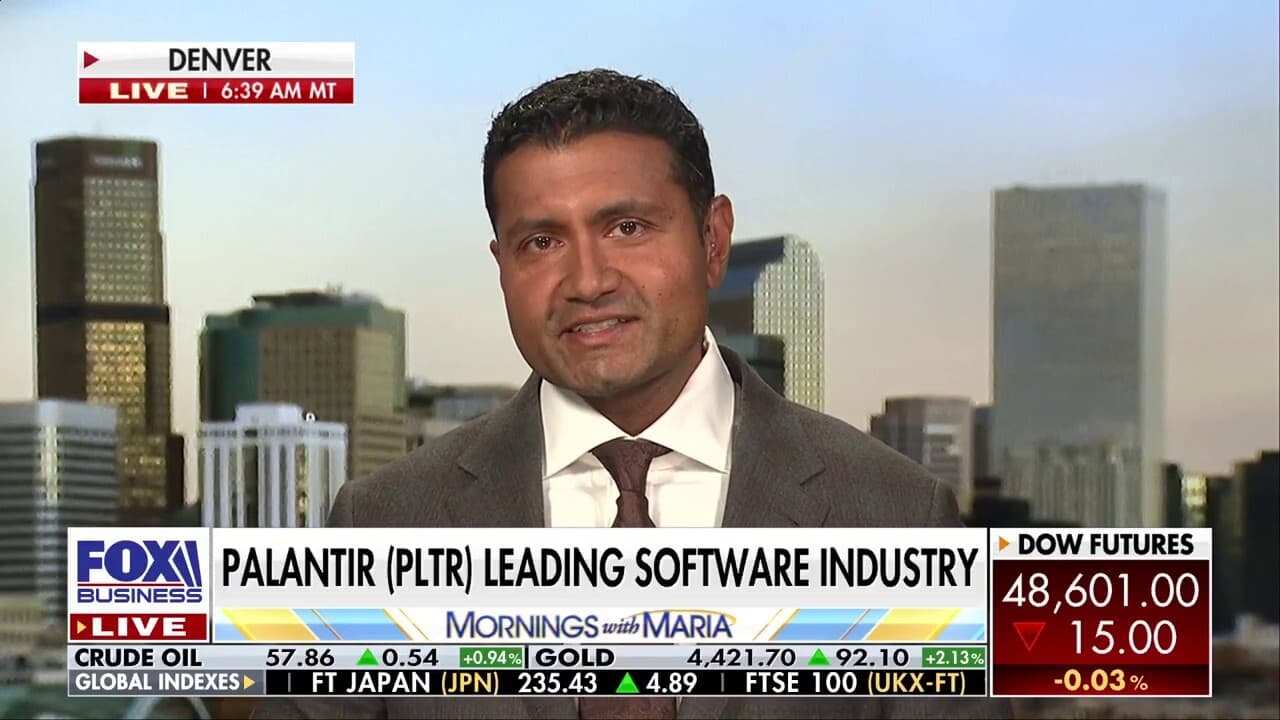
Alex Karp, co-founder and CEO of the data analytics and defense technology company Palantir, has publicly addressed concerns regarding Anthropic's recent designation as a potential "supply chain risk." While the specific details and context of this designation remain within the original social media report, Karp's commentary points to a broader, critical debate about the security and sovereignty of the United States' artificial intelligence infrastructure. His position favors implementing domestic restrictions on AI development and deployment, signaling a significant shift toward viewing advanced AI through a national security lens.
The Core Concern: AI as a Strategic Asset
Karp's remarks, as reported, center on the idea that the AI supply chain—encompassing everything from foundational model development and training data to specialized hardware like GPUs—is not merely a commercial concern but a matter of strategic national interest. By highlighting Anthropic's situation, he underscores a growing anxiety within defense and intelligence circles: over-reliance on AI systems or components that could be influenced by, or vulnerable to, foreign adversaries. This perspective treats cutting-edge AI capabilities with the same gravity as other dual-use technologies critical to defense, such as semiconductors or cryptography.
For a company like Palantir, which has built its reputation on providing data integration and analysis platforms for U.S. intelligence and military agencies, this viewpoint is a natural extension of its operational philosophy. The core argument is that AI systems integral to national security functions must be developed and governed within a trusted ecosystem. An external "supply chain risk" designation for a major AI player like Anthropic suggests potential vulnerabilities that could be exploited, whether through intellectual property theft, algorithmic manipulation, or embedded dependencies that grant undue influence.
The Push for Domestic AI Restrictions
Karp's reported favor for "domestic AI restrictions" moves the conversation beyond voluntary safety guidelines into the realm of policy and regulation. This stance likely advocates for measures that could include:
- Export controls on advanced AI models and related technologies.
- Scrutiny of foreign investment in critical AI startups and research entities.
- Mandated security audits for AI systems used in government and critical infrastructure.
- Incentives or requirements for using domestically developed AI solutions in sensitive applications.
This approach represents a more hawkish, sovereignty-focused counterpoint to the dominant industry narrative, which often emphasizes open research, global collaboration, and cautious, principle-based regulation. Karp is effectively arguing that in a world of great-power competition, AI is too important to be left to an unfettered global market. The goal would be to create a protected, resilient domestic AI industrial base capable of supporting national security needs without external dependencies.
Implications for the AI Industry and Geopolitics
The public airing of this concern by a figure like Alex Karp has immediate ripple effects. For AI companies, particularly those like Anthropic that are at the forefront of developing large language models (LLMs), it introduces a new layer of complexity. Being flagged for supply chain considerations can affect partnerships, investment, and market access, especially with government clients. It forces a reckoning with corporate structures, funding sources, and hardware procurement strategies.
On a geopolitical level, this rhetoric accelerates the "splinternet" of AI, where technological ecosystems begin to fragment along national or bloc lines. The U.S., China, and the European Union are already pursuing divergent regulatory paths. Karp's comments add fuel to the fire of techno-nationalism, suggesting that the U.S. should actively decouple its strategic AI development from global chains it cannot fully trust. This could lead to a bifurcated world with competing AI standards, infrastructures, and spheres of influence.
Balancing Security, Innovation, and Ethics
The major challenge inherent in Karp's position is balancing undeniable security imperatives with the drivers of AI innovation: open scientific exchange, global talent pools, and scalable, efficient supply chains. Overly restrictive domestic policies could stifle the very innovation the U.S. seeks to protect, pushing research talent and capital elsewhere or slowing progress. Furthermore, it raises ethical questions about creating a class of "restricted" AI that is developed under a veil of secrecy for national security purposes, potentially sidestepping broader societal debates about safety, bias, and alignment.
Ultimately, Alex Karp's intervention transforms the discussion about Anthropic from a single company's status into a proxy for a much larger strategic dilemma. It frames AI not just as a tool for economic growth or a risk to be managed for societal harm, but as the central arena for 21st-century geopolitical competition. The call for domestic restrictions is a clear statement that in the eyes of key defense technology leaders, the era of treating AI as a purely commercial global commodity is over.
Source: Commentary from Alex Karp, co-founder & CEO of Palantir, as reported by @rohanpaul_ai on X.