In a development that fundamentally reimagines how artificial intelligence systems operate, researchers have demonstrated an AI architecture capable of running 19 different models simultaneously on a single task. This breakthrough represents a paradigm shift from the sequential, single-threaded approach that has dominated AI development to a truly parallel processing methodology that mirrors how human teams collaborate.
From Sequential to Parallel: A Fundamental Architecture Shift
Traditional AI systems, particularly those built on large language models, typically operate in a linear fashion. As noted in the original observation, "Most AI agents work like a single person doing everything sequentially: research, then write, then edit." This approach creates bottlenecks where each step must complete before the next can begin, limiting efficiency and preventing true multitasking.
The new architecture changes this fundamental limitation by enabling what might be called "cognitive parallelism" - multiple specialized AI models working on different aspects of a problem simultaneously. Rather than a single generalist model attempting to handle everything, this system employs specialized models working in concert, much like a well-coordinated team of experts.
How the 19-Model Architecture Works
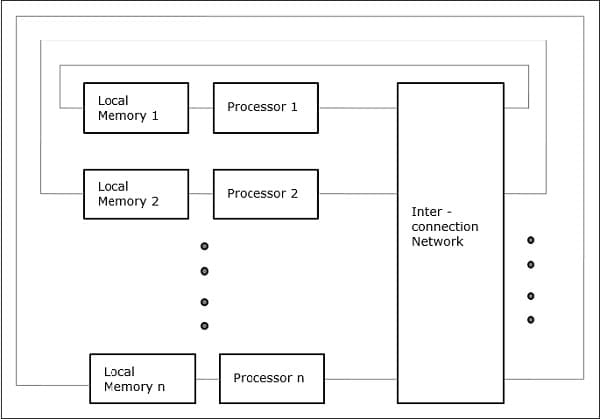
While specific implementation details vary, the core concept involves creating a master orchestrator that decomposes complex tasks into subtasks and assigns them to specialized models running in parallel. This architecture might include:
- Specialized research models scanning different data sources simultaneously
- Multiple writing models handling different sections of a document concurrently
- Analysis models processing different aspects of data in parallel
- Quality assurance models checking various dimensions of output simultaneously
- Integration models combining parallel outputs into coherent results
This approach dramatically reduces the time required for complex tasks while potentially improving quality through specialized expertise. Where a sequential system might take hours to research, write, and edit a comprehensive report, a parallel system could complete these steps simultaneously, potentially reducing completion time by orders of magnitude.
Technical Implications and Challenges
The implementation of such parallel architectures presents both opportunities and challenges:
Technical Advantages:
- Dramatically reduced latency for complex tasks
- Improved specialization through model optimization for specific subtasks
- Better resource utilization through parallel processing
- Enhanced robustness through redundancy and diverse approaches
Implementation Challenges:
- Coordination complexity between parallel models
- Synchronization overhead for combining parallel outputs
- Resource management for running multiple models simultaneously
- Quality consistency across parallel processing streams
Real-World Applications and Impact
This architectural breakthrough has profound implications across multiple domains:
Scientific Research: Parallel AI systems could simultaneously analyze experimental data, review literature, generate hypotheses, and write research papers, accelerating the scientific process dramatically.
Business Intelligence: Companies could deploy parallel AI to simultaneously monitor market trends, analyze financial data, assess competitive threats, and generate strategic recommendations.
Creative Industries: Content creation could involve parallel models simultaneously handling research, outlining, writing different sections, fact-checking, and editing.
Software Development: Coding tasks could be decomposed with parallel models handling architecture design, code generation, testing, documentation, and optimization simultaneously.
The Human-AI Collaboration Paradigm Shift
This development represents more than just a technical improvement; it suggests a new model for human-AI collaboration. Rather than replacing human workers with AI, this architecture enables what might be called "augmented teaming" - where AI systems function as coordinated teams of specialists that humans can direct and oversee.
The parallel architecture allows for more natural division of labor between humans and AI, with humans focusing on high-level strategy, creativity, and oversight while AI handles parallel execution of specialized subtasks.
Future Directions and Ethical Considerations
As this technology develops, several important considerations emerge:
Scalability Questions: How many parallel models can effectively collaborate before coordination overhead outweighs benefits?
Specialization vs. Generalization: Will future systems feature increasingly specialized models, or will general models become capable of parallel processing internally?
Transparency Challenges: Understanding decisions becomes more complex when they emerge from the interaction of multiple parallel models.
Resource Implications: The computational requirements for running multiple models simultaneously raise questions about energy efficiency and accessibility.
Conclusion: The Dawn of Parallel Intelligence
The ability to run 19 different AI models in parallel represents a fundamental shift in how we conceptualize artificial intelligence. It moves us beyond thinking of AI as a single, sequential processor and toward understanding it as a coordinated system of specialized intelligences.
This breakthrough suggests that the next frontier in AI development may not be simply building larger models, but rather creating more sophisticated architectures for coordinating multiple specialized models. As this technology matures, it promises to transform how we approach complex problems across every domain, potentially accelerating innovation and discovery in ways we're only beginning to imagine.
Source: Analysis based on observations from @LiorOnAI regarding parallel AI architectures.