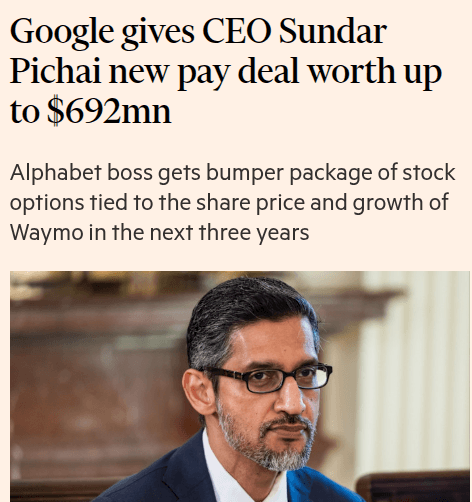
In a move that underscores the high-stakes nature of artificial intelligence and autonomous technology competition, Alphabet's board has approved a groundbreaking compensation package for CEO Sundar Pichai that could reach $692 million over the next three years. According to Financial Times reporting, this represents one of the most substantial executive pay deals in corporate history and signals a strategic pivot toward monetizing Google's long-term experimental projects.
The Structure of a Historic Pay Package
The compensation package, detailed in regulatory filings, combines multiple incentive layers designed to align Pichai's rewards with both short-term performance and long-term strategic goals. At its foundation is a $2 million annual salary—relatively modest by tech CEO standards—supplemented by various stock awards that create the package's enormous potential value.
The most significant component consists of performance stock units worth $126 million that can double to $252 million if Google's stock return outperforms most other S&P 100 companies. This performance-based structure represents a departure from previous compensation models and reflects increasing shareholder pressure to tie executive pay to measurable outcomes.
The Moonshot Connection: Waymo and Wing Incentives
What makes this package particularly noteworthy is the inclusion of $350 million in incentives specifically tied to the growth of Waymo (Google's self-driving car unit) and Wing (its drone delivery service). This marks the first time Alphabet's board has directly linked CEO compensation to the performance of these experimental divisions, which have operated for years under Google's "Other Bets" category with significant investment but limited revenue generation.
"These specific divisions are part of the company's experimental projects that are now being pushed to prove their worth as major revenue sources," notes the Financial Times analysis. The incentive structure suggests that Alphabet leadership views autonomous vehicles and drone delivery as nearing commercialization phases where they should transition from research projects to substantial business units.
Context: Navigating AI Competition and Regulatory Challenges
Pichai's compensation boost comes after a period of intense challenges for Google. Since ChatGPT's explosive debut in late 2022, Google has faced unprecedented competition in its core search business, prompting a massive reorganization around AI development and deployment. The company has launched its Gemini AI models, integrated AI throughout its product suite, and faced pressure to demonstrate that it can maintain dominance in an increasingly competitive landscape.
Simultaneously, Google has navigated multiple government lawsuits targeting its search business practices, including high-profile antitrust cases in both the United States and European Union. Despite these challenges, Alphabet's market value has grown from approximately $535 billion when Pichai took leadership in August 2015 to over $3.6 trillion today—a nearly sevenfold increase that shareholders have rewarded.
Comparative Executive Compensation Landscape
The scale of Pichai's potential compensation places him significantly ahead of other technology leaders. Microsoft CEO Satya Nadella earned $96.5 million in total compensation last year, while Apple's Tim Cook received approximately $99 million. The gap reflects not only Google's specific performance metrics but also the extraordinary expectations placed on Pichai to deliver growth across both established businesses and emerging technologies.
Industry analysts note that the package's structure represents a broader trend toward performance-based compensation in technology, where traditional salary and bonus structures are being replaced by equity awards tied to specific milestones. This shift responds to increasing scrutiny from institutional investors and governance advocates who question whether executive pay adequately reflects company performance.
Strategic Implications for Google's Future
The explicit linkage between Pichai's compensation and Waymo/Wing performance sends several important signals to markets and employees. First, it demonstrates that Alphabet leadership views autonomous technology as a critical growth area worthy of extraordinary focus. Second, it suggests that these "moonshot" projects are transitioning from experimental phases to commercialization stages where they must demonstrate sustainable business models.
Waymo, which began as Google's self-driving car project in 2009, has expanded to offer commercial robotaxi services in Phoenix, San Francisco, and Los Angeles, with plans for further expansion. Wing, launched in 2019, has developed drone delivery partnerships with major retailers and operates in multiple countries. Both represent significant long-term bets that could redefine transportation and logistics industries.
Shareholder and Governance Considerations
While the compensation package's size will undoubtedly attract attention, governance experts will likely focus on its structure and alignment with long-term value creation. The performance conditions—particularly those tied to Waymo and Wing—create clear accountability metrics that shareholders can monitor. However, some may question whether the incentives adequately balance risk, particularly given the regulatory uncertainties surrounding autonomous vehicles and drone delivery.
The package also arrives amid broader debates about income inequality and executive compensation in technology. Google has faced employee protests over workplace policies and compensation disparities in recent years, and this announcement may reignite internal discussions about pay equity and resource allocation.
Looking Ahead: Pichai's Leadership Test
Pichai's compensation package effectively creates a three-year report card with multiple grading categories: overall stock performance relative to peers, and specific progress in commercializing autonomous technologies. The structure acknowledges his successful navigation of previous challenges while establishing clear expectations for the coming period.
As Google faces what many consider its most competitive environment since its founding—with challenges from OpenAI, Microsoft, Amazon, and numerous AI startups—this compensation package represents both a reward for past performance and a substantial bet on future execution. The explicit connection to Waymo and Wing suggests that Alphabet's board believes these technologies represent not just interesting experiments but potential pillars of the company's next decade of growth.
The coming years will reveal whether this compensation structure successfully aligns executive incentives with long-term innovation, or whether it represents an excessive bet on technologies that remain unproven at commercial scale. What's certain is that all eyes will be on both Google's stock performance and its moonshot divisions as Pichai works to earn what could become one of the largest executive compensation packages in corporate history.