Researchers are pioneering a new class of artificial intelligence systems called "knowledge agents" that leverage reinforcement learning (RL) to autonomously navigate, gather, and apply information. This development represents a significant evolution beyond current language models toward more independent problem-solving capabilities that could transform how AI systems interact with knowledge.
The Evolution from Language Models to Knowledge Agents
Traditional large language models (LLMs) have demonstrated remarkable capabilities in processing and generating text based on patterns in their training data. However, they remain largely reactive systems that respond to prompts rather than proactively seeking information or learning through interaction with their environment.
Knowledge agents represent a paradigm shift toward more autonomous systems that can actively pursue knowledge acquisition. By employing reinforcement learning techniques, these agents learn through trial and error how to effectively gather, process, and apply information to achieve specific goals. This approach moves beyond the static knowledge representation of current models toward dynamic, goal-oriented knowledge management.
How Reinforcement Learning Powers Knowledge Agents
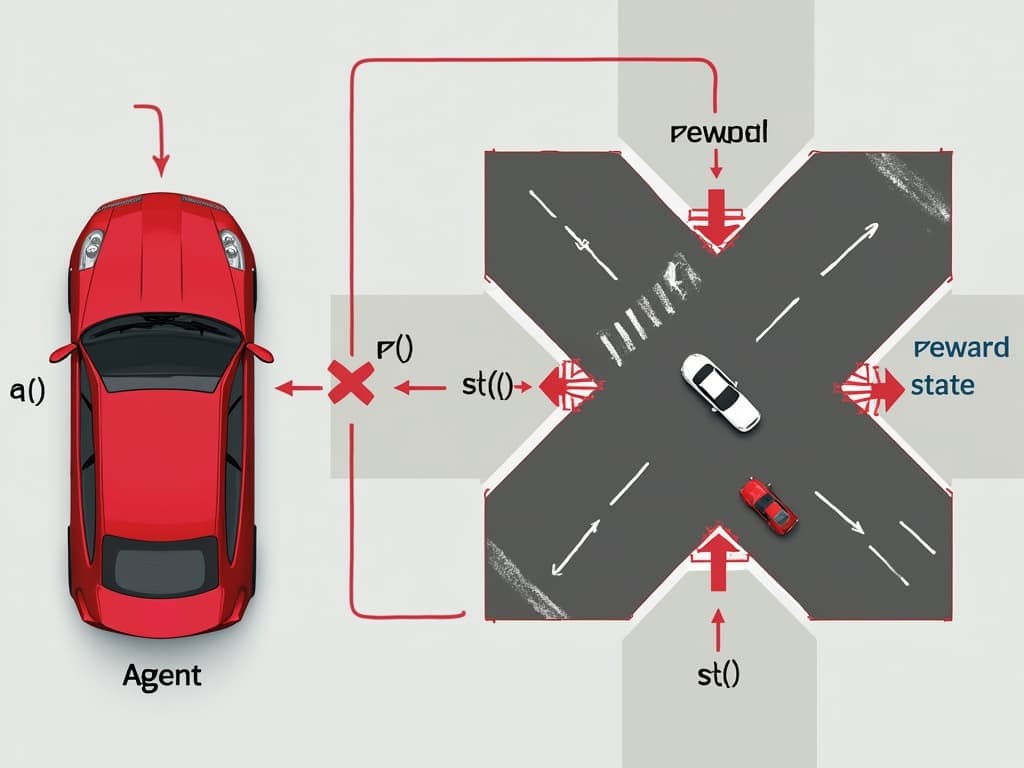
Reinforcement learning provides the framework for knowledge agents to learn optimal strategies for information gathering and application. In this paradigm, agents receive rewards for successful knowledge acquisition and application, gradually learning which actions lead to the most valuable outcomes.
These systems typically operate through several key mechanisms:
- Goal-oriented exploration: Agents learn to navigate information spaces strategically rather than randomly
- Adaptive information gathering: Systems adjust their search strategies based on what they've already learned
- Contextual application: Knowledge is applied in ways that maximize relevance to specific problems
- Continuous learning: Agents improve their knowledge-seeking behaviors over time through experience
Technical Implementation and Architecture
While specific implementation details vary, knowledge agent architectures typically combine several AI components:
- RL algorithms that optimize decision-making about when and how to seek information
- Memory systems that store and organize acquired knowledge for future use
- Reasoning modules that process information to draw inferences and make connections
- Action spaces that define possible knowledge-seeking behaviors
These systems often employ hierarchical reinforcement learning approaches where higher-level strategies guide lower-level information-gathering actions. This allows agents to balance exploration (seeking new information) with exploitation (using existing knowledge effectively).
Applications and Use Cases
Knowledge agents powered by reinforcement learning could revolutionize numerous domains:
Scientific Research: Autonomous agents could systematically explore scientific literature, identify knowledge gaps, and propose novel research directions based on patterns in existing knowledge.
Business Intelligence: Systems could continuously monitor market trends, competitor activities, and emerging technologies, providing strategic insights without human prompting.
Education: Personalized learning agents could dynamically adapt to student knowledge gaps, seeking out appropriate educational resources and adjusting teaching strategies in real-time.
Healthcare: Medical knowledge agents could stay current with the latest research, helping clinicians make evidence-based decisions by synthesizing information from diverse sources.
Challenges and Limitations
Despite their promise, knowledge agents face significant challenges:
Information Quality Assessment: Agents must learn to distinguish reliable from unreliable information sources, a particularly difficult problem in environments with conflicting or misleading data.
Computational Efficiency: The exploration required for effective knowledge acquisition can be computationally expensive, especially when dealing with vast information spaces.
Ethical Considerations: Autonomous knowledge-seeking systems raise questions about privacy, information ownership, and potential biases in what knowledge is pursued or ignored.
Integration with Existing Systems: Deploying knowledge agents in real-world environments requires seamless integration with existing databases, APIs, and information systems.
Future Directions and Research Priorities
Research in knowledge agents via reinforcement learning is rapidly evolving, with several promising directions:
Multi-agent knowledge systems: Networks of specialized agents that collaborate on complex knowledge tasks
Cross-modal knowledge integration: Systems that can process and connect information across text, images, audio, and other modalities
Human-agent collaboration: Interfaces that allow humans to guide and benefit from autonomous knowledge agents
Lifelong learning architectures: Systems that can continuously acquire and integrate new knowledge without catastrophic forgetting
Implications for AI Development
The development of knowledge agents represents a significant milestone in AI evolution, moving systems from passive repositories of information to active seekers and appliers of knowledge. This shift has profound implications for how we conceptualize artificial intelligence and its role in society.
As these systems become more sophisticated, they may fundamentally change how knowledge work is performed, potentially augmenting human capabilities in research, analysis, and decision-making. However, this also raises important questions about the future of expertise and the relationship between human and artificial intelligence in knowledge-intensive domains.
Source: Based on research developments discussed by Omar Sar at https://x.com/omarsar0/status/2030998298203754755
The emergence of knowledge agents via reinforcement learning marks an important step toward more autonomous, goal-oriented AI systems. While significant challenges remain, this approach promises to create AI that doesn't just know things, but knows how to learn things—a capability that could transform our relationship with artificial intelligence and knowledge itself.