The Innovation — What the Source Reports
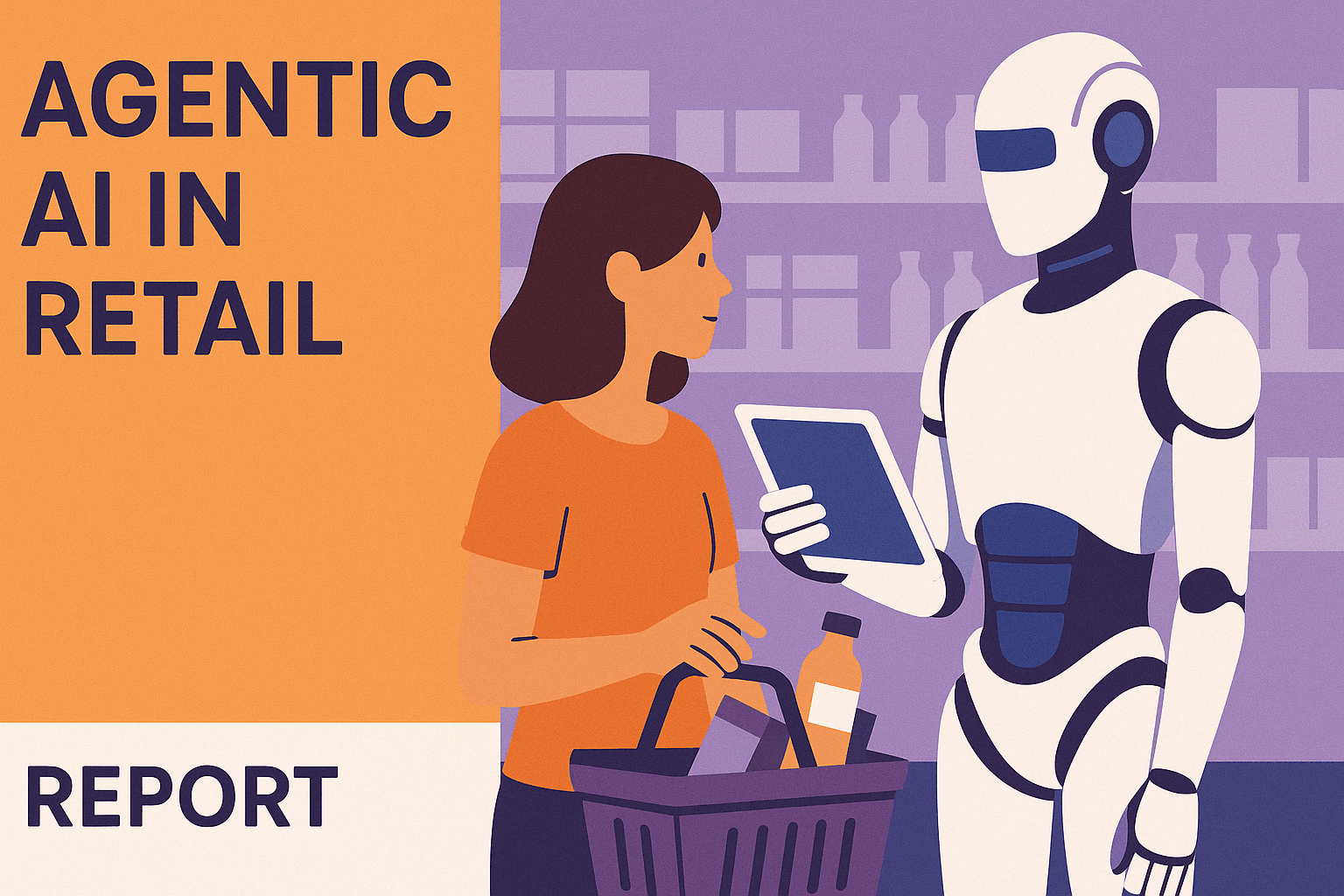
The retail industry is transitioning from speculative discussions about agentic AI to active, hands-on testing. According to the report, retail leaders—presumably major brands and retailers—are now embracing experimental deployments of agentic AI systems. While the source doesn't name specific companies, the implication is clear: the industry is moving beyond pilot projects and proof-of-concepts into more serious evaluation phases where autonomous AI agents are tested against actual retail workflows and business processes.
This testing phase represents a critical maturation point for agentic AI in retail. Rather than treating the technology as a futuristic concept, companies are now asking practical questions about reliability, accuracy, cost, and integration challenges. The testing likely focuses on specific retail domains where agentic AI could provide immediate value: customer service automation, inventory management, personalized shopping assistance, supply chain optimization, and dynamic pricing strategies.
Why This Matters for Retail & Luxury
For luxury and retail executives, this testing phase represents the bridge between theoretical potential and practical implementation. Agentic AI—systems that can autonomously perform complex tasks, make decisions, and interact with other systems—promises to transform several core retail functions:
Customer Experience Transformation: Agentic AI could power highly personalized shopping assistants that don't just recommend products but actively help customers navigate complex decisions—from wardrobe planning to gift selection—while maintaining brand voice and luxury service standards.
Operational Efficiency: In supply chain and inventory management, agentic systems could autonomously monitor stock levels, predict demand fluctuations, and initiate reordering processes, potentially reducing stockouts and overstock situations that are particularly costly in luxury retail.
Personalization at Scale: Agentic AI could analyze customer data across multiple touchpoints to create truly individualized shopping experiences, something luxury brands have struggled to achieve at scale while maintaining exclusivity.
Cross-Channel Integration: These systems could seamlessly connect online and offline experiences, allowing customers to begin an interaction in-store and continue it through digital channels with consistent context and service quality.
Business Impact — Quantified Potential
While the source doesn't provide specific metrics, we can contextualize the potential impact using related industry projections from our knowledge graph. Gartner projects that 40% of enterprise applications will feature task-specific AI agents by 2026, suggesting rapid mainstream adoption is imminent. More dramatically, industry projections forecast that agents could handle 50% of online transactions by 2027.
For luxury retailers, the implications are profound. If these projections hold true, within three years:
- Nearly half of all customer interactions could be mediated or assisted by AI agents
- Transaction processing could become largely autonomous
- Human staff could shift from routine tasks to high-value relationship building and complex problem solving
The financial impact could be substantial, though luxury brands must balance efficiency gains with maintaining the human touch that defines premium experiences.
Implementation Approach — Technical Requirements
Implementing agentic AI in retail requires several foundational elements:
Robust Data Infrastructure: Agentic systems need access to clean, structured data from multiple sources—CRM, inventory systems, transaction records, customer behavior data, and potentially real-time store data.
API Integration Layer: Agents must interact with existing retail systems through well-defined APIs, requiring investment in integration architecture and potentially middleware solutions.
Orchestration Framework: Managing multiple agents working on different tasks requires sophisticated orchestration to ensure they work harmoniously and don't conflict with each other.
Testing Environment: As the source emphasizes, testing is crucial. Retailers need sandbox environments where agents can be tested against realistic scenarios without disrupting live operations.
Monitoring and Control Systems: Given the autonomous nature of these systems, robust monitoring, alerting, and override capabilities are essential for risk management.
Governance & Risk Assessment
Privacy and Data Security: Luxury retailers handle sensitive customer data, including purchase history, preferences, and personal information. Agentic AI systems accessing this data must comply with GDPR, CCPA, and other regulations while maintaining brand trust.
Brand Voice Consistency: Autonomous agents representing luxury brands must consistently reflect brand values, tone, and service standards—a significant challenge for AI systems that might default to generic responses.
Bias and Fairness: AI agents making recommendations or decisions must avoid reinforcing biases in pricing, product recommendations, or customer service treatment.
Maturity Assessment: Current agentic AI technology is still evolving. Retail leaders testing these systems are likely encountering limitations in reasoning capabilities, error handling, and complex decision-making that requires human judgment.
Integration Complexity: Legacy retail systems weren't designed for AI agent integration, creating technical debt and implementation challenges that could slow adoption.
gentic.news Analysis
This development represents a logical progression in the retail AI landscape we've been tracking. The shift from discussion to testing aligns with several trends evident in our knowledge graph:
Google's Strategic Positioning: Google's recent launch of an Agentic Sizing Protocol for retail AI (March 25-26, 2026) directly supports this testing phase by providing standardized tools for one of retail's most challenging problems—accurate size recommendations. This follows Google's pattern of developing retail-specific AI infrastructure, including their Universal Commerce Protocol and integration of agentic capabilities into Google Workspace via their Official Workspace MCP Endpoint.
Competitive Landscape Intensifies: As we reported in "American Express Bets on Agentic AI Commerce with ACE Developer Kit" (March 26, 2026), financial services are making similar moves, suggesting cross-industry validation of the agentic approach. The competition between Google, Microsoft, Anthropic, and OpenAI in providing the underlying models for these agents creates both opportunity and complexity for retailers choosing platforms.
Enterprise Validation: Our coverage of "Accenture's DaVinci Investment Signals Growing Enterprise Bet on Agentic Commerce" (March 25, 2026) shows that major consulting firms are betting heavily on this space, providing implementation expertise that will accelerate adoption once testing phases conclude successfully.
Technical Foundations Maturing: The increased mentions of Agentic RAG (Retrieval-Augmented Generation) in our knowledge graph—appearing in 6 articles this week alone—suggests the underlying technology for making agents more accurate and context-aware is rapidly improving, addressing one of the key concerns for retail applications where precision matters.
Historical Context: This testing phase follows nearly two years of experimentation with simpler AI applications in retail. The fact that leaders are now testing more autonomous systems suggests confidence has grown in basic AI capabilities, and the focus has shifted to more sophisticated implementations.
For luxury retail specifically, the testing phase represents both opportunity and caution. The opportunity lies in creating unprecedented personalized experiences at scale. The caution comes from the need to preserve brand exclusivity and human connection—elements that cannot be fully automated without risking brand dilution. The most successful implementations will likely be hybrid approaches where agentic AI handles routine interactions and data processing, while human experts focus on high-touch relationship building and complex creative decisions.
The next 12-18 months will be critical. Testing outcomes will determine whether agentic AI becomes a transformative retail technology or remains limited to specific, well-contained applications. Based on the momentum indicated by our knowledge graph trends—with Agentic AI appearing in 12 articles this week and Google in 36—the direction seems clear: agentic AI is moving from experimental to essential in retail strategy.