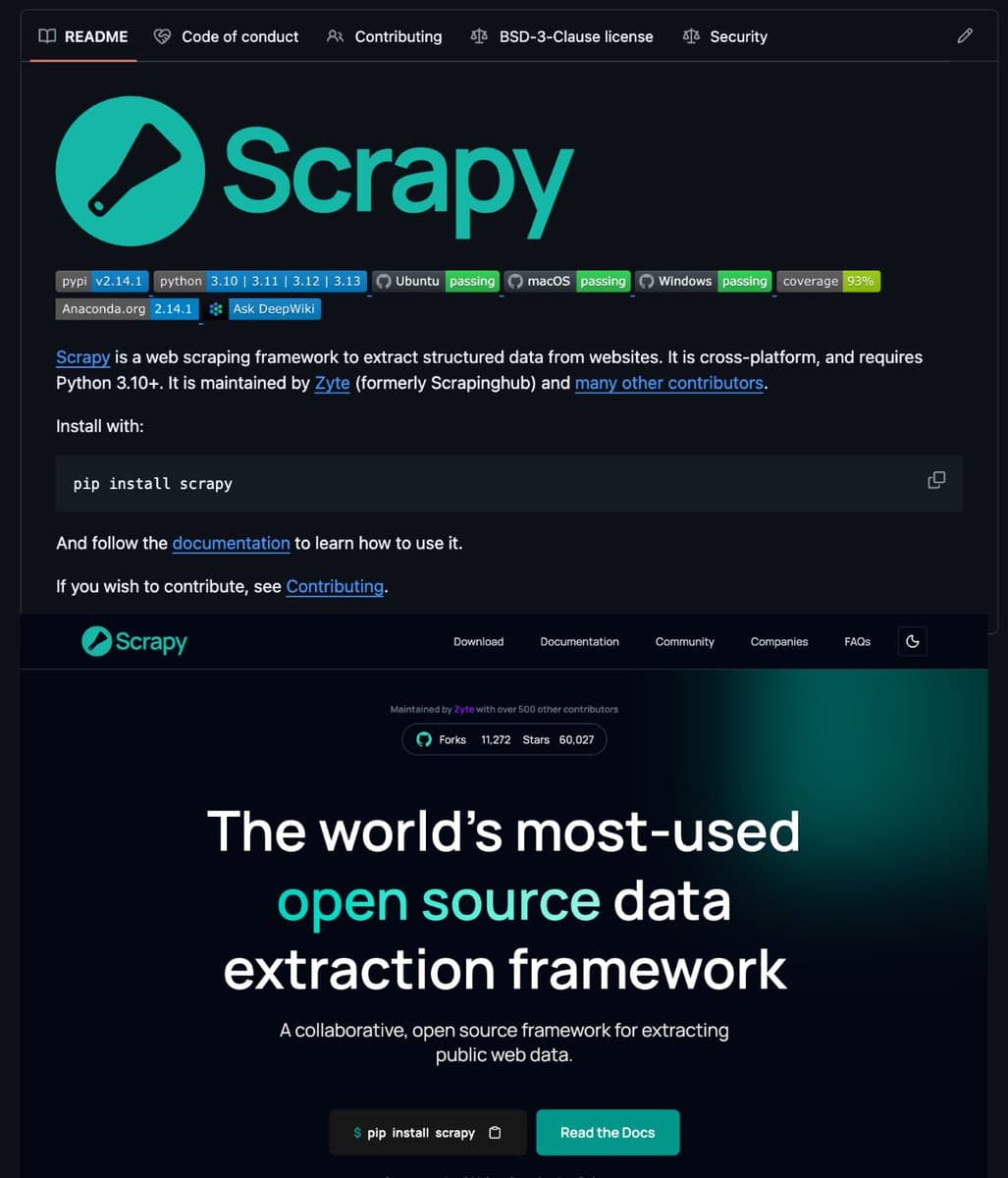
In an era where data has become the new currency, web scraping remains one of the most essential yet challenging tasks for developers, researchers, and businesses. For years, organizations have relied on expensive SaaS solutions and cloud APIs that come with significant costs, usage limits, and privacy concerns. Enter Scrapy—a Python framework that's quietly revolutionizing how we extract data from the web, putting powerful scraping capabilities directly into developers' hands without the monthly subscription fees.
What Makes Scrapy Different?
Unlike simple scraping scripts or limited API solutions, Scrapy is a complete web crawling and data extraction framework. According to developer Hasan Töre's recent spotlight on the tool, Scrapy operates entirely from your own machine, meaning no data leaves your infrastructure and you're not subject to cloud API limits or SaaS billing models. This local-first approach addresses growing concerns about data privacy, sovereignty, and cost predictability that have plagued the web scraping industry.
Scrapy's architecture is built around "spiders"—customizable crawlers that developers define once to extract specific data patterns from websites. Once configured, these spiders can scale to process millions of pages while maintaining clean, structured output that can be exported to JSON, CSV, or XML formats instantly.
Enterprise Features Without Enterprise Pricing
What's remarkable about Scrapy is that it offers features typically found in expensive enterprise scraping solutions:
Asynchronous Architecture: Built for parallel crawling at scale, Scrapy can handle multiple requests simultaneously, dramatically reducing the time needed to scrape large websites.
Built-in Middleware: The framework includes sophisticated handling for proxies, automatic retries, and rate limiting—essential features for respectful, sustainable web scraping that avoids overwhelming target servers.
Powerful Selectors: With both CSS and XPath selector support, developers can extract data with precision and minimal boilerplate code.
Pluggable Pipelines: Scrapy's pipeline system allows for custom data processing, including cleaning, deduplication, and storage integration, making it easy to fit into existing data workflows.
Production-Ready: With 54,800+ production projects already depending on it and 15+ years of development history, Scrapy has been battle-tested across countless real-world applications.
The Open-Source Advantage
Scrapy's BSD-3 license means it's completely free to use, modify, and distribute—a significant departure from the subscription-based models that dominate the web scraping market. This open-source approach has fostered a vibrant community of contributors who have helped the project amass 59,000 GitHub stars and maintain compatibility across macOS, Windows, and Linux systems.
The framework's longevity is particularly noteworthy. While many scraping tools come and go, Scrapy has maintained relevance through multiple generations of web technologies, adapting to changes in JavaScript frameworks, anti-bot measures, and website structures while maintaining its core philosophy of simplicity and power.
Implications for Developers and Businesses
For individual developers and small teams, Scrapy eliminates the financial barrier to sophisticated web scraping. What might have required hundreds or thousands of dollars in monthly SaaS fees can now be accomplished with Python knowledge and a local machine.
For enterprises, Scrapy offers greater control over data extraction processes. Since everything runs locally, companies can ensure compliance with data protection regulations, maintain security standards, and avoid vendor lock-in. The framework's scalability means it can grow with organizational needs without exponentially increasing costs.
Data scientists and researchers benefit particularly from Scrapy's ability to create custom data collection pipelines tailored to specific research questions, rather than being limited by what commercial APIs offer.
The Future of Web Scraping
Scrapy represents a broader trend toward democratizing data access tools. As more sophisticated frameworks move to open-source models, the barrier to data-driven innovation continues to lower. This shift could accelerate research across fields from market analysis to academic studies, as more organizations gain the ability to collect and analyze web data without prohibitive costs.
However, with great power comes great responsibility. Scrapy's capabilities mean developers must be particularly mindful of ethical scraping practices, respecting robots.txt files, implementing appropriate rate limiting, and considering the impact of their scraping activities on target websites.
Getting Started with Scrapy
For those interested in exploring Scrapy, the framework's documentation is comprehensive and beginner-friendly. The learning curve is manageable for developers with basic Python experience, and the active community provides support through forums, GitHub discussions, and extensive examples.
As web data continues to grow in importance for decision-making across industries, tools like Scrapy that make this data accessible without gatekeepers or excessive costs will play an increasingly vital role in the data ecosystem.
Source: Hasan Töre's analysis of Scrapy on X/Twitter (@hasantoxr)