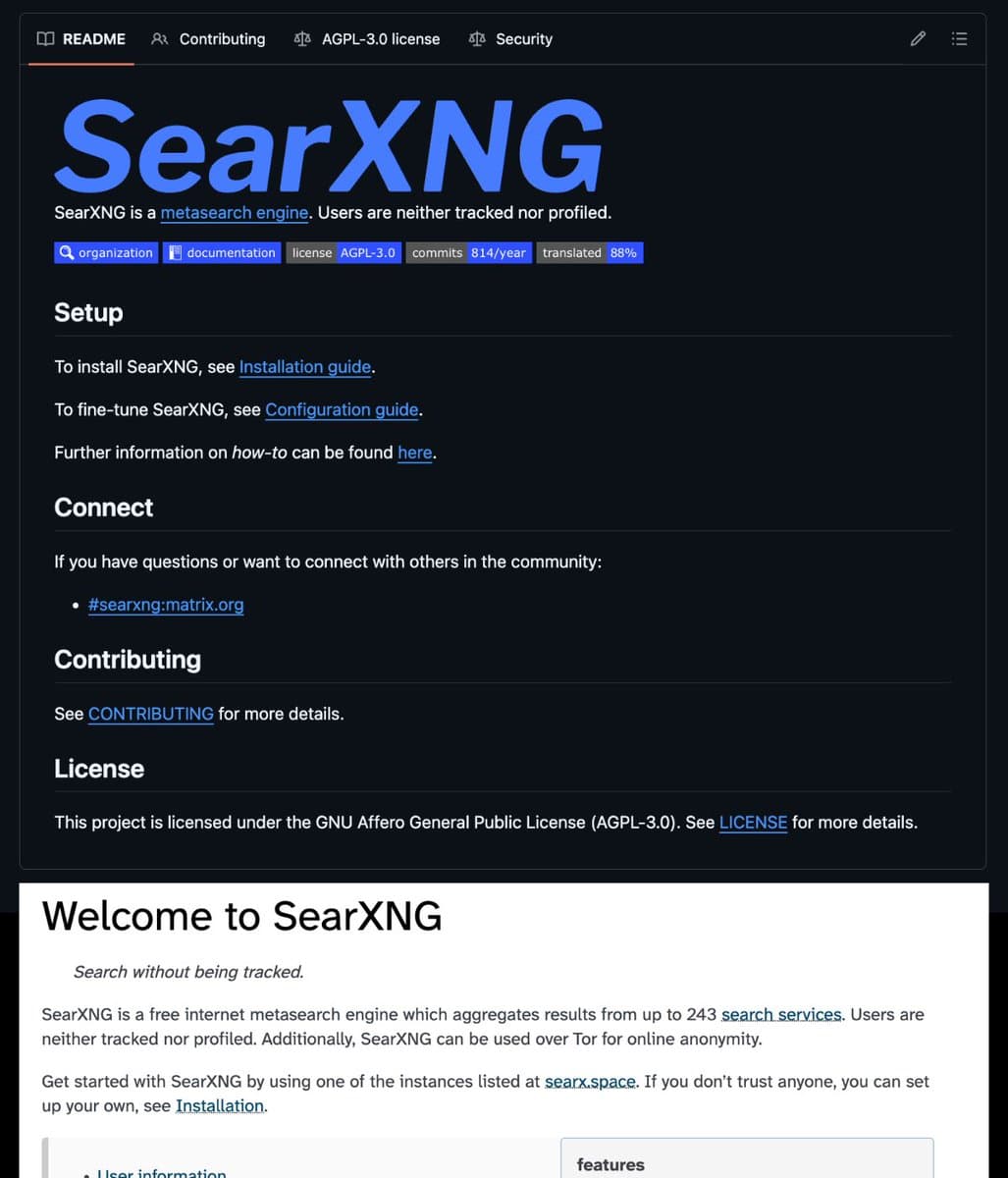
In an era where digital privacy concerns continue to mount, a developer has created SearXNG—a privacy-focused metasearch engine that aggregates results from Google, Bing, and over 70 other sources without tracking user activity. This open-source project represents a significant shift toward user-controlled search infrastructure, offering an alternative to the surveillance-based business models dominating the search industry.
What Makes SearXNG Different?
SearXNG operates as a metasearch engine, meaning it doesn't maintain its own search index but instead queries multiple search engines simultaneously and presents aggregated results. The platform pulls data from major providers including Google, Bing, Yahoo, Brave, and DuckDuckGo, along with numerous specialized sources for news, images, videos, and academic content.
The fundamental distinction lies in its privacy architecture: SearXNG implements zero tracking, zero profiling, and eliminates the targeted advertising that follows users across the web. Unlike commercial search engines that monetize user data, SearXNG treats search queries as anonymous requests, preventing the creation of behavioral profiles that fuel today's attention economy.
Technical Implementation and Deployment
Developed as open-source software under the AGPL-3.0 license, SearXNG boasts contributions from 276 developers worldwide who maintain and enhance the platform. The project emphasizes accessibility through straightforward deployment options, most notably via Docker commands that allow users to run their own instances on affordable hosting services.
This self-hosting capability represents a core philosophical difference from commercial alternatives. Users can deploy SearXNG on any $5-per-month server, creating personalized search portals that they completely control. The platform also offers customization features, allowing users to select which search engines to query for different categories of information.
The Privacy Implications
The emergence of SearXNG addresses growing concerns about data collection practices among major technology companies. Traditional search engines typically record search queries, IP addresses, browser information, and often link this data to user accounts for advertising purposes. SearXNG's architecture deliberately breaks this chain by anonymizing requests before forwarding them to search providers.
This approach means that while SearXNG users benefit from the comprehensive indexes maintained by Google, Bing, and other providers, those companies receive queries without the contextual data needed to build detailed user profiles. The platform essentially acts as a privacy buffer between users and the surveillance infrastructure underlying modern search.
Community-Driven Development Model
With 276 contributors maintaining the project, SearXNG represents a collaborative approach to search technology development. This distributed model contrasts sharply with the centralized control exercised by corporate search providers. The open-source nature ensures transparency in how the software operates and processes user queries, allowing security researchers to audit the code for potential vulnerabilities or privacy issues.
The AGPL-3.0 license further reinforces this commitment to openness by requiring that any modifications to the software remain publicly available. This prevents proprietary forks that might compromise the privacy guarantees that define the project.
Practical Considerations and Limitations
While SearXNG offers compelling privacy advantages, users should understand certain practical considerations. Self-hosting requires technical knowledge, though the Docker implementation simplifies this process significantly. Performance may vary depending on the hosting environment and the number of search engines queried simultaneously.
Additionally, because SearXNG relies on existing search providers, it remains subject to their terms of service and rate limiting policies. Users operating personal instances at scale might encounter restrictions from providers like Google, though the distributed nature of SearXNG instances across many IP addresses helps mitigate this concern.
The Broader Context of Search Privacy
SearXNG emerges amid increasing regulatory scrutiny of big tech data practices and growing consumer awareness of privacy issues. The platform joins other privacy-focused alternatives like DuckDuckGo and Startpage but distinguishes itself through its metasearch approach and self-hosting capabilities.
The project reflects a broader movement toward decentralized web infrastructure, where users regain control over their digital experiences rather than relying on corporate intermediaries. This aligns with developments in other areas of technology, including decentralized social media, encrypted messaging, and blockchain-based identity systems.
Future Development and Adoption
As an open-source project with active community development, SearXNG continues to evolve. Future enhancements may include improved user interfaces, additional search engine integrations, and enhanced privacy features. The distributed nature of development means improvements can come from anywhere in the world, potentially accelerating innovation compared to corporate development cycles.
Adoption patterns will likely follow two paths: individual users deploying personal instances for enhanced privacy, and organizations implementing SearXNG as part of their security infrastructure. Educational institutions, privacy-conscious businesses, and government agencies represent potential institutional adopters seeking to minimize external data exposure.
Source: @hasantoxr on X/Twitter