Shopify shipped its Spring '26 Edition on June 17, placing a single 'Agentic' hub inside every merchant's admin panel and making its catalog infrastructure available to brands on any ecommerce platform. The timing is not incidental: ChatGPT now accounts for roughly 20% of Walmart's referral traffic, up from under 1% a year ago, and AI-driven referrals to U.S. retailers rose 393% in the first quarter of 2026 compared with the same period in 2025, according to Adobe Analytics.
Those numbers reframe the story Shopify is telling. This is no longer a pilot program for forward-looking merchants to monitor — it is a live revenue channel that the largest retailers in the world are already competing on.
Key Takeaways
- Shopify launched its Spring '26 Edition on June 17, expanding agentic storefronts to millions of merchants and opening its catalog infrastructure to brands on any platform.
- The release arrives as AI referral traffic to U.S.
- retailers jumped 393% in Q1 2026, with ChatGPT now accounting for 20% of Wal.
What actually launched
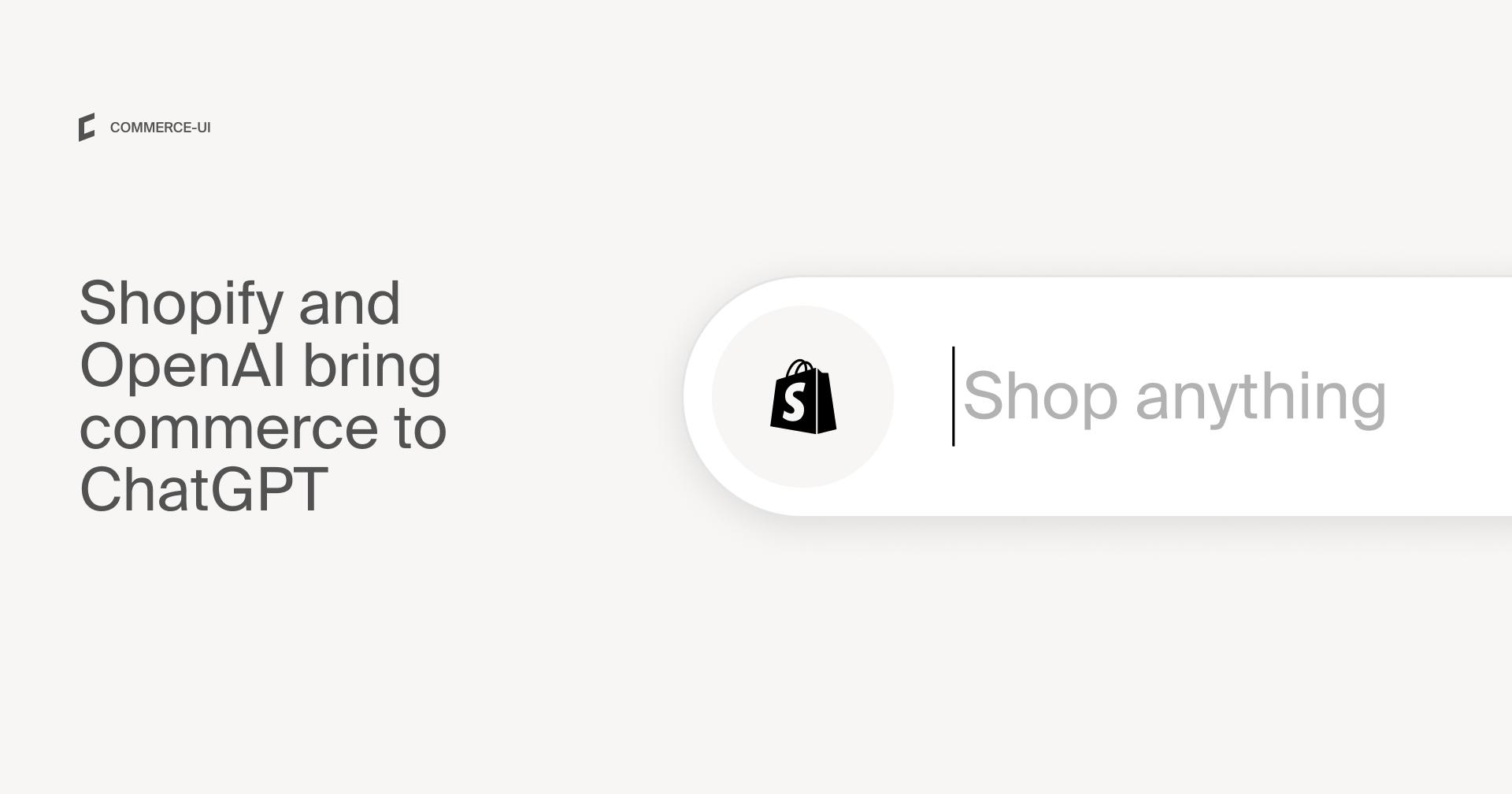
Agentic Storefronts, the core feature, first appeared in Shopify's Winter '25 Edition in December 2025. The Spring '26 release expands the scope significantly: products in the Shopify Catalog are now automatically syndicated to ChatGPT, Google AI Mode, Google Gemini, Microsoft Copilot, and the Shop app, with no per-channel integration required. A new 'Agentic' section in the admin dashboard aggregates orders, conversion rates, and revenue by AI channel in a single view.
The Spring '26 Edition also introduces a Knowledge Base tool that surfaces the questions AI agents are actively asking about a brand — retail locations, bulk ordering terms, return policies — and lets merchants fill in answers directly. Shopify says AI searches powered by its Catalog convert at twice the rate of scraped product data, a figure that will matter to any merchant calculating whether the setup effort is worth it.
For brands not currently on Shopify, the company launched an 'Agentic Plan' that gives them access to the Catalog and the AI channel network without requiring a full platform migration.
The open standard underneath
Underpinning the launch is the Universal Commerce Protocol (UCP), an open standard Shopify co-developed with Google and announced at the National Retail Federation's NRF 2026 conference in January. Amazon, Meta, Microsoft, Salesforce, Stripe, Target, Etsy, and Wayfair are all backers. The spec is published on GitHub under Apache License 2.0.
UCP defines how AI agents authenticate with merchants, read product catalogs, build carts, and initiate checkout — the plumbing that makes a ChatGPT conversation end in a completed purchase rather than a redirect. Shopify processes the transaction through its standard checkout, handling payment, tax, fraud detection, and fulfillment, while the merchant retains full attribution data and customer ownership.
The protocol's open nature is a deliberate strategic move. By publishing the spec rather than keeping it proprietary, Shopify and Google are pushing for a standard that could become as ubiquitous for AI commerce as HTTP is for the web — and, not coincidentally, one that leaves Amazon structurally outside the tent. Amazon has blocked most AI crawlers from its product pages, protecting its $56 billion advertising business but ceding ground as ChatGPT steers shoppers to Walmart and Target instead.
The numbers retailers are actually seeing
The Sensor Tower data cited in earlier coverage — AI referrals at 1.5% of traffic to major retailers — is now significantly out of date. More recent figures paint a different picture:
Key facts
- ChatGPT accounts for approximately 20% of Walmart's referral traffic and nearly 15% of Target's, per Similarweb data from mid-2026.
- AI-driven referrals to U.S. retailers rose 393% in Q1 2026 year-on-year (Adobe Analytics).
- AI-referred shoppers spend 48% more time on product pages and generate 37% more revenue per visit than visitors from other channels.
- Orders from AI-powered searches on Shopify have grown 15 times year-on-year since January 2025.
- OpenAI estimates roughly 50 million product-focused queries pass through ChatGPT each day.
The caveat matters: even at 20% of referral clicks, referral traffic is itself a small fraction of Walmart's total visits. AI commerce is growing explosively from a small base, not yet dominant in absolute terms.
What it means for luxury and specialty retail
For luxury brands, the implications cut in two directions. AI assistants prioritize products with structured, complete data: precise dimensions, materials, care instructions, and high-resolution imagery. A heritage house with a strong digital catalog infrastructure — LVMH maisons with dedicated e-commerce teams, for example — may find AI channels a powerful new discovery surface for high-intent buyers. A smaller independent label with sparse product metadata risks invisible status.
The query data Shopify now surfaces is arguably more valuable than the sales attribution: knowing that shoppers are asking 'What is the best silk dress for a summer wedding under €500?' tells a brand exactly which product gaps and price anchors AI agents are working with. That is a fundamentally different signal from traditional keyword data, and one luxury brands have not had access to before.
There is also a brand-voice risk. When a chatbot surfaces your product, the description it reads is whatever lives in your catalog fields — not your campaign copy, not your editorial narrative. Brands that have invested heavily in storytelling will need to translate that work into structured data fields to remain competitive in AI-mediated discovery.
What to watch: Whether Amazon reverses its crawler-blocking stance as AI referral revenue at rivals becomes undeniable — and how quickly luxury conglomerates move to join the Agentic Plan rather than wait for bespoke integrations.
Source: modern_retail
[Updated 23 Jun via gn_ai_funding]
OpenAI is pitching advertising placements to marketers at the Cannes Lions festival, signalling a direct monetisation push ahead of its anticipated IPO [per Financial Times]. Separately, Getty Images signed a multi-year licensing agreement allowing OpenAI to use its content library in ChatGPT and AI search [per The Decoder]. These moves point to a commercialisation strategy that could reshape how brands appear in AI-driven product discovery — potentially adding paid placement layers to the organic catalog listings Shopify merchants now depend on.