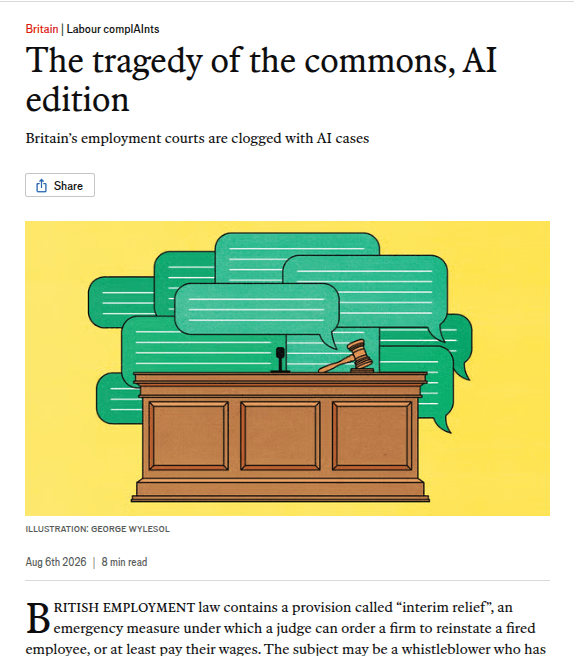
Britain's employment-tribunal backlog hit 64,000 cases, up from 45,000 a year earlier, as workers replace lawyers with AI drafting tools. Judges report the surge stems directly from free AI-generated claims that cost claimants nothing to file.
Key facts
- 64,000 open UK employment-tribunal cases, up from 45,000
- 42% year-over-year increase in tribunal backlog
- AI drafting costs claimants nothing to file
- Judges attribute surge to AI-generated claims
- No data on share of AI-drafted cases disclosed
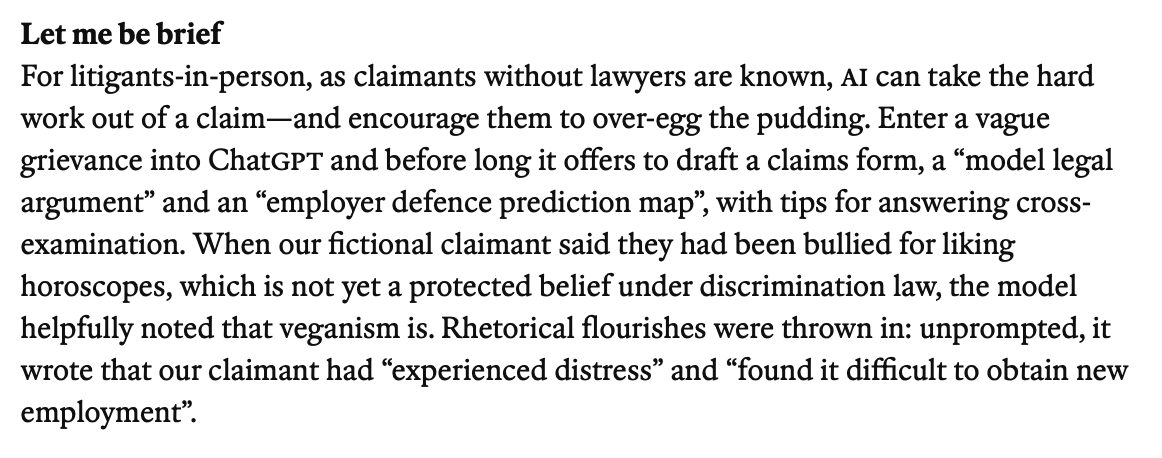
The numbers are stark: 64,000 open employment-tribunal cases in Britain, up roughly 42% from 45,000 a year prior According to @rohanpaul_ai. The cause, per judges cited in the report, is the proliferation of AI-drafted claims from workers who would otherwise never have filed. "AI now does the drafting that once required a lawyer, so filing a claim costs the claimant nothing."
This is not a story about AI writing better legal arguments. It is a story about AI collapsing the cost of initiating a legal process to zero, and the institutional friction that remains unchanged. The drafting was never the bottleneck — judicial review was. Each AI-generated claim still requires a human judge to read it, assess it, and either dismiss or schedule it. The tribunal system's capacity to absorb claims did not change; the volume of claims did.
The cost asymmetry
What makes this structurally different from prior waves of pro-se litigation is the absence of any quality gate. A worker with a grievance and a free chatbot can now produce a claim that is formally sufficient to enter the system. Whether the claim has merit is a question the tribunal must now answer — at public expense. The claimant bears zero cost for filing, so the rational strategy is to file first and refine later.
This is the same dynamic that has played out in US small-claims courts and in the rise of AI-generated mass comments in regulatory proceedings. The pattern is consistent: when the cost of generating a legal artifact approaches zero, the system's intake triples, and the adjudication bottleneck becomes the binding constraint.
The source does not disclose how many of the 64,000 cases are AI-drafted, nor whether the tribunal has begun filtering or summarily dismissing them. The report is silent on whether the government has responded with new filing fees or procedural gates.
What the tribunal data does not say
There is a counter-reading worth holding: the backlog may reflect not just AI volume but also a genuine increase in workplace disputes — post-pandemic employment practices, remote-work disagreements, and wage disputes. The source offers no breakdown. What is clear is that the year-over-year increase coincides with the widespread availability of consumer AI chatbots, and judges are attributing the surge to AI drafting directly.
For AI policy observers, the employment tribunal is a canary. It is a low-cost, high-volume adjudication system where AI-generated filings are colliding with fixed human review capacity. Other jurisdictions — and other high-volume legal processes like parking appeals, immigration petitions, and small claims — will face the same pressure. The question is not whether AI will flood legal systems, but which systems break first.
Key Takeaways
- UK employment-tribunal backlog hit 64,000 cases, up from 45,000, as workers use AI to draft claims free.
- Judges say AI filings overwhelmed the system, exposing a cost-asymmetry crisis.
What to watch
Watch for the UK Ministry of Justice's next quarterly tribunal statistics, due within months, and whether the government introduces filing fees or mandatory pre-claim mediation to gate AI-generated submissions. Also watch for any tribunal rule change requiring disclosure of AI assistance, which would quantify the actual share of AI-drafted claims.