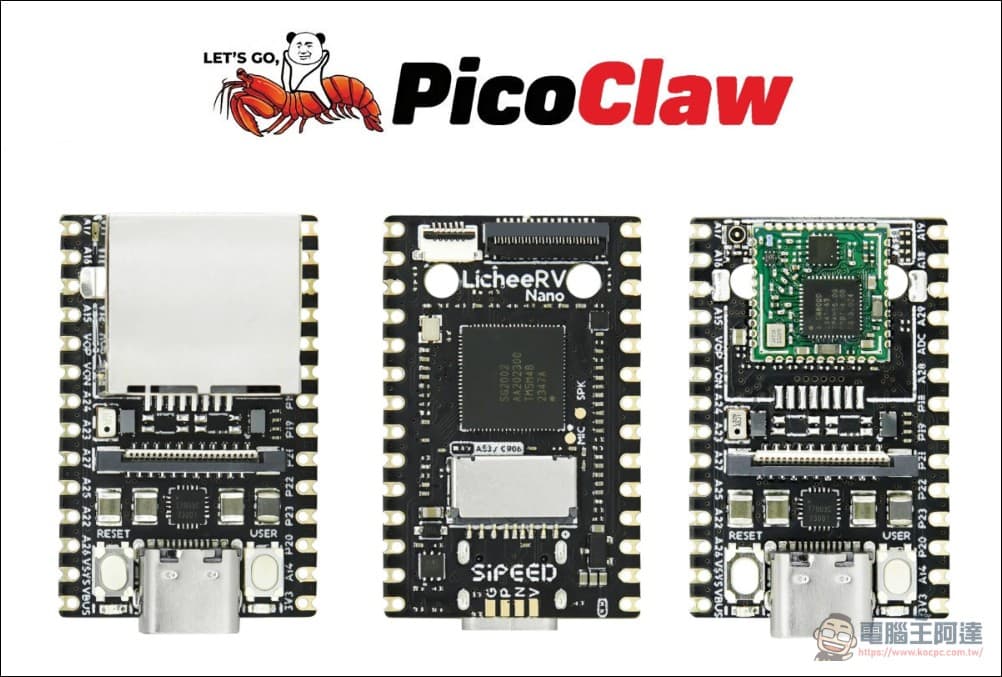
Chinese AI and hardware company Sipeed has launched PicoClaw, an open-source framework for Large Language Model (LLM) orchestration and agent deployment. The core proposition is extreme resource efficiency: the framework is designed to run on ~$10 single-board computers (like the Raspberry Pi Pico series) with a core memory footprint of under 10 MB of RAM.
Positioned as an alternative to frameworks like OpenClaw, PicoClaw aims to bring LLM-powered automation and tool use to the most constrained embedded environments.
What PicoClaw Does
PicoClaw is a lightweight orchestration layer that sits between an LLM (which can be hosted remotely or run locally if small enough) and the physical or digital world. Its feature set, as indicated by the announcement, includes:
- LLM Orchestration: Managing the flow of tasks, reasoning, and actions for an AI agent.
- Multi-Channel Messaging: Handling inputs and outputs across different communication protocols, which is essential for IoT and edge device integration.
- Tools/Skills System: Allowing the LLM to call predefined functions or APIs to interact with external systems.
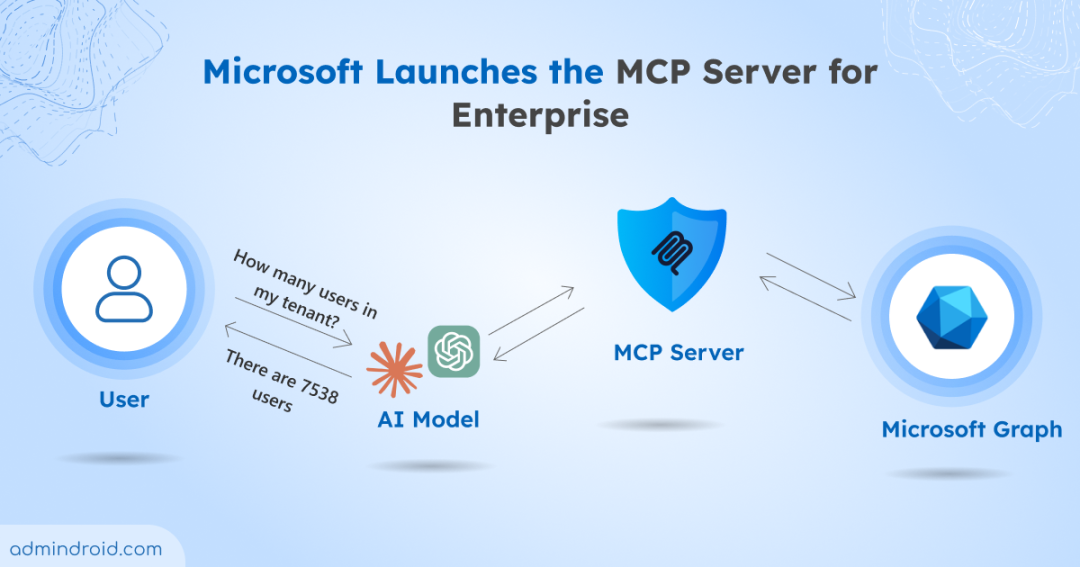
- Model Context Protocol (MCP) Support: Integration with the emerging MCP standard, pioneered by Anthropic, which provides a unified way for LLMs to access data sources and tools. This is a notable feature for a framework targeting low-resource hardware.
The Technical Edge: Cost and Size
The defining characteristic of PicoClaw is its minimal hardware requirements. By targeting a sub-10MB RAM footprint, it can operate on microcontrollers and the lowest-tier single-board computers, which typically cost around $10. This is a different paradigm from running agent frameworks on cloud servers or even more powerful edge devices like NVIDIA Jetson modules or higher-end Raspberry Pi models.
This design choice suggests a focus on deploying simple, dedicated LLM agents for specific tasks—like parsing natural language commands to control lights, querying a local database, or managing a basic workflow—directly on the device where the interaction happens, without relying on constant cloud connectivity.
The Sipeed Context
Sipeed is known in the maker and embedded AI community for its affordable AI acceleration hardware, such as the K210 RISC-V AIoT chip and modules like the Maix series. The company's GitHub presence, noted as having over 27,000 stars, is built on open-source hardware designs and software for edge ML. PicoClaw fits squarely into this portfolio, providing the software layer to leverage LLMs on the same class of hardware where Sipeed has historically focused on computer vision workloads.
Potential Use Cases and Limitations
Potential applications include:
- Smart Home Hubs: A low-cost central unit that uses an LLM to interpret voice or text commands and coordinate other devices.
- Industrial IoT Gateways: Adding natural language querying or alert interpretation to sensor networks.
- Educational Tools: Cheap platforms for experimenting with LLM agents in robotics or electronics projects.
The primary limitation is inherent to the platform: the local LLM running on such constrained hardware would need to be extremely small (likely in the 1-3B parameter range or less), which significantly caps reasoning capability. Therefore, a common deployment pattern would likely involve PicoClaw running locally as an orchestration agent, while the heavier LLM inference is handled via an API call to a cloud service (like GPT-4o Mini, Claude Haiku, or a local server). The framework's efficiency would then lie in managing the agent's state, tool calls, and messaging with minimal overhead.
gentic.news Analysis
PicoClaw's release is a logical next step in the trend of pushing AI inference from the cloud to the edge, but with a specific focus on the agentic layer rather than just the model. While much of the industry effort has been on shrinking LLMs (e.g., Microsoft's Phi series, Google's Gemma 2B), there's been less focus on making the orchestration framework itself ultra-lightweight. Sipeed is addressing that gap.
This move aligns with Sipeed's established strategy of commoditizing access to AI for developers and makers. By open-sourcing PicoClaw, they are fostering an ecosystem that could drive demand for their low-cost AI hardware. The support for the Model Context Protocol (MCP) is a strategically astute inclusion. As we covered in our analysis of Anthropic's MCP launch, MCP is gaining traction as a standard for tool integration. By baking it into a lightweight edge framework, Sipeed ensures PicoClaw can easily connect to the growing ecosystem of MCP servers for data and tools, significantly extending its utility beyond what can be physically hosted on a $10 computer.
The competitive landscape here is distinct. It's not directly competing with cloud-centric agent platforms like LangChain or LlamaIndex. Instead, it's carving out a niche at the far edge, competing with custom-built solutions and potentially challenging developers to think about agents as truly decentralized, low-cost entities. If the framework gains traction, it could accelerate the development of a new class of disposable, single-purpose AI agents embedded in everyday objects.
Frequently Asked Questions
What is the Model Context Protocol (MCP) and why does it matter for PicoClaw?
The Model Context Protocol is an open protocol developed by Anthropic that standardizes how LLMs connect to external data sources and tools (like databases, APIs, or filesystems). For PicoClaw, supporting MCP means the lightweight agent running on a $10 board can easily and securely access a vast array of tools and live data defined by an MCP server, which could be running on a more powerful machine on the same local network. This separates the heavy lifting of tool management from the ultra-constrained edge device.
Can PicoClaw run a full LLM locally on a $10 computer?
Almost certainly not a capable, general-purpose LLM. A $10 single-board computer (like a Raspberry Pi Pico W) has limited RAM and processing power. PicoClaw's sub-10MB footprint is for the orchestration framework itself. The LLM would typically be hosted elsewhere—either on a cloud service, a more powerful local server (like a Raspberry Pi 4/5), or could be a very tiny model (sub-1B parameters) for extremely narrow tasks. PicoClaw manages the agent logic and communication with the LLM, wherever it is.
How does PicoClaw compare to OpenAI's GPT-4o or other cloud APIs?
It doesn't. They are complementary. PicoClaw is a framework for building agents that use LLMs like GPT-4o. You would configure PicoClaw to make API calls to OpenAI (or Anthropic, Google, etc.) for the core LLM reasoning. PicoClaw's job is to maintain the agent's state, manage the conversation, and execute tool calls based on the LLM's instructions, all while consuming minimal resources on your edge device.
Who is the target developer for PicoClaw?
The target developer is likely a maker, hardware engineer, or IoT developer who wants to integrate conversational AI or automated agentic behavior into a physical product or prototype without relying on a always-on cloud connection for the entire agent stack. It's for scenarios where low cost, low power, and local execution of the agent's decision-making logic are critical, even if the heavy LLM inference happens elsewhere.