What Happened
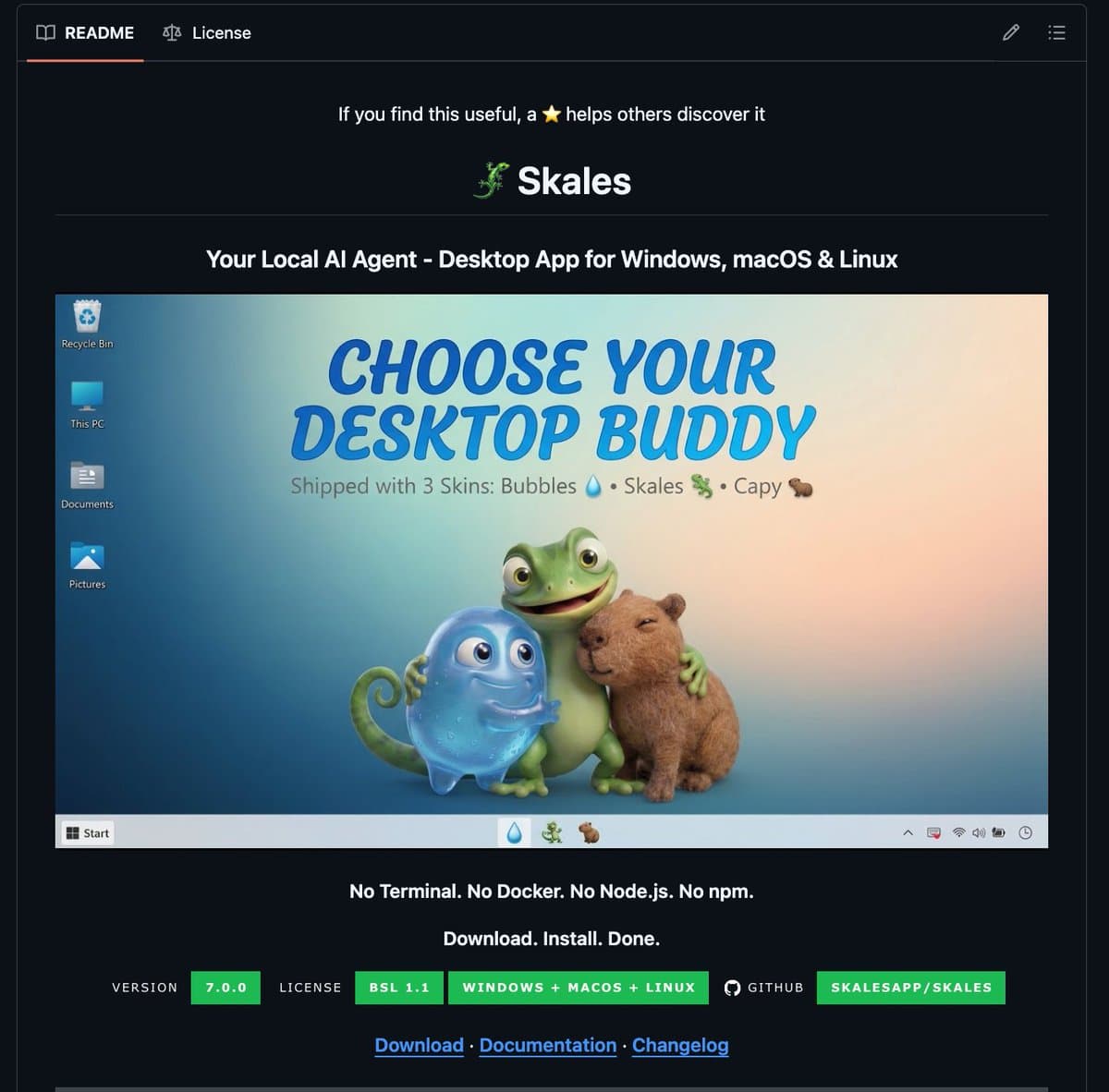
Skale has launched a desktop AI agent that runs locally on Windows and macOS systems without requiring terminal interaction. According to the announcement, the software installs in approximately 30 seconds and operates on just 300MB of RAM.
The agent supports integration with 11+ large language model providers including Claude, GPT-4, Gemini, Groq, DeepSeek, and Ollama. Built-in functionality includes browser automation, Gmail and Google Calendar integration, and Twitter/X connectivity.
Key Features
Multi-LLM Support: Users can connect to multiple LLM providers simultaneously, allowing flexibility in model selection for different tasks.
Automation Capabilities: The agent includes pre-built integrations for common productivity applications:
- Browser automation for web-based tasks
- Email management via Gmail
- Calendar scheduling through Google Calendar
- Social media interaction on Twitter/X
Memory System: Skale implements a "bi-temporal memory" system that reportedly learns user preferences automatically over time.
Autonomous Mode: An optional "Chief of Staff" mode enables the agent to execute tasks autonomously, including overnight operation.
System Requirements: The lightweight design requires only 300MB RAM and installs in 30 seconds on both Windows and macOS platforms.
Pricing: The tool is free for personal use according to the announcement.
Context
Desktop AI agents represent an emerging category of tools that bring autonomous AI capabilities to local machines rather than cloud-based services. Skale's approach emphasizes accessibility through minimal system requirements and elimination of terminal-based configuration, potentially lowering the barrier to entry for non-technical users.
The integration of multiple LLM providers distinguishes Skale from single-model agents, offering users flexibility in model selection based on task requirements and cost considerations.
While the announcement doesn't provide performance benchmarks or detailed technical specifications, the focus on low-resource operation suggests optimization for consumer hardware rather than high-performance computing environments.