Key Takeaways
- Stitch Fix expands AI image generation to personalize outfit visualizations for 4 million clients.
- The move deepens its algorithmic styling approach, using generative AI to show tailored clothing combinations in photorealistic detail.
What Happened
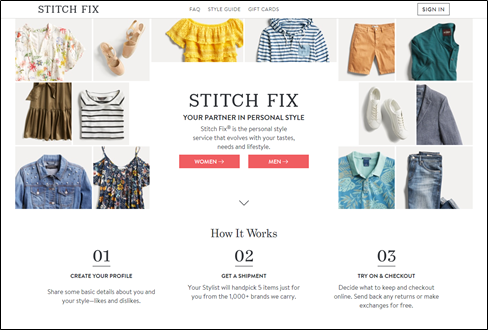
Stitch Fix, the online personal styling service, has expanded its use of AI image generation to create personalized outfit visualizations for its clients. The company now leverages generative AI to produce photorealistic images of clothing combinations tailored to individual preferences, body measurements, and style profiles.
This is not a cosmetic upgrade. Stitch Fix's core business model depends on algorithmic recommendations. Every client receives a curated "Fix" of five items selected by a combination of human stylists and AI models. The new image generation capability allows the company to show clients exactly how those items might look together before they ship, reducing uncertainty and improving the likelihood of purchase.
Technical Details
The system builds on Stitch Fix's existing AI infrastructure, which includes recommendation algorithms, computer vision models for garment analysis, and natural language processing for client feedback. The image generation component likely uses diffusion models or similar generative architectures to create realistic outfit composites from individual garment images.
Key technical elements:
- Personalization at scale: The system generates unique images for each client based on their style preferences, body type, and past purchase history.
- Real-time generation: Images are created on demand, meaning the system must balance quality with latency.
- Feedback loop: Client reactions to generated images feed back into the recommendation algorithm, creating a continuous improvement cycle.
Retail & Luxury Implications
For luxury and premium retailers, Stitch Fix's approach offers several lessons:
Visual trust drives conversion: Luxury buyers are notoriously hesitant to purchase online without seeing the product. Photorealistic AI-generated images of styled outfits can bridge that gap, especially for high-consideration purchases.
Personalization at scale: Traditional luxury retail relies on human sales associates for personalized styling. AI image generation allows this to scale to millions of clients while maintaining a tailored feel.
Reduced returns: By showing clients exactly what they'll receive, retailers can reduce the 30-40% return rates common in online apparel.
Brand consistency: Generated images must adhere to brand aesthetics. Stitch Fix's approach suggests it's possible to train models on brand-specific visual languages.
Business Impact
Stitch Fix reports approximately 4 million active clients across the U.S. and U.K. The company has invested heavily in AI since its founding, with engineering teams focused on recommendation systems, computer vision, and now generative AI.
While specific metrics on the image generation rollout are not public, the business case is clear:
- Higher conversion rates from improved visual presentations
- Reduced return rates from better expectation setting
- Increased client retention through more engaging experiences
- Lower marginal cost of personalization compared to human stylists
Implementation Approach
For retailers considering similar capabilities, the technical requirements include:
- Garment image database: Clean, consistent product images with transparent backgrounds
- Body measurement models: Ability to map clothing to diverse body types
- Style preference data: Historical purchase and feedback data to train personalization models
- Generative model infrastructure: GPU capacity for inference at scale
- Quality assurance: Human review loops to catch unrealistic or unflattering generations
Governance & Risk Assessment
- Privacy: Generating images based on client body measurements raises privacy concerns. Stitch Fix must ensure data is anonymized and secure.
- Bias: Generative models can perpetuate biases in body representation. Regular auditing is essential.
- Maturity: This technology is production-ready for mid-market retailers like Stitch Fix but may require customization for luxury brands with stricter visual standards.
- Brand risk: Poorly generated images could damage brand perception. Quality control processes are critical.
gentic.news Analysis
Stitch Fix's move is strategically sound but not revolutionary. The company has been an AI-first retailer since its founding, and this is a natural extension of its existing capabilities. What's notable is the timing — as generative AI matures, the cost of image generation drops, making it viable for personalization at scale.
For luxury retailers, the lesson is that AI-generated imagery can enhance the online shopping experience without replacing the human touch. The most successful implementations will likely blend AI-generated visuals with human stylist curation, as Stitch Fix does.
The real competitive advantage will come from data. Stitch Fix's 4 million clients generate massive amounts of preference and feedback data, which continuously improves its models. Luxury brands with smaller client bases may struggle to achieve the same level of personalization without additional data sources.
Google Cloud, which competes with AWS and Azure for AI infrastructure, could benefit from this trend as more retailers adopt generative AI. Google's recent release of DiffusionGemma, a 25B-parameter diffusion model based on Gemma 4 MoE, aligns with the need for efficient, customizable image generation models in retail.
Bottom line: AI image generation for personalization is moving from experimental to operational. Stitch Fix provides a reference architecture for how to implement it — but the real value depends on data quality and feedback loops, not just model capability.
Source: news.google.com