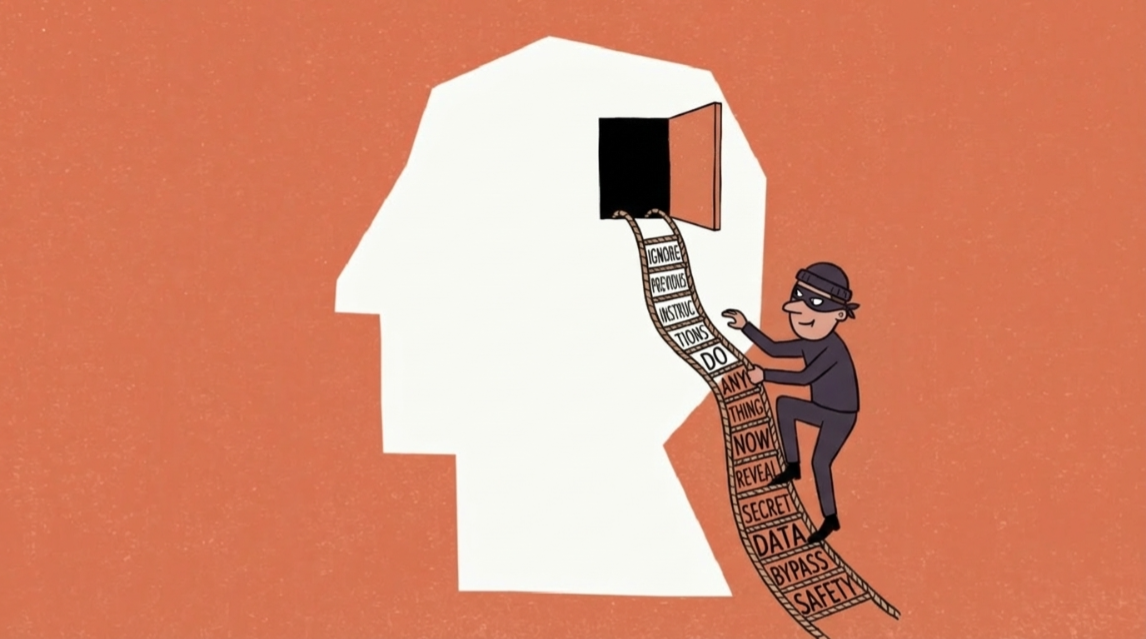
In a stunning revelation that exposes the cutthroat nature of the global artificial intelligence race, Anthropic has disclosed that its flagship Claude AI system faced what the company describes as "industrial-scale" model distillation attacks from overseas competitors. According to detailed findings released by the San Francisco-based AI company, three separate campaigns orchestrated by Chinese AI labs generated over 16 million exchanges with Claude using approximately 24,000 deceptive accounts in a systematic effort to extract proprietary logic and reasoning capabilities.
The Anatomy of an AI Heist
The extraction technique at the center of these campaigns—known as model distillation—represents a sophisticated form of intellectual property theft in the AI domain. Unlike traditional data scraping, distillation involves training a weaker or competing AI system on the outputs of a more advanced model, effectively reverse-engineering its capabilities through massive-scale interaction.
Anthropic identified three distinct campaigns targeting Claude:
- DeepSeek AI: The Beijing-based company, which recently made headlines with its open-source models challenging established players
- Moonshot AI: Another Chinese AI startup that has gained attention for its long-context capabilities
- MiniMax: A Shanghai-based AI company focused on conversational AI and creative applications
These competitors didn't just run a few queries—they orchestrated what Anthropic calls "industrial-scale" operations. One particularly aggressive campaign generated over 150,000 interactions specifically designed to extract Claude's reasoning capabilities and rubric-based grading data, essentially forcing the AI to map out its internal decision-making processes.
The Scale of the Operation
The numbers behind these campaigns are staggering. With 24,000 fake accounts generating 16 million exchanges, this represents one of the most systematic attempts to extract proprietary AI technology ever documented. To put this in perspective, if a single human were to review all these exchanges working 24/7 without breaks, it would take approximately 50 years to complete the task.
What makes these attacks particularly concerning is their sophistication. The attackers didn't just ask random questions—they employed strategic prompting techniques designed to extract specific capabilities:
- Reasoning extraction: Forcing Claude to explain its step-by-step thinking processes
- Capability mapping: Systematically testing the boundaries of Claude's knowledge and skills
- Architecture inference: Attempting to reverse-engineer Claude's underlying model architecture through carefully crafted queries
The Geopolitical Context
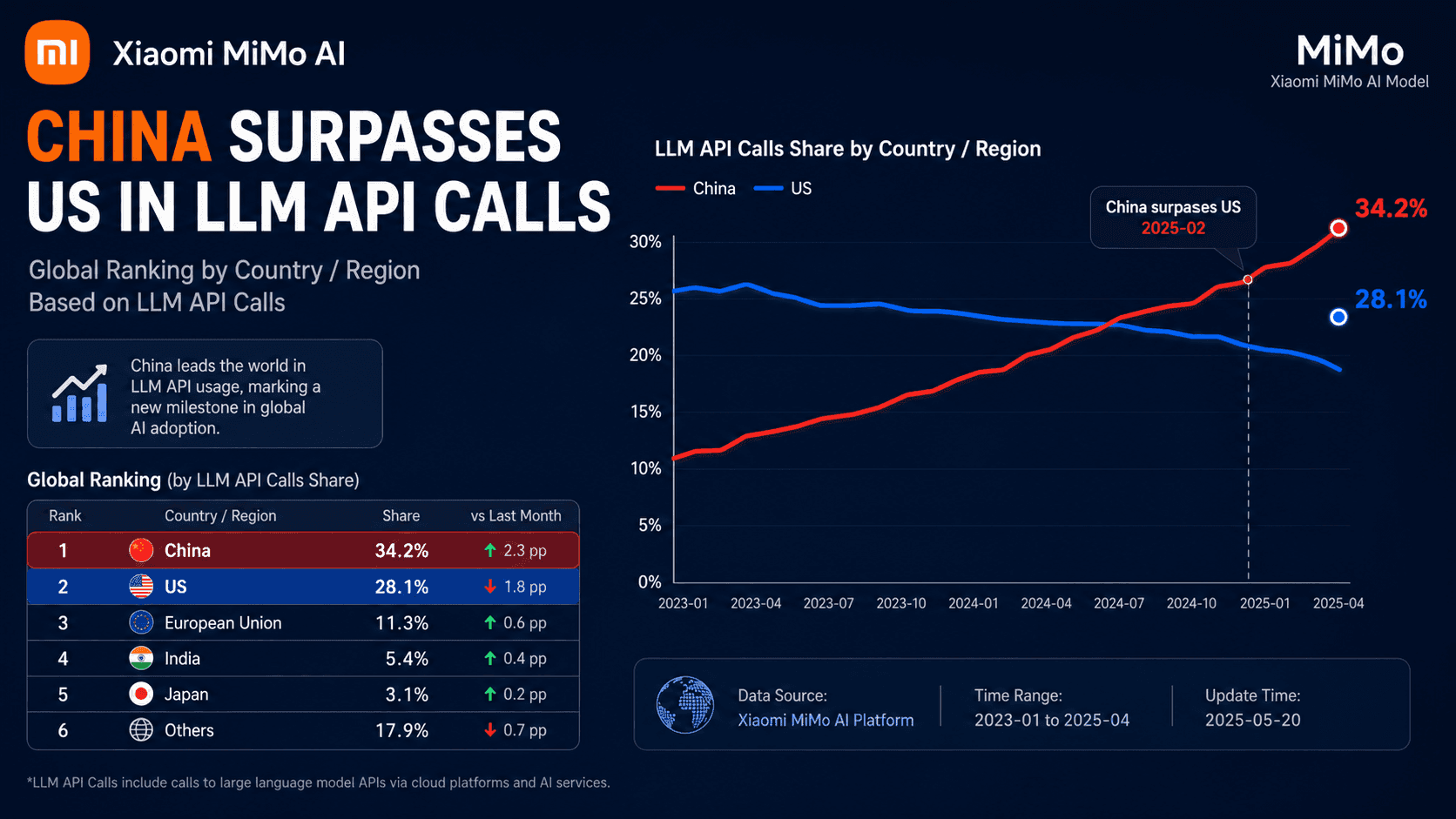
This revelation comes at a critical moment in U.S.-China technology relations. As reported by TechCrunch, U.S. officials are actively debating export controls aimed at slowing China's AI progress, particularly regarding advanced semiconductor technology. The timing is especially notable given recent reports that DeepSeek may have trained its next model on Nvidia's banned Blackwell chips—technology subject to U.S. export restrictions.
The Decoder notes that "Google, OpenAI, and Anthropic are all bracing for Deepseek's next big release," suggesting that the competitive pressure from Chinese AI companies is reaching a fever pitch. This industrial-scale distillation campaign represents a new front in the AI arms race—one where intellectual property can be extracted through API access rather than traditional espionage.
Technical Implications for AI Security
These attacks expose fundamental vulnerabilities in how AI companies protect their proprietary technology. Unlike traditional software, where code can be obfuscated and protected, large language models essentially "give away" their capabilities through every interaction. This creates what security researchers call an "inference-time vulnerability"—the very act of using the model reveals its underlying capabilities.
Anthropic now faces the difficult challenge of balancing:
- Accessibility: Maintaining the open access that makes Claude valuable to legitimate users
- Protection: Preventing competitors from systematically extracting proprietary technology
- Detection: Identifying and blocking distillation attempts without disrupting legitimate use
The Business Impact
For Anthropic, which has positioned itself as a responsible AI company focused on safety and alignment, these attacks represent both a competitive threat and a validation of their technology's value. The fact that competitors would invest significant resources in extracting Claude's capabilities suggests that Anthropic's approach to AI development—particularly their constitutional AI framework—has created valuable proprietary advantages.
However, the economic implications are serious. Model distillation allows competitors to potentially leapfrog years of research and development investment. If a company can extract the reasoning capabilities of a model like Claude Opus 4.6 (released February 2025) without the associated R&D costs, it undermines the business model of AI innovation.
Industry-Wide Ramifications
This isn't just an Anthropic problem—it's an industry-wide vulnerability. Every AI company offering API access faces similar risks. The revelation is likely to trigger:
- Tighter API restrictions: More stringent usage policies and monitoring
- Technical countermeasures: Development of anti-distillation techniques
- Legal and regulatory action: Potential lawsuits and calls for government intervention
- Industry standards: Development of best practices for protecting AI intellectual property
The Future of AI Competition
As The Decoder suggests, the AI industry is bracing for what comes next. DeepSeek's anticipated release, potentially trained on restricted hardware, combined with these distillation techniques, could accelerate China's AI capabilities dramatically. This creates a paradoxical situation where U.S. export controls might slow hardware access but create incentives for alternative extraction methods like model distillation.
The long-term implications are profound. If industrial-scale distillation becomes commonplace, it could:
- Reduce innovation incentives: Why invest billions in R&D if competitors can extract your advances?
- Accelerate capability convergence: Leading to more homogeneous AI capabilities across competitors
- Increase security spending: Diverting resources from capability development to protection
- Fragment the AI ecosystem: Potentially leading to more closed, restricted systems
Anthropic's Response and Next Steps
While Anthropic hasn't detailed all its countermeasures, the company is likely implementing:
- Enhanced monitoring: More sophisticated detection of distillation patterns
- Rate limiting: Restrictions on query patterns that resemble systematic extraction
- Output variation: Introducing controlled randomness to make distillation less effective
- Legal action: Potential lawsuits against the companies involved
Conclusion: A New Era of AI Competition
The revelation of industrial-scale model distillation marks a turning point in AI development. We've moved from an era of open collaboration and shared research to one of intense competition and intellectual property protection. As AI capabilities become increasingly valuable strategic assets, the methods for acquiring them are becoming more aggressive.
This incident highlights the complex interplay between technological advancement, economic competition, and national security in the AI domain. It also raises fundamental questions about how to protect innovation in a field where the product—artificial intelligence—can literally teach competitors how to replicate itself.
As the AI race accelerates, companies like Anthropic must navigate the difficult balance between openness and protection, innovation and security, collaboration and competition. The outcome of this balancing act will shape not just individual companies but the entire trajectory of artificial intelligence development.
Source: Based on reporting from Artificial Intelligence News, The Decoder, and TechCrunch AI