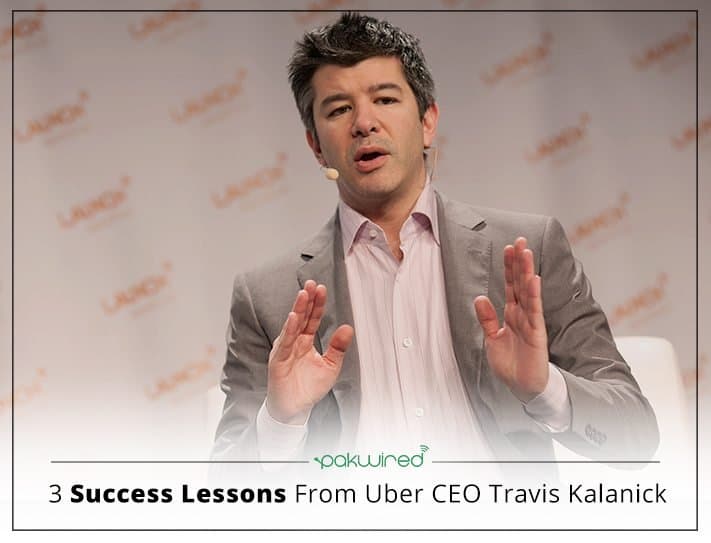
Former Uber CEO Travis Kalanick has conducted an extensive, AI-facilitated interview with Oscar Salazar, Uber's first Chief Technology Officer. The interview spanned over 30 hours across three weeks, diving deep into the technical and cultural foundations of the ride-hailing giant during its earliest days.
The conversation, hosted on the AI-powered platform Maven, focused on core operational and technical pillars: hiring and firing practices, organizational design, engineering standards, and the specific cultural traits Kalanick expected from the founding team. This represents a significant use of AI for creating detailed, structured oral histories of major tech companies.
What Happened
Kalanick, who co-founded Uber in 2009 and served as CEO until 2017, engaged Salazar in a marathon recorded dialogue. Salazar, credited as Uber's founding CTO and the architect of its initial prototype, provided a first-hand account of building the company's technical backbone. The AI platform Maven was used to record, structure, and presumably enable search or analysis of the lengthy conversation.
The stated topics are highly specific to engineering leadership:
- Hiring & Firing: The principles used to assemble Uber's initial technical team and remove underperformers.
- Org Design: How the early engineering organization was structured for hyper-growth.
- Engineering Standards: The technical bar and development practices established before scaling.
- Cultural Traits: The specific behaviors and attitudes Kalanick demanded, which shaped Uber's infamous early culture.
Context
This interview is part of a growing trend of using AI to capture and codify institutional knowledge from tech founders and early employees. Platforms like Maven aim to transform long-form conversations into searchable, analyzable datasets, preserving decision-making rationales that are often lost.
For Uber specifically, this is a rare look into its pre-scale technical philosophy. The company's culture under Kalanick has been extensively documented for its aggressive, win-at-all-costs mentality, but less is known about the precise engineering doctrines that supported its explosive growth. Salazar's perspective as the first technical hire is uniquely valuable.
gentic.news Analysis
This project sits at the intersection of two major trends we've been tracking: the AI-augmented knowledge management trend for enterprises and the founder-led historical preservation movement in Silicon Valley. It follows a pattern of former tech leaders using new tools to document their legacies. For instance, our coverage of Andreessen Horowitz's "American Dynamism" archive in late 2025 highlighted a similar push to capture founder stories, though with a more traditional media approach.
The use of Maven is notable. The platform has gained traction among investors and operators as a tool for conducting "due diligence interviews" and building proprietary knowledge graphs of industry expertise. Kalanick's deep dive suggests a new use case: creating definitive, primary-source records of company-building playbooks. This aligns with Kalanick's post-Uber focus on City Storage Systems and his 10100 fund, which invests in large-scale projects requiring intense operational execution—the very skills likely discussed with Salazar.
From a technical leadership perspective, the most valuable output for AI engineers and CTOs will be the concrete details on early-stage engineering standards. How did Uber balance speed and technical debt when building a real-time, global, two-sided marketplace? What were the "non-negotiables" in code quality or system design before the team grew beyond 10 engineers? This interview, if released broadly, could serve as a case study in foundational technical culture, for better or worse. It also provides a counterpoint to the current trend of documentation-as-code and AI-powered code review—here, the focus is on the human and process principles that precede the tools.
Frequently Asked Questions
What is the Maven AI platform?
Maven is an AI-powered platform designed to record, transcribe, and structure long-form conversations. It allows users to search, analyze, and extract insights from interviews, meetings, and oral histories, turning dialogue into a queryable knowledge base.
Who is Oscar Salazar?
Oscar Salazar is recognized as Uber's first Chief Technology Officer and a founding team member. He is credited with developing the initial prototype for the ride-hailing service and architecting its early technical infrastructure before the company scaled globally.
Will this interview be publicly released?
As of now, there is no announcement regarding public release. The interview was conducted on a private platform. Its content may remain within Kalanick's circle, be used for internal training at his current ventures, or potentially be released as a curated case study in the future.
Why is this relevant to AI engineers and technical leaders?
Beyond the use of AI as an interview tool, the content delves into the foundational engineering and cultural decisions of one of the most impactful tech companies of the past decade. It provides a real-world case study on building technical teams, establishing engineering standards, and designing organizations under extreme growth pressure—highly relevant lessons for anyone leading technical projects today.