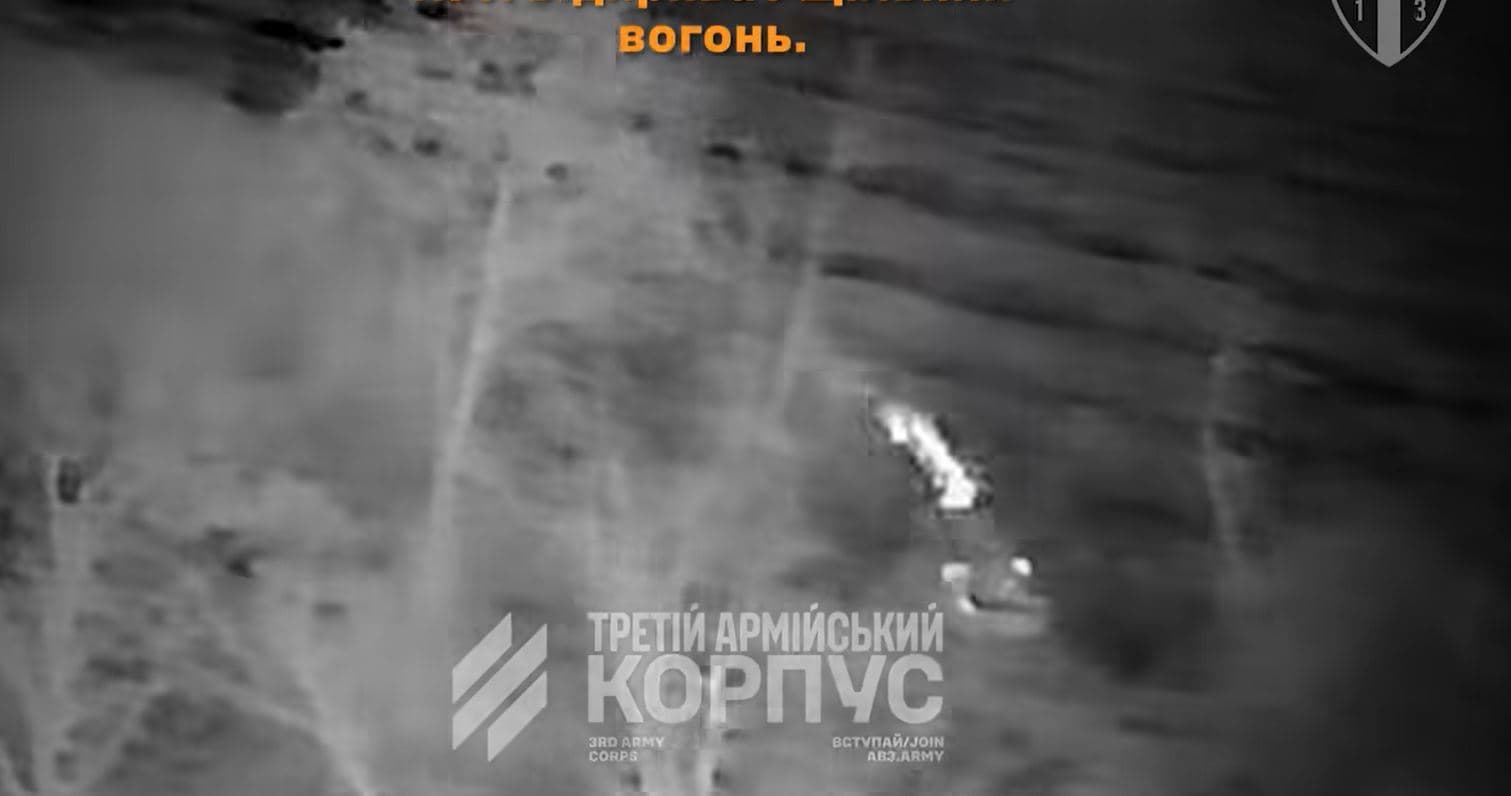
A social media post from an AI-focused account has highlighted a stark demonstration of unmanned systems' evolving role in modern warfare. According to the post, a Ukrainian robotic platform, identified as the TWW127, maintained a forward infantry position in a contested sector for 45 consecutive days without requiring repositioning or retrieval.
The account, @rohanpaul_ai, frames this as "proof that remote unmanned robots can now hold infantry positions indefinitely." The post states the robot provided "daily forward overwatch" and used "suppressive fire" to halt enemy advances, operating entirely alone on the position.
What Happened
The core claim is one of unprecedented endurance for a tactical unmanned ground vehicle (UGV). Holding a static defensive or overwatch position for over a month and a half represents a different operational paradigm than the typical short-duration missions for reconnaissance or logistics UGVs. The system's reported ability to deliver suppressive fire indicates it is weaponized, moving beyond surveillance into a direct combat role.
The source material is a brief social media post linking to a video, limiting detailed technical verification. The assertion hinges on the robot's sustained operational availability—resilience to weather, electronic warfare, counter-fire, and maintenance needs—rather than a specific AI breakthrough in navigation or targeting.
Context: The Push for Autonomous Systems
The development and deployment of UGVs have accelerated dramatically since Russia's full-scale invasion of Ukraine in 2022. The conflict has become a testing ground for drone and robotic warfare at a scale and pace unseen in previous conflicts. Ukrainian forces have been particularly innovative in adapting commercial and custom-built unmanned systems for various roles, from first-person view (FPV) attack drones to unmanned mine-clearing vehicles.
A weaponized UGV capable of long-duration, independent station-keeping addresses several critical battlefield challenges:
- Force Preservation: Removes soldiers from static, exposed, and hazardous duties.
- Persistent Surveillance: Maintains 24/7 intelligence, surveillance, and reconnaissance (ISR) on key avenues of approach.
- Area Denial: Can deter or delay enemy movement through the threat of automatic or remotely triggered fire.
The 45-day benchmark, if accurate, suggests substantial progress in power systems (likely hybrid solar/battery), communications resilience, and mechanical reliability for all-terrain, all-weather operation.
gentic.news Analysis
This report, while anecdotal, fits squarely into the accelerating trend of embodied AI moving from controlled labs and warehouses into chaotic, real-world environments. For years, the discussion around autonomous systems in conflict has focused on aerial drones. This claim signals a tangible shift toward ground-based autonomy in direct fire roles, a domain fraught with greater complexity due to terrain and proximity.
Technically, the most significant implication is not necessarily advanced AI—the "remote unmanned" description suggests significant human-in-the-loop control for fire decisions—but system integration and reliability engineering. Keeping a complex robotic system functional, powered, and connected in an active artillery zone for 45 days is a monumental feat of ruggedization. It points to a maturation curve where the limiting factor is shifting from core autonomy algorithms to battlefield durability and sustainment.
This development also raises immediate tactical and ethical questions that the defense and AI communities are already grappling with. A system that can "hold a position" blurs the line between a tool and a combatant. It directly connects to our previous coverage on the U.S. Department of Defense's Replicator initiative and the UK's Army Warfighting Experiment (AWE), which are explicitly testing networked swarms of autonomous and attritable systems. The TWW127's reported endurance suggests some platforms may be designed to be persistent rather than attritable, creating a different cost-benefit calculus and threat profile.
If this capability is validated and scaled, it could initiate a new phase in ground warfare tactics, forcing adaptations in counter-unmanned systems and assault strategies. The focus for ML engineers and roboticists watching this space should be on the subsystems enabling this endurance: power management, fault-tolerant communications, and passive surveillance AI that minimizes detectable emissions until engagement.
Frequently Asked Questions
What is the TWW127 robot?
Based on the available information, the TWW127 appears to be a Ukrainian unmanned ground vehicle (UGV) designed for combat roles. It is reportedly weaponized and capable of remote operation, with claims of exceptional endurance for persistent overwatch and suppressive fire missions on the front line.
How can a robot hold a position for 45 days?
This would require a highly robust system design. Key enabling technologies likely include a hybrid power system (e.g., batteries recharged by solar panels or a quiet generator), hardened communications equipment resistant to jamming, all-weather mechanical components, and sufficient ammunition or power for its weapon system. The 45-day claim emphasizes reliability and reduced need for maintenance or resupply.
Does this mean the robot is fully autonomous?
The term "remote unmanned" suggests it is not fully autonomous in a decision-making sense. A human operator likely controls the weapon system and major movements remotely. However, it may employ autonomy for lower-level functions like maintaining station, power management, and surveillance scanning. The breakthrough claimed is in sustained remote operation, not in fully independent AI combat decisions.
What are the implications of such robots for modern warfare?
If widely deployed, persistent unmanned combat vehicles could significantly alter ground tactics. They allow for constant coverage of dangerous areas without risking soldiers, potentially slowing enemy advances and increasing the defender's situational awareness. This forces adversaries to invest more in electronic warfare and counter-drone capabilities. It also intensifies debates around the rules of engagement and accountability for the use of armed remote systems.