Key Takeaways
- Retail TouchPoints reports that AI search deployments often worsen relevance due to poor embeddings, lack of fine-tuning, and misaligned ranking.
- This matters because retailers investing in AI search must address these pitfalls to avoid customer frustration and revenue loss.
What Happened
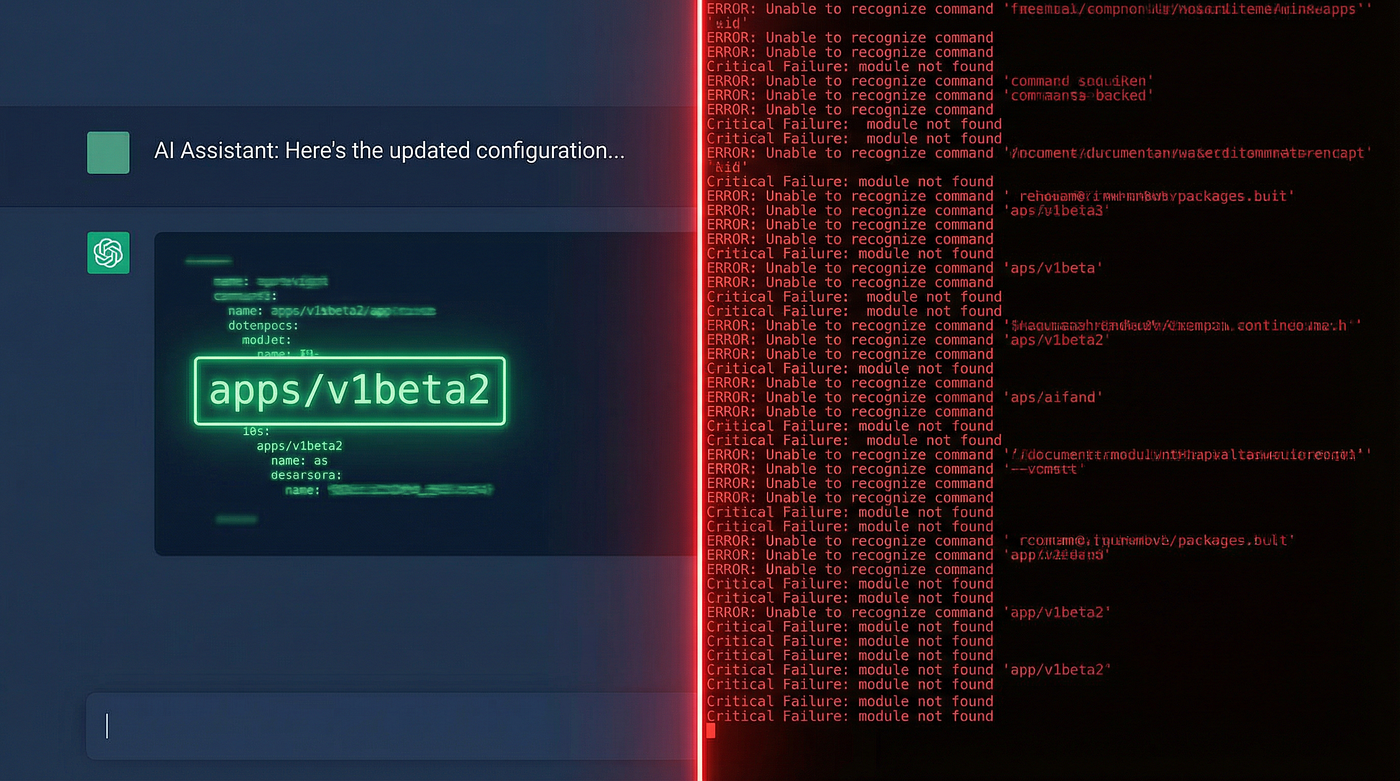
Retail TouchPoints published an article titled "You Deployed AI Search and Relevance Got Worse. Here’s Why It Happens," which examines the common reasons why AI-powered search systems underperform after deployment. The article highlights that many retailers and e-commerce platforms experience a decline in search relevance when they move from traditional keyword-based search to AI-driven semantic search.
Why Relevance Degrades
The article identifies several key factors:
Poor Embedding Quality: Many AI search systems use pre-trained embeddings that are not optimized for the specific product catalog or customer queries. Generic embeddings from models like BERT or Sentence-BERT may not capture domain-specific nuances, such as fashion terminology or luxury brand descriptors.
Lack of Domain-Specific Fine-Tuning: Even when using advanced models like those from Google (e.g., Gemini Embedding 2), retailers often skip the critical step of fine-tuning on their own data. Without fine-tuning, the model may misinterpret queries like "little black dress" or "cashmere blend."
Misaligned Ranking Signals: AI search systems often combine semantic similarity with business rules (e.g., popularity, margin, inventory). When these signals are not properly weighted, the system can surface irrelevant products or bury high-margin items.
Ignoring User Intent: Search queries often have implicit intent (e.g., "buy" vs. "browse"). Generic AI models may not distinguish between these, leading to poor results.
Failure to Iterate: Many teams deploy AI search and assume it will self-improve. Without continuous feedback loops—such as click-through rate analysis, A/B testing, and manual relevance tuning—performance drifts.
Retail & Luxury Implications
For luxury retailers (Kering, Richemont, Burberry, Nike), search relevance is critical. Customers expect highly accurate results for nuanced queries like "size 38 suede ankle boots with block heel" or "silk evening gown in emerald green." A generic AI search system that fails on these queries leads to:
- Increased bounce rates: Customers leave the site if they can't find what they want.
- Lower conversion rates: Irrelevant results reduce purchase likelihood.
- Brand damage: Poor search reflects poorly on the brand's digital experience.
Business Impact
While the article does not provide specific metrics, industry benchmarks suggest that a 10% improvement in search relevance can increase revenue by 3-5%. For a luxury retailer with $1B in annual e-commerce revenue, that translates to $30-50M.
Implementation Approach
To avoid relevance degradation, retailers should:
- Fine-tune embeddings: Use domain-specific data (product descriptions, customer queries, past interactions) to fine-tune models like Google's Gemini Embedding 2 or OpenAI's text-embedding-3.
- Implement feedback loops: Track click-through rates, dwell time, and conversion rates per query. Use this data to adjust ranking algorithms.
- A/B test continuously: Compare AI search results against a baseline (e.g., traditional search) to measure relevance gains.
- Use hybrid search: Combine semantic search with keyword matching and business rules for robustness.
Governance & Risk Assessment
- Privacy: Fine-tuning on customer query data requires compliance with GDPR and CCPA. Anonymize and aggregate data before training.
- Bias: AI models can amplify biases in product recommendations (e.g., gender or size biases). Regular audits are necessary.
- Maturity Level: The technology is mature, but successful deployment requires ongoing investment in data pipelines and relevance engineering. Expect 6-12 months to achieve stable, improved performance.
Source: news.google.com