The Innovation — What the source reports
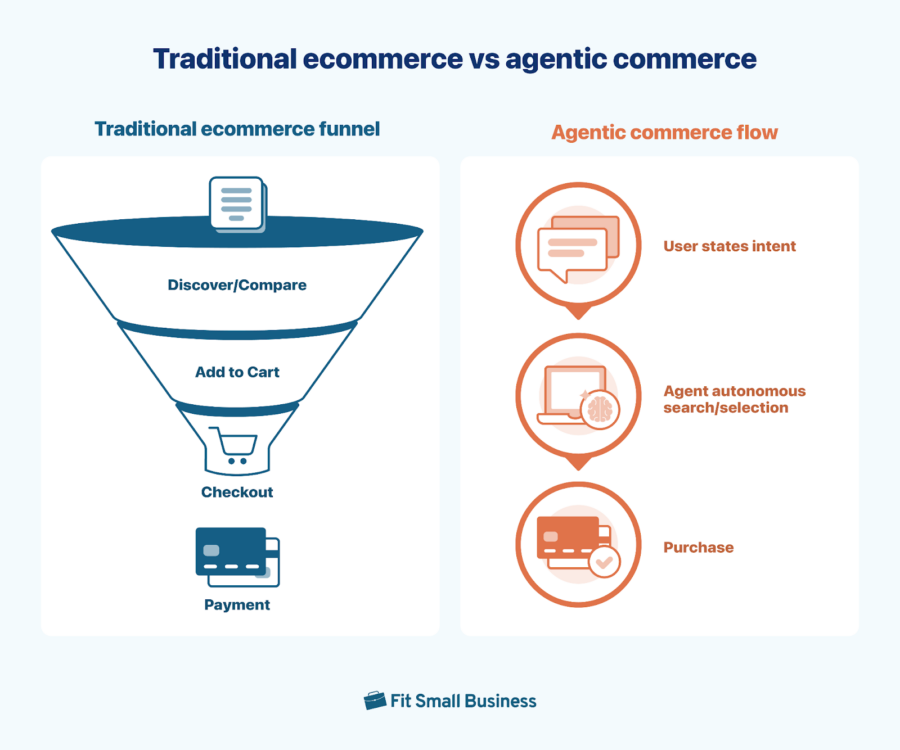
The traditional online checkout—where a customer manually reviews items, enters payment details, and clicks "confirm"—is undergoing a fundamental transformation. According to analysis from Electronic Payments International, we're entering the era of agentic AI checkout, where autonomous AI agents handle purchasing decisions on behalf of customers.
The core insight is straightforward but profound: "Instead of relying on a customer to tap a button or confirm a payment, systems need to support purchasing while still valuing customer intent and control." This represents a paradigm shift from transactional interfaces to relationship-based commerce.
This transition fundamentally changes how identity and trust function at the point of purchase. When an AI agent acts on a customer's behalf, traditional authentication methods (passwords, 2FA) become insufficient. The system must verify both the customer's identity and the agent's authorization to act, creating a dual-layer trust architecture.
Why This Matters for Retail & Luxury
For luxury and premium retail, agentic AI checkout presents both significant opportunities and unique challenges:
Personal Shopping at Scale: Imagine a customer's AI agent that knows their style preferences, size history, brand affinities, and budget constraints. This agent could monitor new arrivals, limited editions, or restocks across multiple luxury retailers and make purchases autonomously when criteria are met—securing highly sought-after items before they sell out.
Reduced Abandonment, Increased Conversion: The luxury customer journey often involves consideration, comparison, and hesitation. An AI agent that understands a customer's genuine intent could complete purchases during moments of high intent that might otherwise be lost to distraction or second-guessing.
Subscription and Replenishment Reimagined: For luxury beauty, fragrance, or accessories, agentic AI could manage replenishment of signature items, but with sophisticated discretion—understanding when a customer might want to try something new versus when they want their established favorite.
The Experience Economy: The luxury sector sells experiences as much as products. Agentic AI could book spa appointments, reserve restaurant tables, or secure event tickets as part of a coordinated lifestyle management system, with purchases flowing seamlessly through trusted relationships rather than transactional interfaces.
Business Impact
While specific metrics aren't provided in the source material, the implications are substantial:
- Transaction Velocity: Purchases could happen faster than human decision cycles, particularly for time-sensitive items (limited releases, flash sales).
- Customer Lifetime Value: Agents that understand nuanced preferences could increase purchase frequency and basket size through highly relevant, timely suggestions.
- Operational Efficiency: Reduced customer service inquiries related to checkout issues, failed payments, or inventory questions.
- Competitive Differentiation: Early adopters could capture customers who value convenience and personalization at the highest level.
However, luxury brands must balance convenience with exclusivity. The risk of making premium purchases feel "too easy" or commoditized is real. The emotional journey of acquiring a luxury item—the anticipation, the consideration—is part of the value proposition.
Implementation Approach
Building agentic AI checkout capabilities requires several technical and strategic components:
1. Trust and Authorization Framework:
- Customer-defined permissions (spending limits, brand restrictions, category approvals)
- Agent authentication protocols (likely leveraging emerging standards like Google's Agent2Agent protocol mentioned in recent developments)
- Audit trails for all agent-initiated transactions
2. Intent Understanding Systems:
- Advanced LLMs that can interpret customer instructions with nuance
- Contextual awareness (time of day, location, recent browsing history)
- Preference modeling that evolves with customer behavior
3. Integration Architecture:
- APIs that allow external agents to query inventory, pricing, and availability
- Secure payment pathways that don't require sharing raw payment details with agents
- Real-time communication channels for exceptional situations requiring human input
4. Brand Experience Controls:
- Rules governing how and when agents can interact with the brand
- Preservation of brand storytelling and experiential elements
- Escalation paths to human brand ambassadors when appropriate
Governance & Risk Assessment
Privacy Considerations: Agentic systems require deep access to customer preferences, purchase history, and behavioral data. Luxury customers are particularly sensitive about data privacy. Clear value exchange must be established, with transparent data usage policies and robust security measures.
Brand Safety: Autonomous agents making purchases could create brand reputation risks if they make inappropriate choices or misinterpret customer intent. Brands need safeguards against agents purchasing items that conflict with brand values or customer preferences.
Financial Controls: Spending limits, approval workflows for high-value items, and fraud detection systems must be more sophisticated when transactions are initiated by AI agents rather than humans directly.
Maturity Level: While the concept is gaining traction (with projections that autonomous AI agents could facilitate 50% of all online transactions by 2027), production-ready systems for luxury retail are still emerging. Early implementations will likely be in controlled environments or for specific use cases rather than full autonomous purchasing.
Ethical Considerations: The potential for agentic systems to encourage overconsumption or make purchases that don't align with a customer's best interests requires careful design. Luxury brands have a particular responsibility to ensure their implementations enhance rather than exploit customer relationships.
The Path Forward
The transition to agentic AI checkout won't happen overnight, but forward-thinking luxury retailers should:
- Experiment with Limited Use Cases: Begin with replenishment items or accessory purchases where risk is lower.
- Develop Agent-Friendly APIs: Ensure your technical infrastructure can support secure, standardized agent interactions.
- Engage with Standards Bodies: Participate in developing protocols for agent authentication and authorization.
- Educate Your Customers: Help high-value clients understand how agentic systems could enhance their experience while protecting their interests.
Agentic AI checkout represents the next evolution of e-commerce—from self-service to assisted service to truly personalized service. For luxury brands, the challenge will be implementing this technology in ways that enhance rather than diminish the exclusivity, craftsmanship, and emotional resonance that define the luxury experience.