A recent report from Digital Commerce 360 highlights a clear and accelerating trend: companies across both business-to-business (B2B) and business-to-consumer (B2C) sectors are significantly increasing their investments in artificial intelligence. The primary catalyst for this spending surge is the growing traction of "agentic commerce"—a paradigm where autonomous AI agents manage complex, multi-step customer interactions and transactions.
The Rise of Agentic Commerce
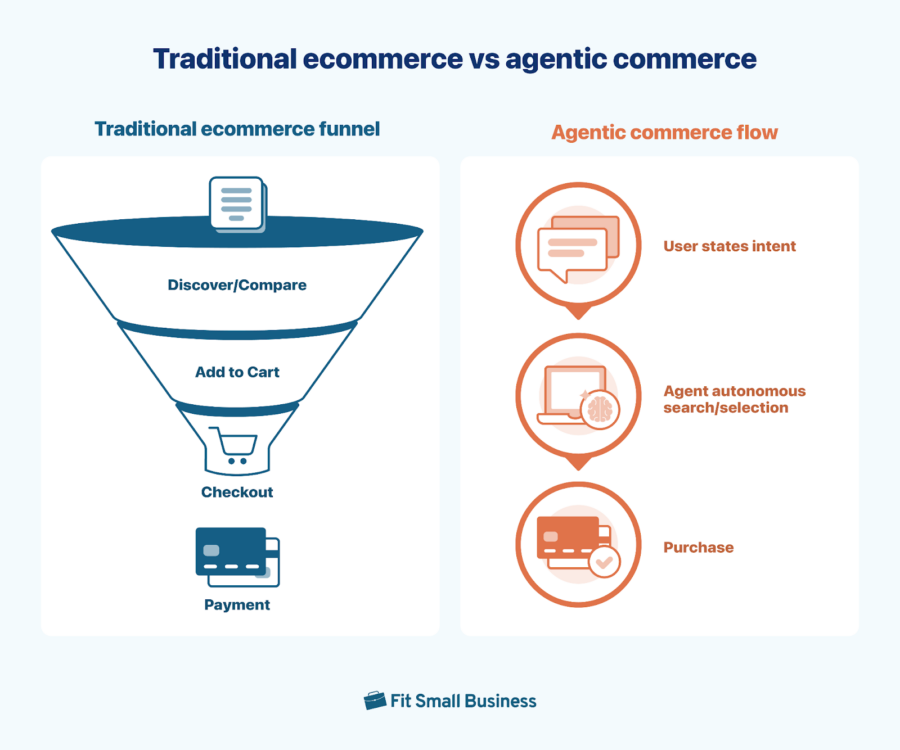
Agentic commerce represents a fundamental evolution beyond today's common AI applications like chatbots or recommendation engines. Instead of simply responding to queries or suggesting products, AI agents are designed to execute complete workflows.
Imagine a system where an AI agent doesn't just help a customer find a winter coat but autonomously:
- Researches options based on style, budget, and sustainability preferences.
- Schedules a virtual fitting or in-store appointment.
- Coordinates with inventory systems to ensure availability.
- Manages the payment and checkout process.
- Arranges delivery and proactively handles any post-purchase inquiries or returns.
This end-to-end, goal-oriented autonomy is the core promise of agentic systems. The report indicates that businesses are now funding the infrastructure, models, and integration work required to make this a operational reality, moving from pilot projects to scaled implementations.
The Investment Imperative
The increased investment is flowing into several key areas:
- Foundation Model Access & Fine-Tuning: Companies are allocating budgets to access powerful large language models (LLMs) and multimodal AI systems, and then customizing them with proprietary data (transaction histories, customer service logs, product catalogs) to create domain-specific agents.
- Agent Orchestration Platforms: Building reliable agents requires sophisticated middleware that can manage memory, tool use (like querying a database or calling an API), and complex decision trees. Investment is going into both commercial platforms and in-house development of these orchestration layers.
- Data Infrastructure: Agentic commerce demands real-time, unified data. Investments are being made to break down data silos between CRM, ERP, PIM, and inventory systems to create a single source of truth that AI agents can act upon.
- Integration & Change Management: Significant resources are dedicated to weaving these AI agents into existing e-commerce platforms, mobile apps, and in-store systems, as well as training staff to work alongside them.
The Competitive Landscape and Enablers
The report's context, supported by the Knowledge Graph, arrives amid a flurry of activity from major AI infrastructure providers that is directly enabling this trend. Google's recent moves are particularly illustrative:
- Removing Barriers: Google's elimination of rate limits and introduction of free tiers for its Gemini API (March 12, 2026) lowers the cost and complexity of experimentation and scaling for businesses.
- Launching Advanced Tools: The launch of Gemini Embedding 2 (March 13, 2026)—a new multimodal embedding model—provides a crucial technical building block. Superior embeddings allow AI agents to better understand and relate diverse data types (text, images, product specs), leading to more accurate reasoning and task completion.
- Pursuing Integration: Google's launch of AI agents within Google Maps (March 14, 2026) demonstrates the industry-wide push to embed autonomous assistants directly into the user interfaces where commerce happens.
These developments from key platform players create a more accessible and powerful toolkit for retailers and brands looking to build their own agentic capabilities.
Business Impact: Beyond Efficiency to Experience
The business case for this investment extends far beyond cost reduction. The projected impacts include:
- Hyper-Personalization at Scale: Agents can manage a nuanced, 1:1 relationship with millions of customers simultaneously, remembering preferences and context across months or years.
- Increased Conversion & AOV: By seamlessly guiding customers through complex consideration and purchase journeys—like configuring a bespoke product or managing a bulk corporate order—agents can reduce friction and abandonment.
- 24/7 Complex Service: They can handle intricate tasks like cross-border returns, warranty claims, or personalized styling advice at any hour, elevating service standards.
- Unlocking B2B E-commerce: Agentic AI is particularly potent for B2B, where purchases involve complex contracts, multi-tier approvals, and integration with procurement systems. An AI agent can navigate these processes autonomously on behalf of a buyer.
Implementation Approach & Governance
For technical leaders, implementing agentic commerce is a multi-layered challenge:
- Start with a Contained, High-Value Use Case: The most pragmatic path is to identify a specific, complex workflow with a clear ROI (e.g., personalized gift concierge, technical product configuration for B2B buyers). Avoid attempting a "full customer journey" agent from day one.
- Architect for Safety and Control: Agents must operate within strict guardrails. This requires designing systems with:
- Precise Tool Definitions: Clear APIs and functions the agent is allowed to call.
- Supervision & Escalation: Human-in-the-loop checkpoints for high-stakes actions (e.g., approving a large discount, finalizing a contract).
- Audit Trails: Complete transparency into every action, decision, and data point used by the agent.
- Prioritize Data Quality and Governance: The agent is only as good as the data it can access. A rigorous data governance program is a prerequisite, ensuring clean, unified, and ethically sourced data.
Governance & Risk Assessment: The risks are significant and must be proactively managed. Hallucination—where an agent confidently provides incorrect information or takes erroneous actions—is a primary concern. Bias in underlying models can be amplified by autonomous action. Privacy is paramount, as these agents will process vast amounts of personal and commercial data. Finally, the maturity level of this technology is still evolving; implementations should be considered advanced and require robust monitoring and rollback plans.