ServiceNow CEO Bill McDermott has issued a stark warning about the future of work, predicting that artificial intelligence agents could drive college graduate unemployment rates to exceed 30% within the coming years. This forecast, shared via social media, underscores a growing concern among technology leaders about the speed and scope of AI's impact on knowledge-based professions traditionally filled by degree holders.
The Warning from the Front Lines of Enterprise Software
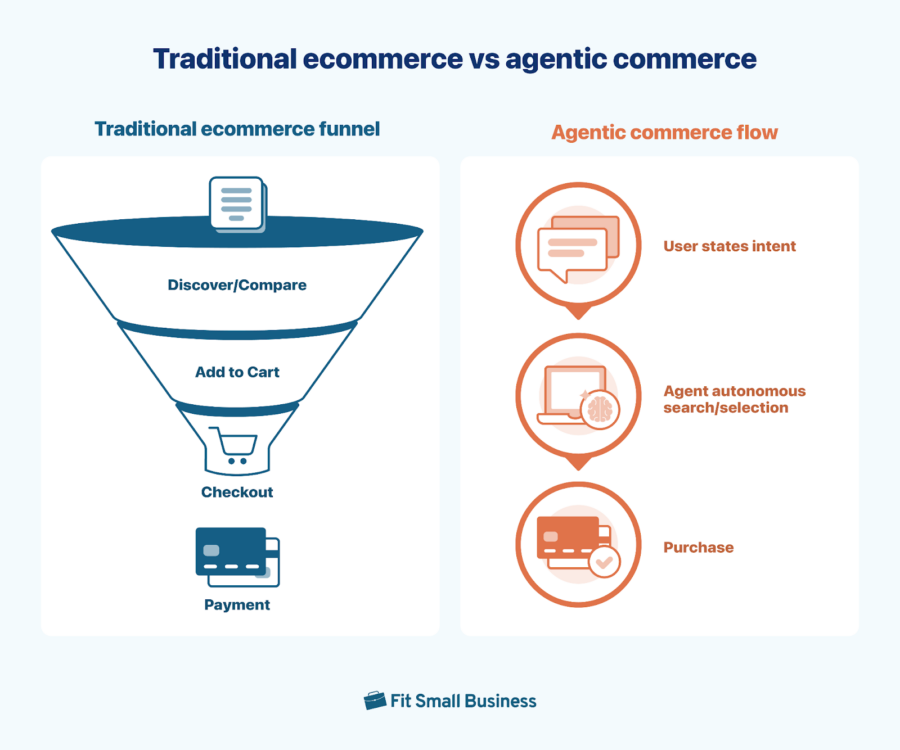
Bill McDermott leads ServiceNow, a company deeply embedded in the enterprise software market, where AI integration is accelerating. His perspective comes from observing how businesses are implementing AI agents—sophisticated systems capable of performing complex, multi-step tasks autonomously. Unlike previous automation waves that primarily affected manufacturing and routine administrative work, this new generation of AI targets analytical, creative, and decision-support functions.
The prediction suggests a significant deviation from historical patterns where higher education served as a reliable buffer against technological unemployment. McDermott's warning implies that the foundational skills taught in many college programs may no longer match the demands of an AI-augmented economy at the scale needed.
Why College Graduates Are Particularly Vulnerable
The automation of knowledge work presents a unique challenge. Many entry-level and mid-tier professional positions in fields like content creation, data analysis, basic coding, marketing, paralegal work, and junior financial analysis involve structured tasks that AI agents are increasingly capable of performing. These are precisely the roles that have historically absorbed large numbers of new graduates.
AI agents can operate 24/7, learn from vast datasets, and execute processes without human intervention. For cost-conscious businesses, the economic argument for deploying AI agents over hiring multiple graduates for analytical or content-generation roles is becoming compelling. This could create a "missing rung" on the career ladder, where the traditional pathway from education to experience is disrupted.
The Broader Context: A Shifting Conversation on AI and Work
McDermott's warning aligns with a growing chorus of concerns from academics and some industry figures about AI-driven displacement. However, it contrasts with more optimistic narratives that emphasize AI as a tool for augmentation rather than replacement. The key differentiator may be the concept of the "agent." An AI tool that assists a human worker is one thing; an autonomous agent that completes entire business processes is another.
This prediction also raises questions about the ROI of a college degree. If the employment landscape for graduates contracts sharply, the massive debt burden carried by many students could become an even more severe social and economic problem.
Potential Pathways Forward: Adaptation and New Skills
The looming challenge necessitates a multi-faceted response. Higher education institutions may need to radically redesign curricula to emphasize uniquely human skills that complement AI, such as complex problem-solving, ethical reasoning, interpersonal leadership, and creativity that transcends pattern recombination. Lifelong learning and continuous skill adaptation would become the norm, not the exception.
From a policy perspective, McDermott's warning could bolster arguments for stronger social safety nets, educational subsidies for mid-career transitions, and perhaps even frameworks that govern the pace of AI integration into core business functions. The goal would be to manage the transition rather than simply witness the disruption.
A Call for Proactive Strategy
While predictions about technology's impact on employment have often been overly dire, the unique capabilities of generative AI and autonomous agents suggest this cycle may be different. McDermott's position as the head of a major tech company gives his warning particular weight. It serves as a call to action for educators, policymakers, and business leaders to develop a coherent strategy for the future of knowledge work.
The next few years will be critical in determining whether AI agents become a tool for widespread human empowerment or a catalyst for significant professional displacement. The fate of the next generation of college graduates may hang in the balance.
Source: Prediction shared by ServiceNow CEO Bill McDermott, as referenced on social media (@rohanpaul_ai).