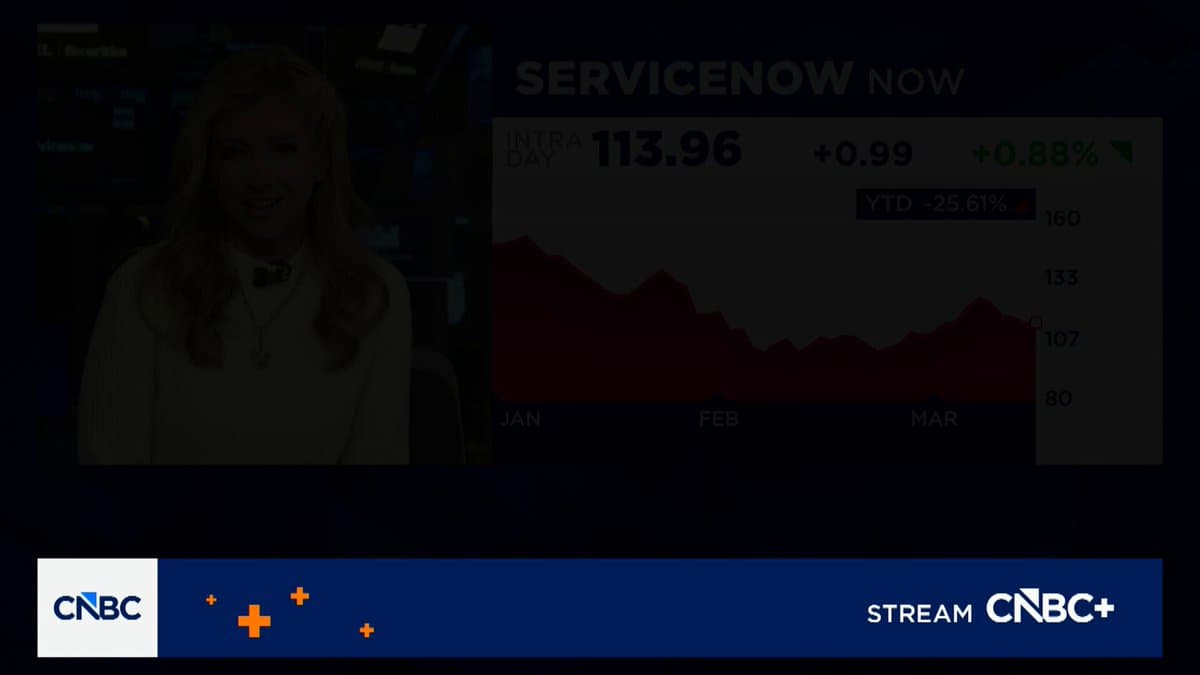
In a recent statement that challenges the narrative of AI as an all-encompassing solution, ServiceNow CEO Bill McDermott has articulated a crucial distinction in the enterprise technology landscape. According to McDermott, while artificial intelligence excels at identifying issues and generating insights, it fundamentally lacks the capability to execute solutions within complex organizational environments. This perspective, shared via social media commentary, highlights what he describes as a significant "execution gap" in the current AI market—a gap that ServiceNow aims to fill.
The AI Identification vs. Execution Divide
McDermott's argument centers on a simple but powerful premise: "AI identifies issues but cannot fix it." This statement cuts to the core of a common misconception in business technology adoption—that AI systems, once deployed, will autonomously resolve operational inefficiencies. In reality, as McDermott suggests, AI functions more effectively as a diagnostic tool than as an implementation engine.
The ServiceNow CEO emphasizes that true value creation occurs not when problems are identified, but when they are systematically resolved through coordinated action. This distinction becomes particularly critical in enterprise settings where identified issues often span multiple departments, legacy systems, and complex approval chains that no AI system can navigate independently.
ServiceNow as the "Do-It" Layer
McDermott positions ServiceNow not as an AI company, but as what he calls the "do-it" layer—the essential platform that translates AI-generated insights into concrete actions. This framing represents a strategic positioning that acknowledges AI's strengths while emphasizing ServiceNow's unique value proposition in the execution phase.
The concept of the "last mile" in enterprise technology refers to the final, often most challenging, stage of implementation where theoretical solutions meet practical organizational realities. McDermott suggests that while AI vendors focus on the "first mile" of problem identification, ServiceNow specializes in navigating the complexities of the last mile—where solutions actually get deployed across what he describes as "80B workflows across legacy systems."
The Legacy System Challenge
The reference to 80 billion workflows across legacy systems underscores the monumental scale of the integration challenge facing enterprises. Most large organizations operate with decades-old systems that were never designed to interface with modern AI technologies. These legacy environments create what McDermott calls an "execution gap"—the disconnect between AI's analytical capabilities and the practical realities of enterprise operations.
ServiceNow's platform, with its workflow automation capabilities, positions itself as the bridge across this gap. Rather than replacing legacy systems (an often prohibitively expensive and disruptive proposition), ServiceNow creates a layer of intelligence and coordination that works with existing infrastructure while enabling more efficient processes.
Market Implications of the Execution Gap
McDermott's commentary suggests that the current AI market is overlooking a fundamental component of enterprise value creation. While billions of dollars flow into AI development for better pattern recognition, natural language processing, and predictive analytics, comparatively less attention and investment target the systems that translate these capabilities into measurable business outcomes.
This perspective has significant implications for how enterprises should approach AI adoption. Rather than viewing AI implementation as a standalone project, McDermott's argument suggests organizations need to consider AI as part of a broader operational ecosystem—one that requires robust workflow platforms to realize its full potential.
The Human Element in AI Implementation
Implicit in McDermott's argument is the continued importance of human oversight and organizational processes in technological transformation. While AI can surface opportunities for improvement, human judgment remains essential for prioritizing initiatives, allocating resources, and managing change within complex organizations.
ServiceNow's platform facilitates this human-AI collaboration by providing structured workflows that incorporate both automated processes and human decision points. This hybrid approach acknowledges that while AI can enhance efficiency, many business decisions require contextual understanding, ethical consideration, and strategic judgment that remains uniquely human.
Competitive Positioning in the AI Era
McDermott's statements reflect a sophisticated competitive strategy in the rapidly evolving enterprise technology market. By acknowledging AI's analytical strengths while emphasizing execution as a separate (and equally valuable) capability, ServiceNow carves out a distinctive position that complements rather than competes directly with AI pure-plays.
This positioning allows ServiceNow to partner with AI providers while maintaining its central role in enterprise operations. The company becomes not just another AI vendor, but the essential platform that makes AI investments actionable and measurable—a potentially more defensible and sustainable position in the long term.
Future Directions for Enterprise AI
The execution gap highlighted by McDermott suggests several emerging trends in enterprise technology. First, we're likely to see increased integration between AI platforms and workflow automation systems. Second, success metrics for AI implementations may shift from technical capabilities to business outcomes. Third, the most valuable enterprise technology partnerships may be those that combine AI innovation with robust execution platforms.
As organizations continue their digital transformation journeys, McDermott's perspective serves as a reminder that technology adoption must be evaluated not just by what systems can theoretically accomplish, but by what they practically enable within the constraints and complexities of real-world business environments.
Source: Commentary from ServiceNow CEO Bill McDermott as shared by @rohanpaul_ai on X/Twitter.