Key Takeaways

- A developer has created a game where players write actual code to program drones for farm automation tasks like planting and harvesting.
- This gamifies learning practical automation and control logic.
What Happened
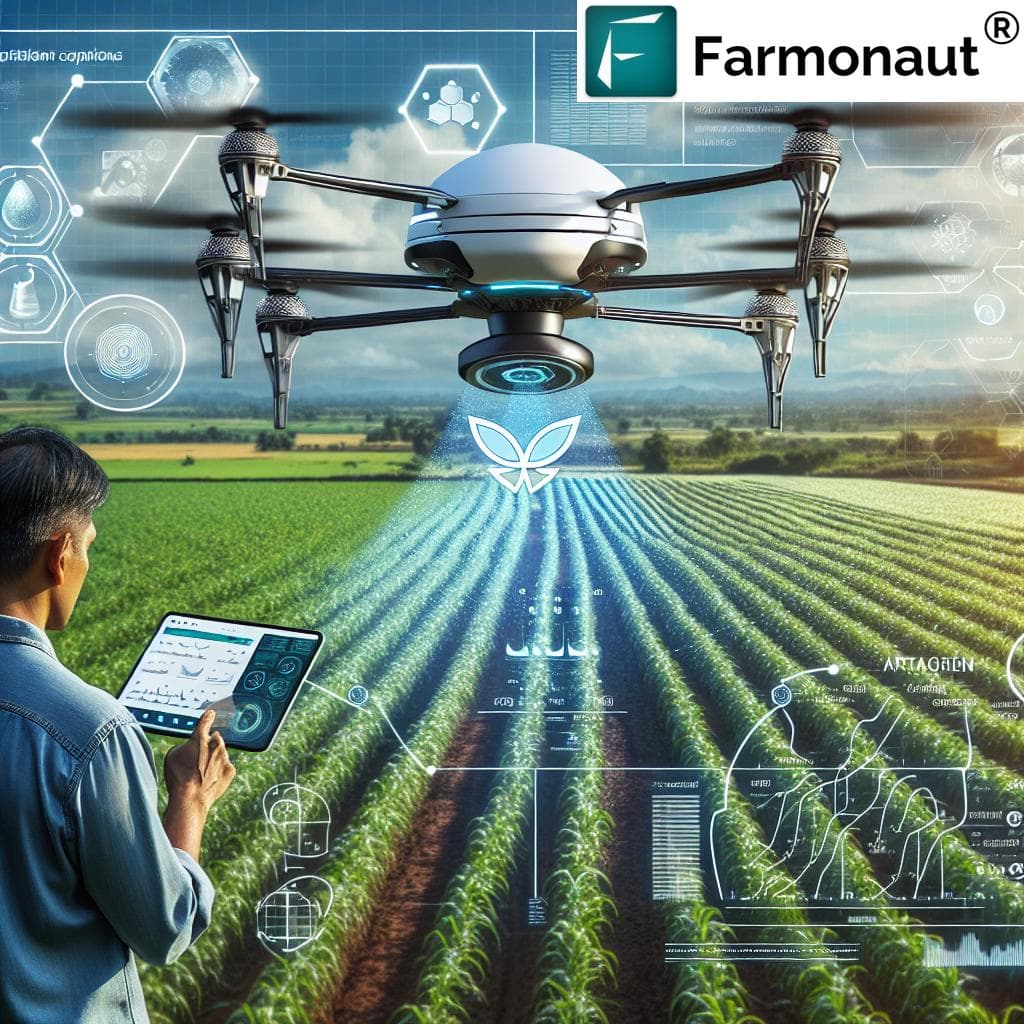
A developer has launched a new simulation game that blends programming education with agricultural automation. In the game, players write code in a Python-like language to control drones responsible for managing a virtual farm. The core gameplay loop involves programming drones to perform tasks such as planting seeds, harvesting crops, and optimizing yields based on in-game conditions.
The game appears to be a hands-on simulation for learning automation logic, requiring players to think through sequencing, conditionals, and loops to efficiently manage their farm. The source material indicates the code is "actual code," suggesting a focus on practical, transferable programming skills rather than a simplified block-based interface.
Context

This project fits into a growing niche of "code gamification" platforms—tools that teach programming concepts through interactive challenges and simulations. Unlike broader computer science learning platforms like Codecademy, these simulation games often focus on a specific domain, such as robotics, logistics, or, in this case, precision agriculture.
The concept of using simulated drones for agricultural tasks mirrors real-world trends in precision agtech, where companies like John Deere and startups are deploying AI and automation for planting, monitoring, and harvesting. This game abstracts that real-world application into an accessible, educational format.
gentic.news Analysis
This development is a practical entry in the ongoing convergence of AI education, simulation, and gamification. While not a breakthrough in AI research, it represents an important trend in developer tooling and education: creating low-stakes, high-engagement environments to learn automation logic that is directly applicable to real-world AI and robotics pipelines.
The choice of agricultural automation as a domain is strategically interesting. It's a complex enough problem space—involving scheduling, resource management, and conditional logic—to teach meaningful programming concepts, yet it's visually intuitive and universally understood. This follows a pattern we've seen with other successful coding games, like Screeps (AI for unit control in an MMO) or Bitburner (cybersecurity and scripting), which tie coding proficiency to in-game progression.
For AI engineers, the underlying principles practiced here—writing efficient control loops, managing state, and optimizing task sequences—are foundational for developing real autonomous systems. This game could serve as a lightweight onboarding tool for engineers moving into robotics or operational AI, where thinking in terms of actuators, sensors, and time is crucial. Its emergence aligns with the industry's growing need for practical skills in embodied AI and automation, as the focus shifts from pure language models to agents that interact with environments.
Frequently Asked Questions
What programming language do you use in the drone farming game?
The game uses a Python-like language for writing the drone automation code. This means the syntax and core logic structures (like loops, conditionals, and functions) will be familiar to those who know Python, making it an accessible tool for learning or practicing automation scripting.
Is this game related to real agricultural AI?
Yes, conceptually. The game simulates a core application of real-world precision agriculture, where drones and ground robots are programmed to automate tasks like planting, monitoring crop health, and harvesting. While simplified for gameplay, the logical challenges of scheduling, resource allocation, and conditional execution mirror those faced by agtech engineers.
Who is this game for?
The game is primarily an educational tool for beginner to intermediate programmers interested in learning automation logic, Python, or domain-specific applications of code. It could also appeal to developers curious about robotics or AI control systems in a low-friction, gamified format.
How does this compare to other coding games?
Unlike broad computer science platforms, this game is domain-specific, focusing entirely on drone control for farm automation. This provides a cohesive narrative and set of constraints that can deepen understanding of a particular type of problem-solving (sequential task automation) compared to more generic coding challenge sites.