An AI engineer, known by the handle @hasantoxr on X (formerly Twitter), has announced the release of a comprehensive, free open-source textbook. The resource aims to compile key concepts from mathematics, computer science, and artificial intelligence into a single, accessible volume.
What Happened
In a post on X, the engineer announced the completion of the textbook, describing it as a compilation of "every maths, CS, and AI concept." The primary stated goal is to serve as an intuitive, visual-first learning resource. The textbook is freely available and open-source, meaning its content and potentially its source code are accessible for anyone to use, modify, or distribute.
The announcement is light on specific technical details, benchmarks, or a direct link to the repository. It functions as a social media teaser for a community-driven educational project rather than a formal product launch or research paper.
Context
The creation of large-scale, open-source educational resources is a growing trend within the tech community, particularly in AI. As the field expands rapidly, there is a constant demand for high-quality, consolidated learning materials that bridge foundational theory and modern practice. Projects like this often emerge from practitioners who identify gaps in existing educational offerings.
Successful precedents include online book projects like "Dive into Deep Learning" (d2l.ai), which combines interactive code, math, and discussions, and community-driven resources like the "Machine Learning Yearning" blog-style technical strategy guide. The value proposition hinges on curation, clarity, and practical utility rather than novel research.
gentic.news Analysis
This development aligns with a clear and persistent trend we've covered: the democratization of AI education through practitioner-led, open-source initiatives. While not a breakthrough in model architecture, efforts like this are critical infrastructure for the ecosystem. They lower the barrier to entry for new engineers and researchers by providing curated, applied knowledge that is often missing from traditional academic textbooks or fragmented across blog posts and video tutorials.
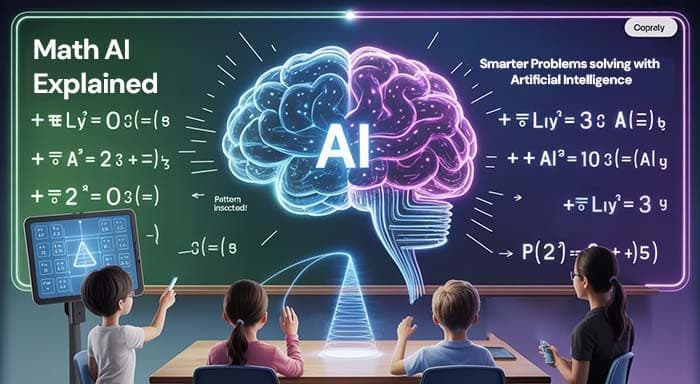
The choice to make it visual and intuitive targets a known pain point in STEM education, where abstract concepts in linear algebra, calculus, and algorithms can become stumbling blocks. If executed well, a visual companion to dense theory could significantly accelerate comprehension. The success of such a project will depend entirely on the execution—the depth of coverage, accuracy, quality of visualizations, and community adoption for maintenance and updates.
We should watch to see if this garners the community support seen by other open-source educational projects. Its impact will be measured not by a benchmark score, but by its GitHub star count, contributor activity, and mentions in learning pathways. For practitioners, the immediate question is locating the repository to evaluate its current state and potential utility as a reference or teaching tool.
Frequently Asked Questions
Where can I find this AI textbook?
The initial announcement was made on X by the user @hasantoxr. To find the textbook, you would need to visit that profile and look for a link to a repository, likely on GitHub or a similar platform. The source material for this article did not include a direct link.
Is this textbook suitable for beginners in AI?
Based on the description emphasizing "intuitive" and "visual" learning, it appears designed to be accessible. However, without reviewing the content, it's impossible to confirm its true difficulty curve. A textbook covering "every" concept from math to AI would necessarily range from beginner to advanced topics.
How does this compare to other free AI resources like "Dive into Deep Learning"?
"Dive into Deep Learning" (D2L) is a mature, interactive resource that combines textbook explanations with runnable code. This new project, as announced, seems to share the goal of being a comprehensive, free resource. The key differentiator highlighted is a "visual-first" approach. A direct comparison would require examining the new textbook's depth, interactivity, and programming language focus.
What does "open-source" mean for a textbook?
An open-source textbook typically means the content (text, diagrams, code examples) is released under a permissive license like Creative Commons. This allows anyone to freely read, download, modify, and redistribute the material, often with the requirement to attribute the original authors. It also often implies the source files (e.g., LaTeX, Markdown) are available in a public repository for community contributions and corrections.