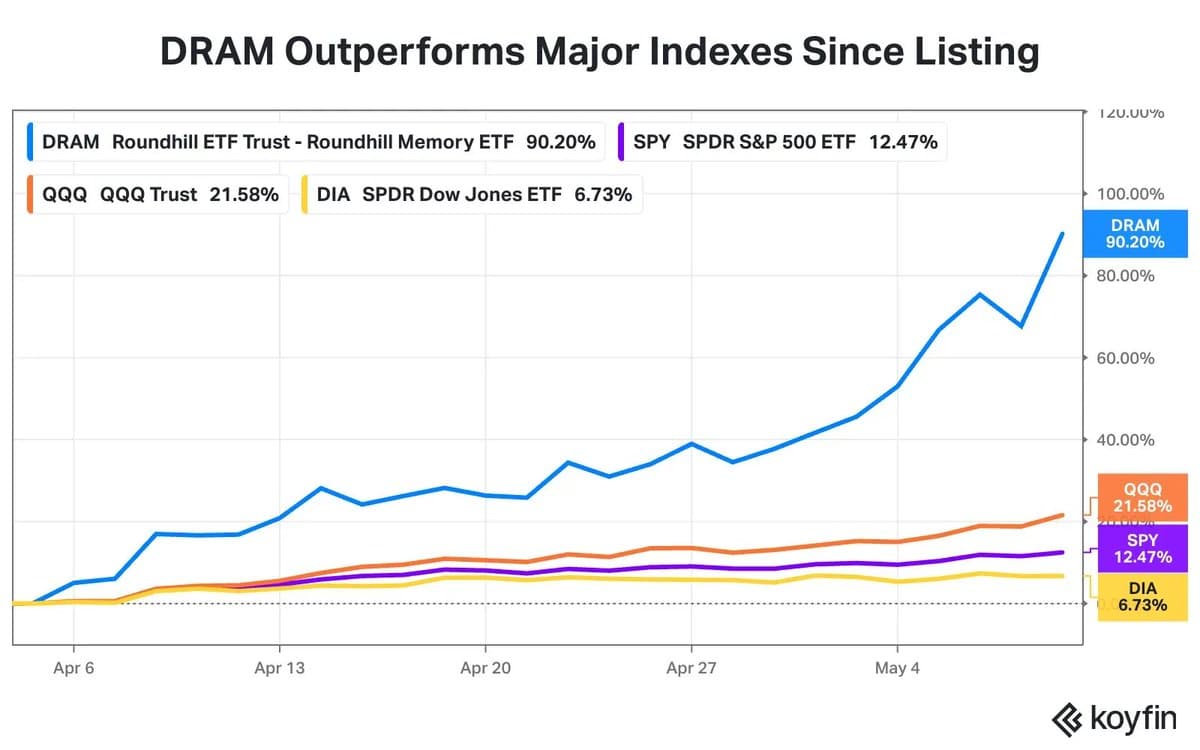
The Roundhill Memory ETF (DRAM) surged 90% since its April 2 debut, amassing $6.5B in assets in 36 days—faster than any ETF in history. The rally reflects AI's insatiable demand for DRAM, which powers model inference and training.
Key facts
- DRAM ETF up ~90% since April 2 debut
- $6.5B assets in 36 days, fastest ETF ever
- Tracks memory chip makers: Samsung, SK Hynix, Micron
- AI inference workloads are memory-bandwidth-bound
- Previous fastest ETF took 12 months to reach $1B
The Roundhill Memory ETF (DRAM) has surged about 90% since its debut on April 2, amassing $6.5B in assets in only 36 days—faster than any ETF ever, according to @kimmonismus. The fund tracks an index of memory chip makers, including DRAM giants like Samsung, SK Hynix, and Micron.
Unique Take: The DRAM ETF's parabolic growth signals a structural market shift that most AI investors are missing. While GPU makers like Nvidia dominate headlines, memory chips are becoming the bottleneck for AI inference. Large language models require massive memory bandwidth to serve tokens in real-time; without enough DRAM, GPU utilization collapses. This is not a speculative meme rally—it's a supply-chain repricing.
$6.5B in assets in 36 days is faster than any ETF ever [per @kimmonismus]. The closest competitor, the Roundhill Generative AI ETF (CHAT), took 12 months to reach $1B. DRAM's speed suggests institutional investors are rotating capital into memory plays as they realize AI infrastructure spend must include memory, not just compute.
What's Driving the Rally
AI keeps eating DRAM like spaghetti, the source notes. Every token generated by a model like GPT-4 or Claude requires loading billions of parameters from DRAM into the compute unit. With AI inference demand growing exponentially, DRAM pricing has firmed. Samsung and SK Hynix reported record HBM (high-bandwidth memory) revenues in Q1 2026, and Micron guided above consensus.
The fund's rapid asset growth also reflects a tactical shift: investors are seeking pure-play exposure to memory without picking individual chip stocks. The DRAM ETF's structure allows diversified bets across the memory value chain.
Risks and Caveats
Memory is cyclical. DRAM prices have historically swung 50-80% in a single year. The current rally may be pricing in perfect execution—any demand disappointment or oversupply could trigger a sharp correction. The ETF's 90% gain in 36 days is unsustainable in a vacuum, but the structural AI tailwind is real.
What to watch

Watch for Q2 2026 earnings from Samsung and SK Hynix, due in July. If HBM revenue growth decelerates, the DRAM ETF could correct 20-30%. Also monitor Micron's next guidance call for capacity expansion plans.