New research examining the water consumption of data centers powering artificial intelligence reveals a complex picture that challenges both alarmist and dismissive narratives. While national projections suggest relatively modest water usage compared to other sectors, the study highlights how concentrated demand in specific localities could strain infrastructure and create regional water stress.
The National Picture: Putting AI's Thirst in Context
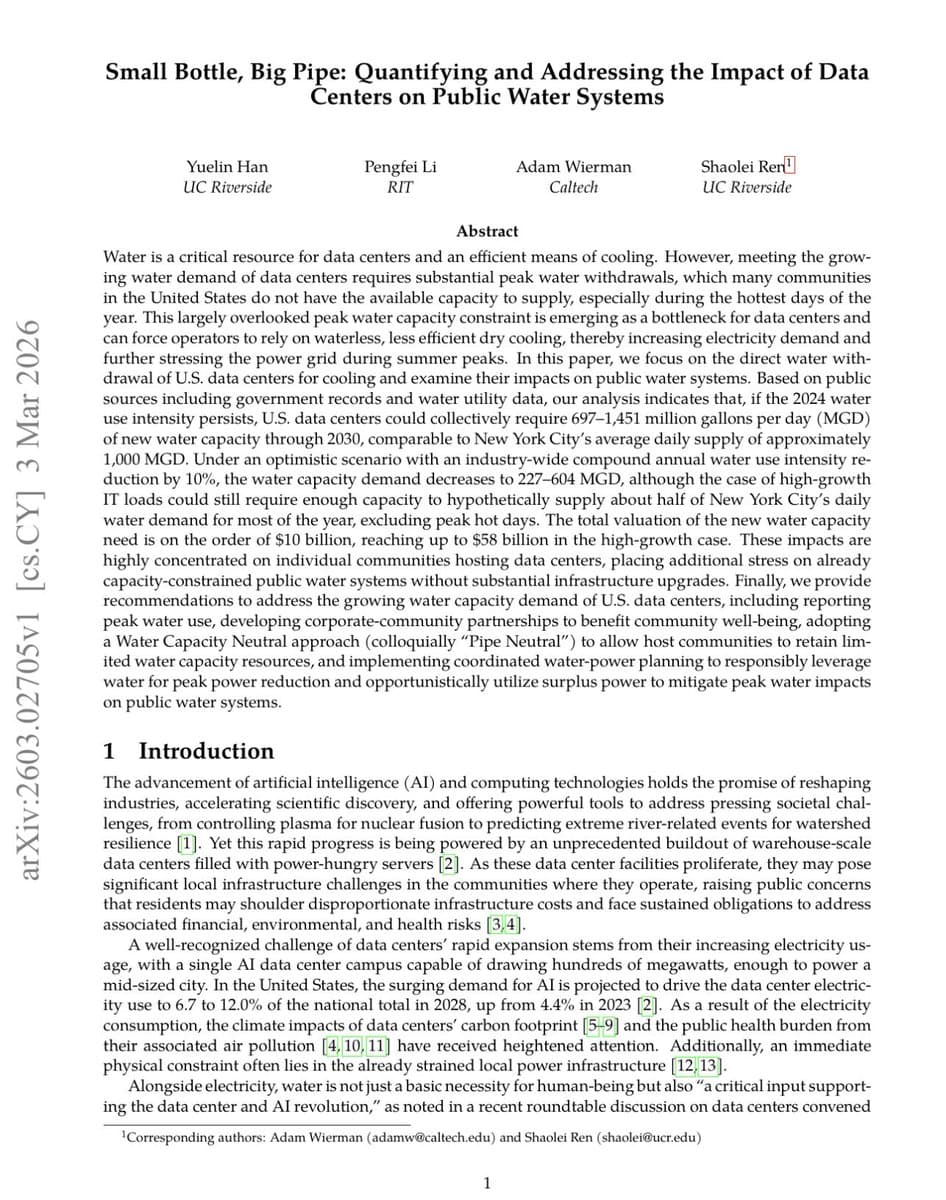
The research, highlighted by Wharton professor Ethan Mollick, projects that by 2030, data centers across the United States will consume between 1.8% and 3.7% of the total public water supply. When compared to agricultural water usage—which dominates water consumption in most regions—data centers represent an even smaller fraction at just 0.6% to 1.2%.
These figures provide crucial context to the growing conversation about AI's environmental impact. As artificial intelligence systems become more sophisticated and widespread, their computational demands have skyrocketed, requiring massive data centers with significant cooling requirements. Water-based cooling remains one of the most efficient methods for managing the heat generated by thousands of servers running complex AI models.
The Local Reality: Infrastructure Under Pressure
While the national numbers appear manageable, the research identifies a more concerning trend at the local level. In specific regions where data centers are concentrated—particularly areas with favorable electricity rates, tax incentives, and existing tech infrastructure—serving peak demand could require significant new water infrastructure.
The problem stems from the uneven distribution of data centers across the country. Tech hubs like Northern Virginia, Silicon Valley, and emerging centers in Arizona, Texas, and the Pacific Northwest are absorbing disproportionate numbers of new facilities. These regions may face water demand spikes that existing systems weren't designed to handle, especially during periods of peak computational activity or extreme heat when cooling requirements intensify.
Understanding Water Usage Patterns
Data center water consumption follows distinct patterns that complicate infrastructure planning. Unlike residential or agricultural water use, which often follows predictable daily and seasonal cycles, data center demand can spike suddenly based on computational needs. Training large AI models or processing massive datasets can create temporary but intense water requirements that strain local systems.
Furthermore, water usage efficiency varies significantly between facilities. Older data centers may use traditional cooling methods that consume substantially more water per computation than newer facilities employing advanced cooling technologies, water recycling systems, or alternative cooling approaches. This variability makes blanket projections challenging and underscores the importance of facility-specific assessments.
Regional Implications and Water Stress
The research suggests that regions already experiencing water stress may face difficult choices as data center expansion continues. Areas like the American Southwest, where water resources are already stretched thin by population growth and agricultural demands, could see increased competition for limited water supplies.
This creates potential conflicts between technological development, agricultural interests, residential needs, and environmental conservation. Local governments may need to develop new water allocation policies, infrastructure investment plans, and regulatory frameworks to balance these competing demands.
Industry Responses and Technological Solutions
The data center industry has been increasingly aware of water usage concerns and has developed several approaches to mitigate impact. Many major tech companies have committed to "water positive" or "water neutral" goals, aiming to replenish more water than they consume through conservation projects and infrastructure improvements.
Technological innovations are also playing a crucial role. Advanced cooling systems that use less water or employ closed-loop systems that recycle water are becoming more common. Some facilities are exploring alternative cooling methods, including liquid immersion cooling and outside air cooling in appropriate climates. Additionally, AI itself is being used to optimize cooling systems, dynamically adjusting water usage based on real-time computational loads and environmental conditions.
Policy and Planning Considerations
The research highlights the need for more sophisticated water management strategies at both local and regional levels. Traditional water infrastructure planning may need to incorporate data center growth projections more systematically, considering not just average demand but peak usage scenarios.
Potential policy responses could include:
- Tiered water pricing that encourages efficiency during peak periods
- Requirements for water recycling and reuse in new data center construction
- Regional water agreements that account for industrial, technological, and traditional uses
- Incentives for locating data centers in regions with more abundant water resources
- Standards for water usage efficiency in data center operations
Looking Toward 2030 and Beyond
As AI continues to evolve and expand its role across industries, society, and daily life, the infrastructure supporting it will face increasing scrutiny. The 2030 projections in this research represent a snapshot in an ongoing technological transformation.
Future developments in AI hardware, including more energy-efficient chips specifically designed for AI workloads, could alter water consumption patterns. Similarly, breakthroughs in cooling technology or shifts toward different computational paradigms (such as quantum computing) might change the water calculus entirely.
What remains clear is that the relationship between technological progress and resource consumption requires careful management. The modest national projections mask potentially significant local challenges that will demand attention from policymakers, industry leaders, and communities.
Balancing Innovation and Sustainability
The research ultimately suggests a path forward that acknowledges both the transformative potential of AI and the practical realities of resource constraints. By understanding where and how data centers impact water systems, stakeholders can develop targeted solutions that support technological advancement while protecting vital resources.
This balanced approach recognizes that AI's benefits—from medical breakthroughs to climate modeling to economic productivity—must be weighed against its environmental costs. The challenge moving forward will be to maximize the former while minimizing the latter through innovation, planning, and cooperation across sectors.
Source: Research highlighted by Ethan Mollick (@emollick) examining data center water usage projections for 2030.