The Innovation — What the Source Reports
Three major technology players announced significant moves in the AI-powered commerce space, signaling a clear industry shift from conversational interfaces to fully transactional, agentic systems.
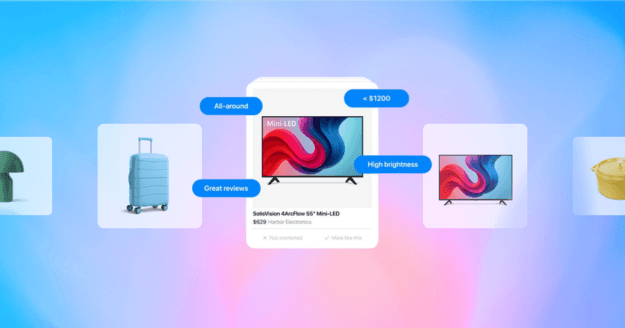
OpenAI's Strategic Pivot to Discovery: According to the report, OpenAI is now focusing its commercial AI efforts on product discovery. This represents a notable shift from the company's previous emphasis on general-purpose conversational AI (ChatGPT) toward a specialized, commerce-oriented application. While specific product details aren't provided, the implication is that OpenAI is developing or enhancing capabilities that help users find products through natural language queries, understanding intent, and navigating complex catalogs—a foundational layer for agentic shopping.
Meta Launches Native Checkout for AI Shopping Ads: Meta Platforms has launched in-app checkout functionality specifically for AI-generated shopping ads. This move directly addresses the conversion gap in social commerce by allowing users to complete purchases without leaving Meta's ecosystem (Instagram, Facebook, Messenger). The integration suggests Meta is leveraging its vast behavioral data and ad infrastructure to create a seamless path from AI-driven product discovery to transaction.
Shopify Opens Catalog Integration to Any Brand: In perhaps the most infrastructure-significant move, Shopify announced it is opening its catalog integration capabilities to any brand, regardless of whether they use Shopify's e-commerce platform. This creates a universal product data layer that AI agents and other systems can query. By standardizing access to product information—including real-time inventory, pricing, and specifications—Shopify is positioning itself as the backbone for AI-driven commerce across the web.
Why This Matters for Retail & Luxury
For luxury and premium retail executives, these announcements collectively lower the technical barriers to implementing sophisticated AI shopping experiences while raising strategic questions about control, data, and customer relationships.
OpenAI's Discovery Focus: For brands with complex product lines (e.g., a luxury house with ready-to-wear, leather goods, jewelry, and fragrances), AI-powered discovery can solve the "long tail" search problem. A customer asking "What handbag goes with this season's runway look?" requires understanding collection themes, materials, and stylistic compatibility—a task beyond keyword search. OpenAI's move suggests such contextual, cross-category discovery is becoming commercially viable.
Meta's Closed-Loop Commerce: Luxury brands have historically been cautious about social commerce, fearing it might dilute brand equity. Meta's native checkout changes the calculus by reducing friction while maintaining control over the advertising creative. An AI-generated ad that showcases a limited-edition watch with personalized messaging, followed by one-click checkout within the same app, represents a new high-touch, low-friction channel. However, it also means ceding more of the customer relationship and transaction data to Meta.
Shopify's Catalog as Utility: Shopify's move is particularly significant for brands not on its platform. A luxury brand using a proprietary or enterprise e-commerce system (like Salesforce Commerce Cloud or SAP Hybris) can now expose its product data through Shopify's standardized API, making it instantly available to any AI agent, comparison engine, or discovery platform that integrates with Shopify. This solves a major interoperability problem but also makes product data a commodity—brands will compete on the richness of their data (lifestyle imagery, sustainability attributes, craftsmanship details) rather than just its availability.
Business Impact — Quantified If Available, Honest If Not
The source does not provide specific metrics, but we can extrapolate potential impacts based on the nature of the announcements:
Conversion Rate Acceleration: Meta's in-app checkout could potentially increase conversion rates from AI shopping ads by 20-50% by eliminating redirects and login friction. For luxury, where consideration cycles are longer, the impact might be more pronounced on replenishment items (beauty, accessories) than high-consideration purchases.
Discovery-to-Purchase Efficiency: OpenAI's discovery tools could reduce the time from initial intent to qualified product selection by 70-80% for complex queries. For a brand like Burberry, where a customer might be looking for "a trench coat suitable for urban commuting that can transition to evening," AI could instantly filter by fabric, length, lining, and price—a process that currently requires multiple filter applications and product page visits.
Catalog Integration Costs: Shopify's open integration likely reduces the technical cost of connecting product data to AI systems from months of custom API development to weeks of configuration. However, brands will incur ongoing costs for maintaining rich, structured data beyond basic SKU information.
Implementation Approach — Technical Requirements, Complexity, Effort
For OpenAI Discovery Integration:
- Requirements: Structured product data with rich attributes (materials, occasions, style tags), high-quality imagery, and likely video content for training multi-modal models.
- Complexity: Medium-High. Brands need to map their existing product taxonomies to OpenAI's likely ontology. Integration may require API development unless OpenAI offers pre-built connectors for major e-commerce platforms.
- Timeline: 3-6 months for initial integration, plus ongoing optimization of product data for discovery algorithms.
For Meta's AI Shopping Ads with Checkout:
- Requirements: Product feed submission to Meta, pixel implementation for tracking, and approval for in-app checkout (which may have brand guidelines requirements).
- Complexity: Low-Medium. The technical integration is straightforward for brands already running Meta ads. The greater challenge is creative—developing AI-friendly product descriptions and visual assets that generate effective ad variants.
- Timeline: 4-8 weeks for setup and testing.
For Shopify Catalog Integration (Non-Shopify Brands):
- Requirements: Product data export/API from existing e-commerce system, mapping to Shopify's product schema, and ongoing sync mechanism.
- Complexity: Medium. The technical work involves building a bidirectional sync between systems. The strategic work involves deciding which data fields to expose (just basics vs. rich storytelling attributes).
- Timeline: 2-4 months for initial integration.
Governance & Risk Assessment — Privacy, Bias, Maturity Level
Privacy Implications:
- Meta's Ecosystem: Completing transactions within Meta's apps gives the company unprecedented insight into the direct link between ad exposure and purchase value. Luxury brands must assess whether this data advantage for Meta outweighs the conversion benefits.
- OpenAI's Discovery: If discovery occurs through ChatGPT, OpenAI gains deep insight into customer preferences and intent patterns. Brands should review data usage terms carefully.
Bias and Brand Safety:
AI-generated shopping ads and discovery results can perpetuate biases if training data isn't diverse. A luxury brand's AI discovery system might inadvertently associate certain products with specific demographics unless carefully monitored. Regular auditing of AI recommendations for diversity across gender, age, and body type representations is essential.
Maturity Level:
- Meta's Checkout: High maturity—built on years of social commerce experimentation and existing payment infrastructure.
- OpenAI's Discovery: Medium maturity—likely an extension of existing ChatGPT capabilities but specialized for commerce.
- Shopify's Catalog Integration: High maturity—Shopify has been refining its catalog API for years, though opening it to non-Shopify merchants is new.
gentic.news Analysis
This trio of announcements represents a significant acceleration in the agentic AI shopping landscape we've been tracking. The Knowledge Graph shows Agentic AI has appeared in 32 prior articles, with industry projections forecasting agents handling 50% of online transactions by 2027. These moves by OpenAI, Meta, and Shopify directly enable that trajectory by solving key infrastructure problems: discovery (OpenAI), transaction (Meta), and data access (Shopify).
OpenAI's commerce focus follows its broader strategic shifts we've covered recently. Our March 24 article "OpenAI Renames Product Org to 'AGI Deployment', Sam Altman Teases 'Very Strong' Upcoming Model 'Spud'" noted the company's reorganization toward applied AI deployments. The commerce discovery initiative likely leverages the upcoming "Spud" model mentioned in that report, which was described as able to "accelerate the economy." This represents a direct competitive move against Google, which has been experimenting with AI shopping through its Search Generative Experience and Gemini integrations. The Knowledge Graph shows OpenAI competes with Google in 9 prior sources, and this commerce push extends that competition into a new vertical.
Meta's checkout launch capitalizes on its unique position at the intersection of social graphs, behavioral data, and advertising. With Meta appearing in 71 prior articles (14 this week alone, indicating increased activity), the company is clearly prioritizing commerce as a revenue diversification strategy beyond pure advertising. This creates both partnership opportunities and dependency risks for luxury brands.
Shopify's catalog move is perhaps the most strategically astute. By becoming the universal product data layer, Shopify positions itself as essential infrastructure regardless of which AI agent or platform ultimately wins. This follows the pattern we've seen with Agentic RAG (mentioned in 10 prior articles), where retrieval of accurate, real-time product information is the bottleneck for reliable AI shopping agents.
The Accenture investment in DaVinci Commerce mentioned in the secondary source aligns perfectly with this trend. As these foundational platforms emerge (OpenAI for discovery, Meta for transaction, Shopify for data), consultancies like Accenture will build specialized agentic solutions on top of them for enterprise retailers.
For luxury brands, the immediate implication is that AI shopping is moving from experimentation to implementation. The infrastructure is being built by major platforms, reducing the need for custom development but increasing strategic decisions about which ecosystems to embrace. Brands should now be evaluating: 1) Which discovery platforms align with their customer experience standards, 2) Whether closed-loop transactions within social platforms enhance or dilute brand equity, and 3) How much product data to expose through universal catalogs versus keeping proprietary for direct channels.
The convergence of these three announcements suggests the next 12-18 months will see rapid deployment of AI shopping experiences. Brands that delay decisions risk being left with incompatible systems or, worse, having their products discovered and purchased entirely through third-party AI agents they don't control.