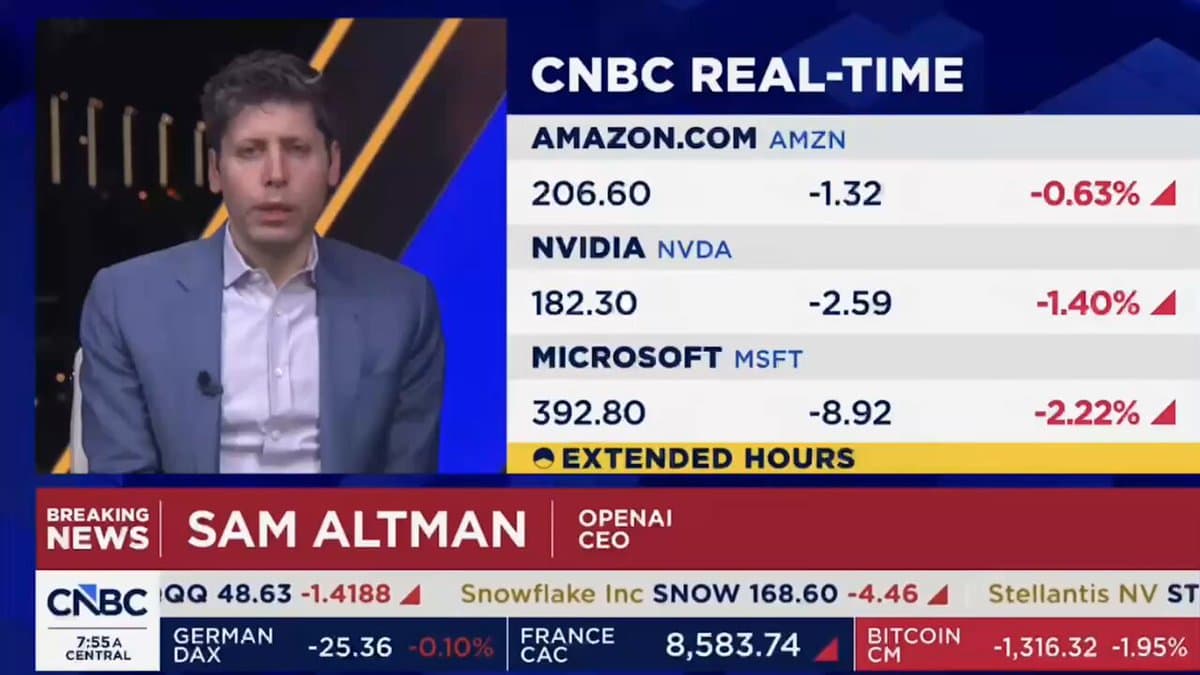
In a development that could reshape the landscape of artificial intelligence governance, OpenAI CEO Sam Altman has publicly declared "full solidarity" with rival AI company Anthropic. This unexpected show of unity between two of the most influential players in the AI industry comes as federal agencies intensify scrutiny of advanced AI systems and their potential risks.
The Context: Growing Government Scrutiny
The AI industry has entered a new phase of regulatory attention following the explosive growth of generative AI technologies. Federal agencies including the Federal Trade Commission (FTC), Department of Justice, and various congressional committees have been examining how existing laws apply to AI systems and whether new regulatory frameworks are necessary.
Anthropic, known for its constitutional AI approach and Claude chatbot, has reportedly been facing particular scrutiny regarding its safety protocols, business practices, and the potential societal impacts of its technology. While specific details of the government's inquiries remain confidential, industry observers note that Anthropic's emphasis on AI safety and alignment research has made it a focal point in discussions about responsible AI development.
Altman's Declaration: Strategic Alignment
Sam Altman's public statement of solidarity represents a significant departure from traditional competitive dynamics in the technology sector. Rather than capitalizing on a rival's regulatory challenges, Altman has chosen to present a united front, suggesting that the issues facing Anthropic are industry-wide concerns rather than company-specific problems.
This alignment is particularly noteworthy given the philosophical differences between OpenAI and Anthropic. While both companies pursue advanced AI development, their approaches to safety, transparency, and commercialization have historically differed. Altman's statement suggests these differences may be secondary to shared concerns about regulatory overreach or inconsistent application of existing laws to AI technologies.
Industry Implications: A New Era of Cooperation
The AI industry has traditionally been characterized by fierce competition for talent, investment, and technological breakthroughs. Altman's solidarity with Anthropic signals a potential shift toward greater cooperation on regulatory and policy matters. This could manifest in several ways:
- Coordinated lobbying efforts: AI companies may pool resources to advocate for regulatory frameworks that balance innovation with safety concerns
- Shared safety standards: Competitors might collaborate on developing industry-wide safety protocols and testing methodologies
- Unified messaging: A more cohesive industry voice could emerge in public discussions about AI risks and benefits
This cooperative approach mirrors strategies employed by other technology sectors facing regulatory challenges, though the speed and transparency of this alignment in AI is unprecedented.
Government Response: Balancing Innovation and Oversight
The federal government now faces a delicate balancing act. On one hand, legitimate concerns about AI safety, bias, concentration of power, and economic disruption demand careful oversight. On the other, overly restrictive regulations could stifle innovation and push AI development to less regulated jurisdictions.
Key questions facing policymakers include:
- How should existing antitrust laws apply to AI collaborations?
- What constitutes appropriate transparency for AI systems?
- How can regulations keep pace with rapidly evolving technology?
- What balance should be struck between encouraging innovation and protecting public interests?
Altman's solidarity statement may force regulators to consider whether they're examining company-specific issues or industry-wide phenomena requiring different regulatory approaches.
Historical Parallels and Differences
This moment bears similarities to other technology regulation debates, including early internet governance, social media oversight, and cryptocurrency regulation. However, AI presents unique challenges:
- Pace of development: AI capabilities are advancing at unprecedented speed
- Technical complexity: Few policymakers fully understand the technology they're attempting to regulate
- Existential concerns: Unlike previous technologies, some experts warn about potential existential risks from advanced AI
- Global dimension: AI development and regulation are inherently international issues
The Road Ahead: Potential Scenarios
Several outcomes are possible following this industry alignment:
Scenario 1: Collaborative Regulation
Government and industry work together to develop flexible, principles-based regulations that evolve with the technology. This approach has succeeded in some areas of fintech and biotechnology.
Scenario 2: Regulatory Pushback
Government agencies view industry solidarity as potentially anti-competitive and intensify scrutiny, possibly leading to more restrictive regulations.
Scenario 3: Stalemate
Polarized positions lead to legislative gridlock, creating regulatory uncertainty that slows both innovation and safety improvements.
Scenario 4: International Divergence
Different regulatory approaches emerge in the U.S., EU, China, and other jurisdictions, creating a fragmented global landscape for AI development.
Conclusion: A Defining Moment for AI Governance
Sam Altman's public solidarity with Anthropic represents more than just corporate diplomacy—it signals a recognition within the AI industry that certain challenges transcend competition. As federal agencies determine their response, they must consider whether they're regulating individual companies or an entire technological paradigm.
The coming months will likely see increased dialogue between AI developers, policymakers, academics, and civil society organizations. The outcome of these discussions will shape not just the future of individual companies, but the trajectory of artificial intelligence development and its integration into society.
What remains clear is that the era of AI developing in regulatory shadows has ended. How industry and government navigate this new landscape will determine whether AI develops as a force for broad benefit or becomes mired in controversy and restriction.
Source: Statement by Sam Altman via social media expressing solidarity with Anthropic amid government scrutiny.