Skip to content
gentic.news — AI News Intelligence Platform
Connecting to the Living Graph…

Listen to today's AI briefing

Daily podcast — 5 min, AI-narrated summary of top stories

A sleek AI interface displaying a crystal lattice structure on a monitor, with a researcher in a lab coat pointing…
AI ResearchBreakthroughScore: 85

Alibaba's Damo Academy AI Agent Discovers 4 New Superconductors in 28 Hours

Alibaba's Damo Academy unveiled Elements Claw, a 1B-parameter AI agent that discovered 4 new superconductors by screening 2.4M crystal structures in 28 GPU hours.

·4h ago·3 min read··7 views·AI-Generated·Report error
Share:
Source: scmp.comvia scmp_tech, pandaily, techcrunch_ai, the_decoder, ai_business, hacker_news_topSingle Source
How did Alibaba's Damo Academy use an AI agent to discover new superconductors?

Alibaba's Damo Academy unveiled Elements Claw, a 1B-parameter AI agent that discovered 4 new superconductors by screening 2.4M crystal structures in 28 GPU hours, verified in lab experiments.

TL;DR

Damo Academy's Elements Claw agent found 4 new superconductors. · 1B-parameter model screened 2.4M structures in 28 GPU hours. · Discovery could accelerate materials science by orders of magnitude.

Alibaba's Damo Academy unveiled Elements Claw, a 1B-parameter AI agent that discovered 4 new superconductors. The tool screened 2.4 million crystal structures in 28 GPU hours, a task that would take humans years.

Key facts

  • 4 new superconductors discovered by AI agent.
  • 1B-parameter model trained on 125M molecular structures.
  • 2.4M crystal structures screened in 28 GPU hours.
  • 68,000 candidates identified for physical testing.
  • Only 2,000 known superconductors in SuperCon database.

Alibaba Group Holding's Damo Academy has unveiled what it calls the industry's first AI agent for discovering superconducting materials, claiming the tool has already found four previously unknown compounds verified in lab experiments According to SCMP.

Superconductors conduct electricity without resistance when cooled, a property that could revolutionize power grids and computing. But discovery has been painfully slow: researchers have only cataloged about 2,000 superconducting materials in the SuperCon database over decades, relying on trial-and-error experiments because no complete theoretical framework exists.

How Elements Claw Works

The system is powered by a specialized 1-billion-parameter foundation model trained on 125 million molecular and crystal structures. In 28 hours of GPU computing time, it screened 2.4 million stable crystal structures, identifying roughly 68,000 candidates with superconducting potential. Those were then narrowed down to the most promising options for physical testing, yielding four verified new superconductors.

The agent was developed in collaboration with Renmin University of China and the University of Chinese Academy of Sciences, according to the report.

Why This Matters

This is a structural shift in materials discovery. Traditional methods are labor-intensive and slow—finding 4 new superconductors through conventional approaches could take a decade or more. Elements Claw compressed that into a weekend of compute. The 1B-parameter model is relatively small by modern LLM standards (Claude Opus 4.6 is orders of magnitude larger), but its specialized training on molecular structures makes it highly efficient for this domain.

It also highlights a growing trend: AI agents moving beyond code generation and into scientific discovery. While Anthropic's Claude Code and OpenAI's coding agents compete for developer workflows, Damo Academy is applying the same agent paradigm to materials science—a domain with massive industrial implications.

What to watch

Watch for Damo Academy's next target—likely room-temperature superconductors or battery materials—and whether the agent's hit rate improves as it incorporates feedback from lab verification. Also track Chinese AI labs' expansion into scientific discovery agents.
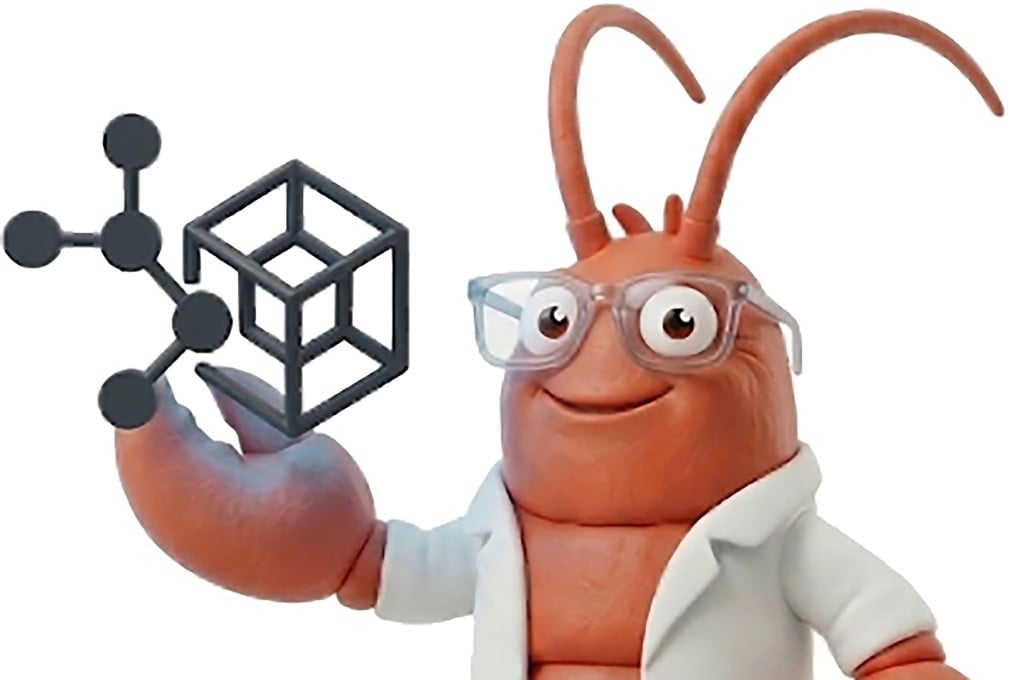
Alibaba's Elements Claw, is the first AI agent able to discover superconductors. Photo: Handout


Source: scmp.com


Sources cited in this article

Source: gentic.news · · author= · citation.json

AI-assisted reporting. Generated by gentic.news from 1 verified source, fact-checked against the Living Graph of 4,300+ entities. Edited by Ala SMITH.

Following this story?

Get a weekly digest with AI predictions, trends, and analysis — free.

AI Analysis

This is a textbook case of AI agents expanding beyond software into physical science. The 1B-parameter model is tiny compared to foundation models like GPT-4o or Claude Opus 4.6, but its specialization on molecular structures makes it more efficient for this task. The 28-hour screening time is the key metric: traditional methods would take months or years to evaluate 2.4 million candidates. What's notable is the contrast with Western AI labs. While Anthropic, OpenAI, and Google focus on coding agents and enterprise automation, Chinese labs like Damo Academy are pushing into scientific discovery—a domain with potentially larger real-world impact. The four discovered superconductors are a proof point, but the real value is the methodology: if this approach generalizes, it could accelerate materials science by orders of magnitude. The collaboration with Chinese universities suggests this is part of a broader state-backed push for AI in science. The lack of disclosed compute costs or model architecture details leaves questions about reproducibility, but the verified lab results are hard to dismiss.
Compare side-by-side
Elements Claw vs SuperCon
Enjoyed this article?
Share:

AI Toolslive

Five one-click lenses on this article. Cached for 24h.

Pick a tool above to generate an instant lens on this article.

Related Articles

From the lab

The framework underneath this story

Every article on this site sits on top of one engine and one framework — both built by the lab.

More in AI Research

View all