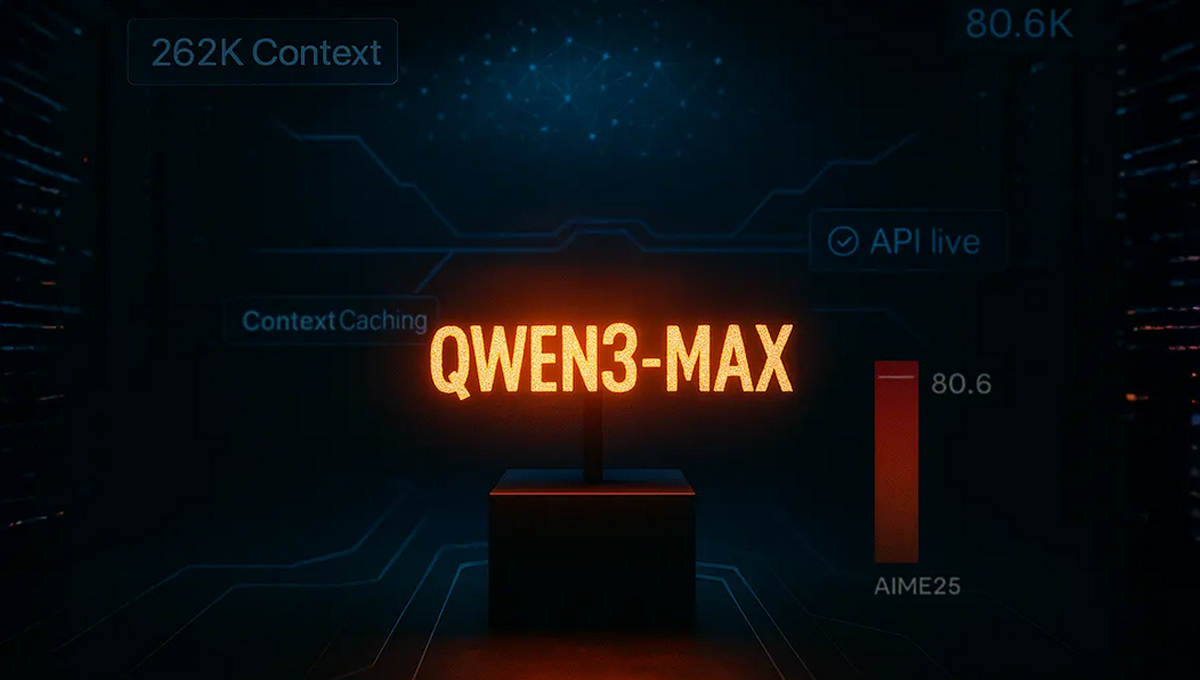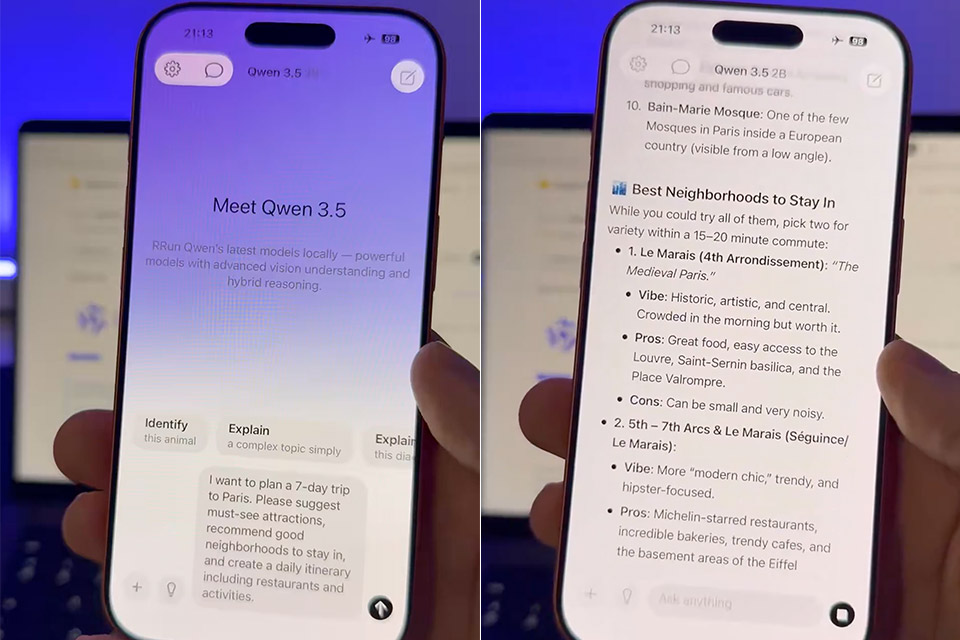
A cryptic social media post from a prominent figure associated with Alibaba's Qwen AI team has set the open-source AI community abuzz. The message, "Qwen 3.6 incoming friends," strongly suggests the imminent announcement or release of the next major iteration in the Qwen large language model series.
What Happened
On March 28, 2026, Kimmo Kärkkäinen, a researcher closely linked to the Qwen project, posted a brief teaser on X (formerly Twitter): "Qwen 3.6 incoming friends." The post contains no further details, specifications, or release timelines. This follows the established pattern for the Qwen team, which often uses social media for low-key, community-focused announcements ahead of formal releases.
Context: The Qwen Series Trajectory
The Qwen (通义千问) series, developed by Alibaba Cloud's research team, has established itself as a leading family of open-source LLMs, frequently benchmarked against Meta's Llama models and Mistral AI's offerings.
- Qwen 2.5: The current flagship series was released in November 2024. It came in multiple sizes (0.5B, 1.5B, 7B, 14B, 32B, 72B, and a massive 110B parameter model) and showed strong performance across reasoning, coding, and multilingual tasks. It was notably licensed under the permissive Apache 2.0 license.
- The 3.x Leap: The jump from Qwen 2.5 to Qwen 3.6 indicates a significant version increment, suggesting substantial architectural improvements, training data expansion, or capability enhancements beyond a minor point release.
What to Expect from Qwen 3.6
While the teaser provides no technical details, expectations within the technical community are shaped by the competitive landscape and the team's historical focus areas:
- Performance Gains: The primary anticipation is for improved benchmark scores across standard evaluations like MMLU (massive multitask language understanding), GPQA (Graduate-Level Google-Proof Q&A), and coding benchmarks like HumanEval and MBPP. The goal will likely be to close the gap with or surpass the current open-weight leaders.
- Extended Context Length: A competitive battleground in 2025-2026 has been context window length. It is plausible Qwen 3.6 will feature a significantly longer context (e.g., 128K, 256K, or even 1M tokens) compared to Qwen 2.5's standard 32K/128K variants.
- Enhanced Reasoning & Tool Use: Refinements in chain-of-thought reasoning, planning, and reliable function/tool calling API compatibility are likely priorities.
- Multimodal Capabilities: The Qwen team has previously released the Qwen-VL series. Qwen 3.6 may see tighter integration or a concurrent release of an updated multimodal model.
- Efficiency Improvements: Updates may focus on reducing latency, improving throughput, or releasing more optimized variants for edge deployment.
The release will almost certainly include detailed technical reports, weights on Hugging Face, and quantized versions for local deployment.
The Competitive Open-Source Landscape in Early 2026
The tease of Qwen 3.6 arrives during a period of intense activity in the open-source LLM field:
- Meta's Llama 3.2: Released in January 2026, this update brought a new 17B parameter "Troll" model focused on instruction following and a 405B parameter "Grand" model, raising the ceiling for open-weight performance.
- Mistral AI's Mixtral 2.0: Expected imminently, this successor to the popular Mixtral 8x22B mixture-of-experts model is highly anticipated for its efficiency and performance.
- DeepSeek's Continued Push: DeepSeek, another Chinese AI lab, has been exceptionally active, with its DeepSeek-R1 model making waves in reasoning benchmarks.
The announcement signals that Alibaba's Qwen team is not ceding ground and intends to remain a top contender, ensuring the open-source ecosystem remains a multi-polar space with rapid, competitive iteration.
gentic.news Analysis
This teaser is a strategic move in the high-stakes open-source model war. The Qwen team, backed by Alibaba's vast resources, has consistently demonstrated its ability to ship state-of-the-art models on an aggressive timeline. The jump to version 3.6 is telling; it's not a minor 2.6 or 2.7 update. This suggests the team has been working on foundational improvements—possibly a new tokenizer, a novel architecture variant like a more efficient mixture-of-experts, or training on a significantly novel dataset pipeline—that warrant a major version bump.
Financially and strategically, this aligns with Alibaba Cloud's broader play to capture developer mindshare and cloud workload. As we covered in our analysis of "Alibaba Slashes Qwen API Prices by 75% Following DeepSeek's Free Model Move" in February 2026, the company is aggressively using its model portfolio to drive cloud adoption. A superior open-weight Qwen 3.6 acts as a top-of-funnel lead generator: developers fine-tune and deploy the open model locally, but when they need scale, latency, or managed service, they are naturally inclined to turn to Alibaba Cloud's paid Qwen API endpoints. This open-core strategy is becoming the de facto standard for major cloud providers.
Furthermore, this release will put immediate pressure on Mistral AI, which is reportedly on the cusp of announcing Mixtral 2.0. The timing feels competitive. For practitioners, the key question will be how Qwen 3.6's licensing terms evolve. The Apache 2.0 license of Qwen 2.5 was a major adoption driver. Any restriction could dampen enthusiasm, while maintaining permissiveness would solidify its position as a true community staple. Based on the team's history, a business-friendly license is the likely outcome.
Frequently Asked Questions
When will Qwen 3.6 be released?
Based on the teaser, an official announcement with technical details and model weights is likely within days or weeks. The Qwen team's previous release cadence suggests a full release often follows a social media tease within a short timeframe.
How will Qwen 3.6 compare to Llama 3.2?
While direct benchmarks are not yet available, the goal of Qwen 3.6 will unequivocally be to match or exceed the performance of Meta's Llama 3.2 models, particularly the 405B parameter "Grand" variant at the high end, and the efficient 17B "Troll" model at the lower end. Competition will focus on reasoning benchmarks, coding proficiency, and context length.
Will Qwen 3.6 be free and open-source?
The Qwen series has historically been released under the permissive Apache 2.0 license, allowing for commercial and research use. It is highly probable that Qwen 3.6 will follow this precedent, though the final licensing terms will be confirmed upon the official release.
What model sizes will Qwen 3.6 come in?
The Qwen team typically releases a suite of models. We can expect a range covering small (e.g., 1.5B-7B), medium (14B-32B), and large (72B-110B+) parameter counts to serve different efficiency and performance needs. A new, extreme-scale model (e.g., 300B+ parameters) is also a possibility given the competitive landscape.