What Happened
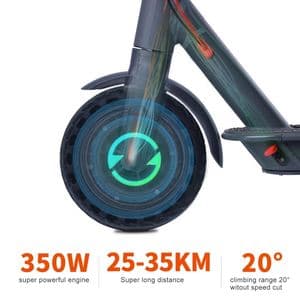
Chinese electric scooter manufacturer Niu Technologies has released a demonstration video of an AI-powered scooter prototype. The vehicle, as shown in the demo, is capable of self-balancing, moving forward at a slow speed, turning, and navigating in an open area without a rider.
According to the source, the system runs on Alibaba's Qwen 3.5 large language model. The scooter's autonomy is classified as an L2-level intelligent driving assistance system, indicating it is designed to handle specific driving tasks under certain conditions, with the expectation that a human remains ready to intervene. The technology is described as being from the "same tech lineage" as systems used in autonomous cars.
Context
Niu Technologies is a publicly traded company (NASDAQ: NIU) known for its smart electric scooters, mopeds, and motorcycles, primarily for urban commuting. Integrating AI and autonomous assistance features represents a logical, though technically challenging, extension of its "smart" vehicle ecosystem.
Alibaba's Qwen series of LLMs, including Qwen 2.5 and the newer Qwen 3.5, are general-purpose models competing with offerings from OpenAI and Anthropic. Their application here suggests the model is being used not just for language understanding but likely for multi-modal perception, decision-making, and low-level control planning—a significant departure from typical LLM use cases.
The claim of "L2-level" assistance aligns with the SAE International's standard levels of driving automation. Level 2 (Partial Driving Automation) means the system can control both steering and acceleration/deceleration simultaneously under certain conditions, but the human driver must perform the rest of the driving task and monitor the environment at all times. Applying this standard to a two-wheeled, inherently unstable vehicle like a scooter is a distinct engineering challenge compared to four-wheeled cars.